In the event of geopolitical conflicts, investors usually start observing the oil prices, shipping routes, safe-haven assets, and global stock indices.
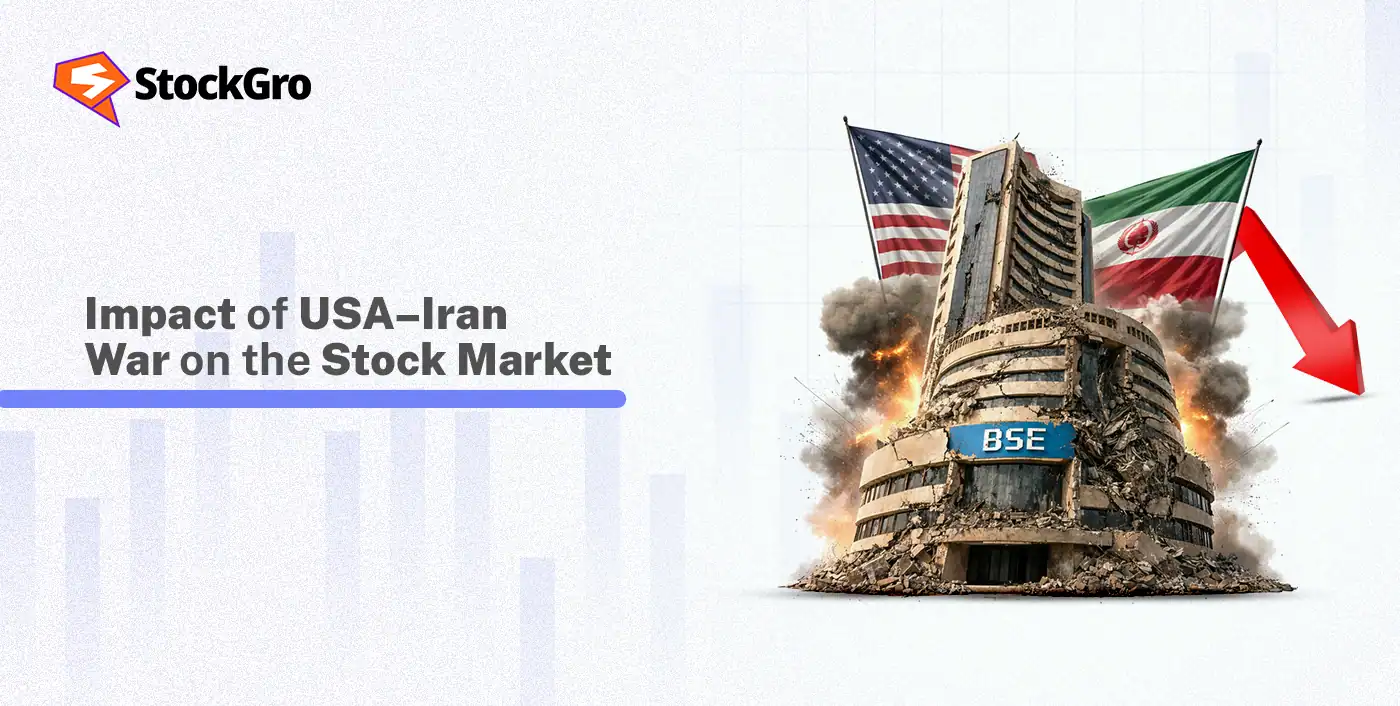
The impacts of the USA–Iran war on the stock market are initially usually felt through crude oil prices and market volatility. The recent reports show the Indian markets’ reaction to the conflict, with Sensex and Nifty falling and volatility rising as investors price in higher oil costs and geopolitical uncertainty. During the escalation, India VIX jumped nearly 19%, while equity markets saw major selling pressure across different sectors.
Read further to know the impact of the USA-Iran war on the stock market!
What are the Impacts of the USA–Iran War on the Stock Market?
The wars in the Middle East have historically had a significant reaction across global financial markets. The current tension involving the United States and Iran has pushed oil prices higher, weakened currencies, and increased selling pressure across global equities.
In India, the stakes are especially high because the country imports over 85–90% of its crude oil, making energy prices one of the biggest drivers of inflation, corporate costs, and stock market sentiment.
Short-Term Market Fall
The primary reaction of any geopolitical conflict is usually a short-term market decline. With tension escalating due to strikes on Iran by the USA and Israel, the Indian stock markets have witnessed strong selling pressure. For instance, on 2 March 2026, the Sensex dropped by 2,700 points, and the Nifty fell roughly 2% in a single session, and the rupee hit a 1-month low, which reflects panic selling and global uncertainty.
Oil Prices Rise
The conflict has raised fears of disruptions in energy supplies, particularly from the Gulf region, which is a significant source of global crude oil production. As per the latest reports, as of 11 March 2026, global oil prices have surged, with Brent crude touching around $120/barrel before falling back below $90. This reflects how sensitive the market is to geopolitical risk.
In India, the petrol prices on March 10 ranged from ₹94.77/litre in Delhi to ₹103.50/litre in Mumbai, ₹105.45/litre in Kolkata, and ₹101.23/litre in Chennai, while diesel prices ranged from ₹87.67/litre in Delhi to ₹92.39/litre in Chennai. These retail prices differ across states because of taxes (VAT), transportation costs, and local levies.
Global Stock Markets Become Volatile
In the USA, major indices declined as the investors monitored developments in the Middle East, with the Dow Jones falling around 250 points and the S&P 500 also slipping, on 11 March 2026, which reflects caution among global investors.
Additionally, in India, GIFT Nifty fell about 800 points, about 3%, during late trading on 3rd March 2026, which signals a weak opening for domestic equities as global markets reacted to the conflict.
Gold and Safe-Haven Assets
Historically, during wars, investors tend to move their investments from shares to safe-haven assets, for example, gold. Gold prices have surged amid geopolitical tensions, rising more than 20% in 2026 and reaching record highs as investors moved funds away from riskier assets.
Analysts also observed strong buying in traditional safe-havens such as Gold, U.S. treasuries, and the Swiss franc, as these assets have historically performed well during uncertainty.
Sectors That Usually Benefit
Now, there are certain sectors that usually benefit during geopolitical conflicts or war-like situations. These are:
- Defence stocks: Military conflicts usually increase government defence spending.
- Energy stocks: Oil and gas firms can benefit from higher crude prices.
- Commodity stocks: The rising prices of metals and raw materials may support these stocks.
- Pharma stocks: The demand for medicines remains consistent during such situations.
Sectors That Usually Fall
The sectors that are most at risk in this war situation are:
- Airline services: Flight cancellations and airspace restrictions reduce demand and increase fuel costs.
- Tourism and hospitality: Travel uncertainty affects tourism activity.
- Manufacturing: Supply chain disruptions and higher energy costs can reduce margins.
Emerging Markets Can Fall
The latest reports indicate that the conflict has triggered a pullback in risk assets, pushing emerging market equities and currencies toward their largest weekly declines in nearly three years, as investors reduced positions in risk-sensitive markets.
The data from the Institute of International Finance (IIF) indicated that portfolio inflows into emerging markets dropped to around $22 billion in February, a sharp decline from more than $100 billion in January, reflecting growing caution among global investors.
For countries like India and other emerging economies, such shifts can lead to weaker currencies, stock market declines, and higher borrowing costs.
Shipping and Trade Disruptions
An economic risk during the US-Iran war is disruption to global shipping routes and supply chains. The conflict has affected maritime and air transport across the Middle East, which is one of the most important trade corridors connecting Asia, Europe, and Africa.
Reports indicate that cargo ships in the Gulf region have been forced to remain stuck at ports or take longer detours around the southern tip of Africa, significantly increasing travel time and logistics costs.
The disruption is linked to the Strait of Hormuz, a narrow sea passage through which roughly 20% of global oil and trade cargo normally travels.
What Investors Usually Do During War?
In case of geopolitical risk, investors tend to adjust portfolios rather than exit the markets completely. A few steps that they might take are as follows:
- Moving into safe assets: Gold, government bonds, and defensive currencies usually receive strong inflows.
- Reducing exposure to sensitive stocks: Industries such as airlines, travel, and consumer discretionary tend to face selling pressure and lower demand.
- Invest in benefitting sectors: Energy, defence, pharma, and commodity companies attract interest due to rising prices.
- Holding more cash: Investors may temporarily increase cash positions until the uncertainty decreases.
Conclusion
The effects of geopolitical conflicts travel faster than expected, especially when they involve countries like the USA, Iran, and Israel. This war has so far affected oil markets, currencies, trade routes, and global stock exchanges. The rising crude prices, volatility in equities, and pressure on emerging markets are the signals visible to investors.
For India, the impact becomes more relevant because of its heavy dependence on imported oil and global trade routes. While the markets may react in the short run, experienced investors usually focus on fundamentals and adjust portfolios cautiously during such periods of uncertainty.