Introduction
In the financial markets, price movements create opportunities for traders/investors to position themselves for potential gains while managing their capital. In such situations, derivatives contracts play a key role in influencing how participants approach risks and rewards.
In this context, call options offer a way to participate in these upside movements without committing full capital. From commodities such as crude oil to equities and indices, call option contracts allow you to express bullish expectations while managing defined risk through premiums and strike prices.
Read further to know how call options function in real market conditions.
What is a Call Option?
In options trading, call options are a type of derivative instrument (contract), which provides a ‘right’ to its buyer to purchase an asset linked to the contract, but without an obligation/liability.
The call options contract involves purchasing an asset, such as stocks, commodities, etc., at a strike price (predetermined price of the asset) at an expiry date (predetermined time/date).
How Do Call Options Work?
Here’s how call options contracts basically work:
- Basic mechanism–Buyer’s right, seller’s obligation!
The buyer pays a premium to secure a right, which allows them to purchase the linked asset at the strike price. The seller receives this premium and takes on the responsibility (obligation) of fulfilling the contract, if exercised.
- Price movement impact
When the market price moves beyond the strike price, the contract gains value. However, if the price stays under the strike, the contract expires without any value.
- Time factor:
In the derivatives segment, every option contract has an expiry date. And, the asset must move in the expected direction within this period for the trade to become profitable.
- Premium effect:
Even if the price rises, the profit is calculated after deducting the premium paid. This makes cost management an essential part of strategy.
- Execution choice: Flexibility to exercise or exit.
The buyer can either utilise the contract to purchase the asset or sell the option in the market before expiry to capture gains.
Call Option Example
Let’s say, Reliance Industries Ltd is trading at ₹2,800/share. You anticipate that the stock price will move higher in the coming few weeks, and purchase a call option at a strike price of ₹2,900, at a premium of ₹40 per share. If one lot represents 100 shares, your total cost is ₹4,000 (100 shares x ₹40).
If the stock rises above ₹2,900, the option gains value. In that case, you may either buy the shares at ₹2,900/share or sell the contract in the market at a higher premium, adjusting the premium paid. However, if the stock stays below ₹2,900, the option will expire without value, with the loss limited at ₹4,000, which is the premium paid.
How To Calculate Call Option Payoffs?
There are two sides to this trade, the buyer and the seller, and both see the outcomes differently.
- Payoffs for Call Option Buyers:
Let’s say you buy a call option of ICICI Bank at a premium of ₹25. The strike price is ₹1,000, with an expiry of one month.
The breakeven is reached when the stock touches ₹1,025, that is strike price and the premium added together (₹1000+₹25). Any move above this level turns into profit.
If the stock moves up to reach ₹1,080 at expiry:
Payoff = Strike Price – Spot Price
Payoff = ₹1,080 − ₹1,000 = ₹80
Profit = Payoff – Premium Paid
Profit = ₹80 − ₹25 = ₹55/share
If the stock stays under ₹1,000, and the option is not exercised, the loss remains limited to ₹25, which is the premium paid.
- Payoffs for Call Option Sellers
Now consider the seller of the same call option. The seller receives ₹25 as a premium upfront.
If the stock closes below ₹1,000, the option will expire without value, and the seller would keep the ₹25 as their profit.
If the stock rises to ₹1,080:
Payoff = ₹1,080 − ₹1,000 = ₹80
Profit = ₹25 − ₹80 = ₹55 loss per share
For the seller, the total income is the premium, while losses can increase in case the stock price keeps rising.
How Is the Premium for Call Options Calculated?
The premium for call options is calculated by combining the intrinsic value and the time value.
| Call Options Premium = Intrinsic Value + Time Value |
Intrinsic Value Calculation:
Intrinsic Value = Spot Price − Strike Price
- In case the result turns out negative, intrinsic value is considered zero.
Time Value Calculation:
Time Value = Premium − Intrinsic Value
- It shows how much traders pay for the opportunity that future price changes may work in their favour.
Types of Call Option
Based on position, call options are classified as long call options and short call options. Let’s discuss them briefly!
- Long Call Option (Buy call):
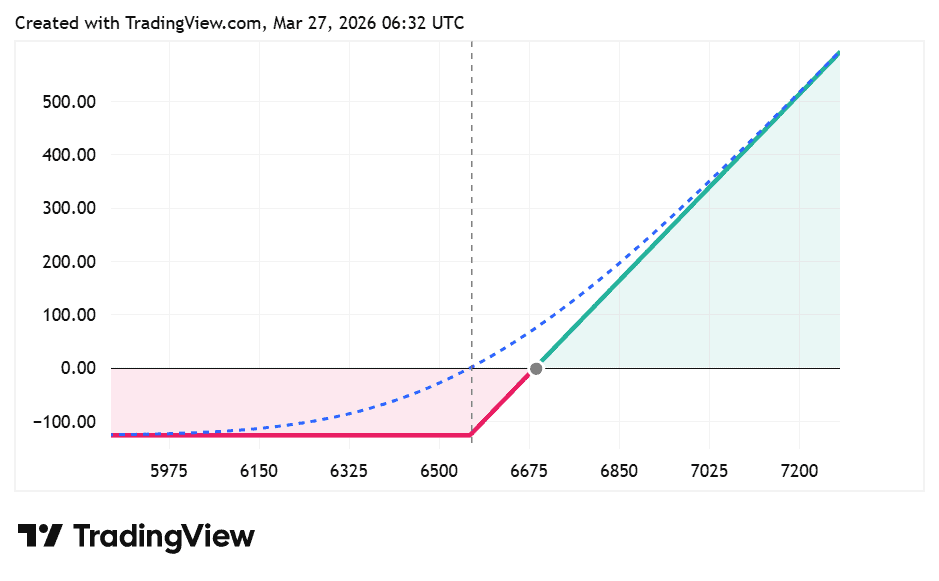
In this case, you buy a standard call option expecting the stock price to rise. The maximum loss here is the premium, while the profit can grow as the stock moves higher. Below is a representation of a long call in the charts.
- Short Call Option (Sell call):
Here, you sell a call option with an expectation that the price stays under the strike. The seller earns the premium as income. However, if the price rises, the loss increases since the seller is obligated to deliver at the strike price. Here’s an example of how a short call option looks in the charts:
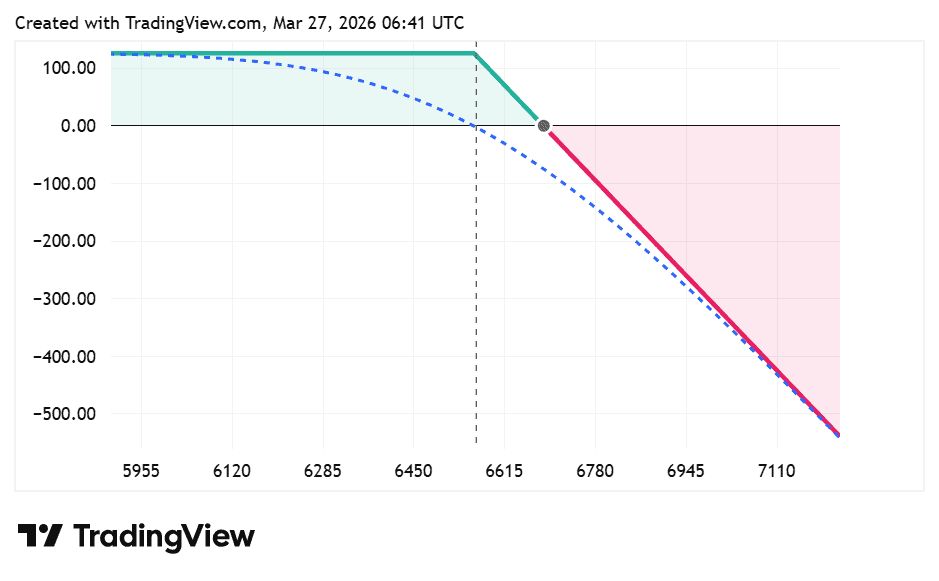
Again, based on coverage, call options are classified as:
This strategy involves selling a call contract despite not having the stock in possession. If the price rises, the seller may have to purchase shares at elevated market levels to meet the obligation, resulting in heavy losses.
In this approach, the investor already holds the underlying shares and sells a call option on them. The premium earned adds to income, though gains remain capped if the price rises beyond the strike.
What is Leverage in a Call Option?
Leverage in a call option means controlling a larger value of shares by paying a small amount of capital (the premium). In this case, a slight rise in the stock price can lead to higher percentage returns. At the same time, if the price falls, the maximum loss remains limited to the premium paid.
ITM, ATM and OTM Call Options
ITM, ATM, and OTM call options define where the strike stands against the market price, while influencing risk, premium, and profit potential across different trading scenarios.
- In-the-money (ITM) call option: An ITM call option occurs when the market price of the stock exceeds the strike price, giving the option immediate worth. For example, if Reliance Industries trades at ₹2,900 and the strike price is ₹2,800, the option is ITM.
- At-the-money (ATM) call option: A call option falls into the ATM category when the difference between the stock price and strike price is minimal. For example, if Infosys is at ₹1,500 and the strike is also ₹1,500, the option is ATM. These are highly sensitive to small price movements.
- Out-of-the-money (OTM) call option: A call option is classified as OTM when the stock has not yet reached the strike level, leaving it without immediate value. For example, if TCS trades at ₹3,800 and the strike is ₹4,000, the option is OTM, having no intrinsic value, but can gain if the price rises.
When Should You Buy or Sell a Call Option?
Buying or selling call options depends on market direction, risk appetite, and how you position yourself around the price expectations.
When Should You Buy a Call Option?
- Strong bullish outlook: A call is bought when the price is likely to cross the strike level soon.
- Event-driven opportunity: Buying calls makes sense before events such as earnings, policy announcements, or sector news that may push prices higher.
- Breakout levels: The traders might buy call options when a stock breaks its resistance levels, signalling the start of a fresh upward trend.
When Should You Sell a Call Option?
- Neutral to slightly bearish view: A call option is sold when the expectation is that the stock will stay below the strike price or rise only marginally before expiry.
- Time decay advantage: Selling calls works when time is expected to pass without major price movement, allowing the premium to decline in value.
- Covered position: Investors may sell a call option when they already own the stock and do not expect a sharp rise beyond a certain level.
Factors Influencing the Call Option Price
The call option prices shift with stock movement, time, volatility, and market expectations, which influence how premiums are valued across different trading conditions.
- Underlying stock price: The price of a call option rises when the underlying stock moves higher, as the likelihood of profitable exercise increases with the upward movement.
- Strike price: Options near the current market price usually carry higher premiums due to better profit chances.
- Time to expiry: A longer time to expiry usually leads to a higher premium, since the option has more time for the expected price movement to unfold.
- Volatility: A higher market volatility could result in increased premiums, as wider price fluctuations improve the probability of the option gaining value before expiry.
Call Option vs Put Option
The key distinctions between call options and put options are as follows:
| Basis | Call options | Put options |
| Definition | It gives a right to purchase the contract-linked asset at a fixed price | It gives a right to sell the contract-linked asset at a fixed price |
| Market view | Used when expecting prices to rise | Used when expecting prices to fall |
| Profit condition | The contract gains when price rises beyond the strike | The contract gains when price falls below strike price |
| Profit potential | Increase as price keeps rising | Increase as price keeps falling |
| Loss for buyer | The premium paid | The premium paid |
| Seller’s position | The seller benefits if price stays below strike | The seller benefits if price stays above strike |
| Use case | Bullish trading or hedging rising prices | bearish trading or protecting downside risk |
| Breakeven point | Strike price + premium | Strike price − premium |
Conclusion
In today’s time, call options are a widely used instrument for traders looking to participate in upward price movements with defined risk. From pricing and payoff calculations to timing decisions, each element reflects market expectations and discipline.
When they’re used with an understanding of risk and direction, call options could support both short-term trades and structured strategies in changing market conditions.
FAQs
A call option is usually bought when there is an anticipation that the stock price will rise above the strike price before expiry. This often happens during strong trends, breakout situations, or ahead of major events that may drive prices higher in the near term.
A call option is usually sold when the expectation is that the stock price will remain below the strike price or move within a limited range. It is also used when an investor wants to earn premium income, especially in stable or slightly declining market conditions.
Call options give the buyer the right to purchase an asset at a fixed price within a specified time. The buyer pays a premium for this right, while the seller takes on the obligation to deliver if exercised. Profit depends on whether the market price rises above the strike price.
Buying a call option reflects a bullish view on the market. The buyer expects the price of the underlying asset to rise within a certain period. If the price increases above the strike price, the option gains value, leading to potential profit.
A call option is a contract that allows you to buy a stock at a fixed price before expiry. For instance, if a stock is at ₹1,000 and you buy a call with a ₹1,050 strike, gains arise if the price moves above ₹1,050.