
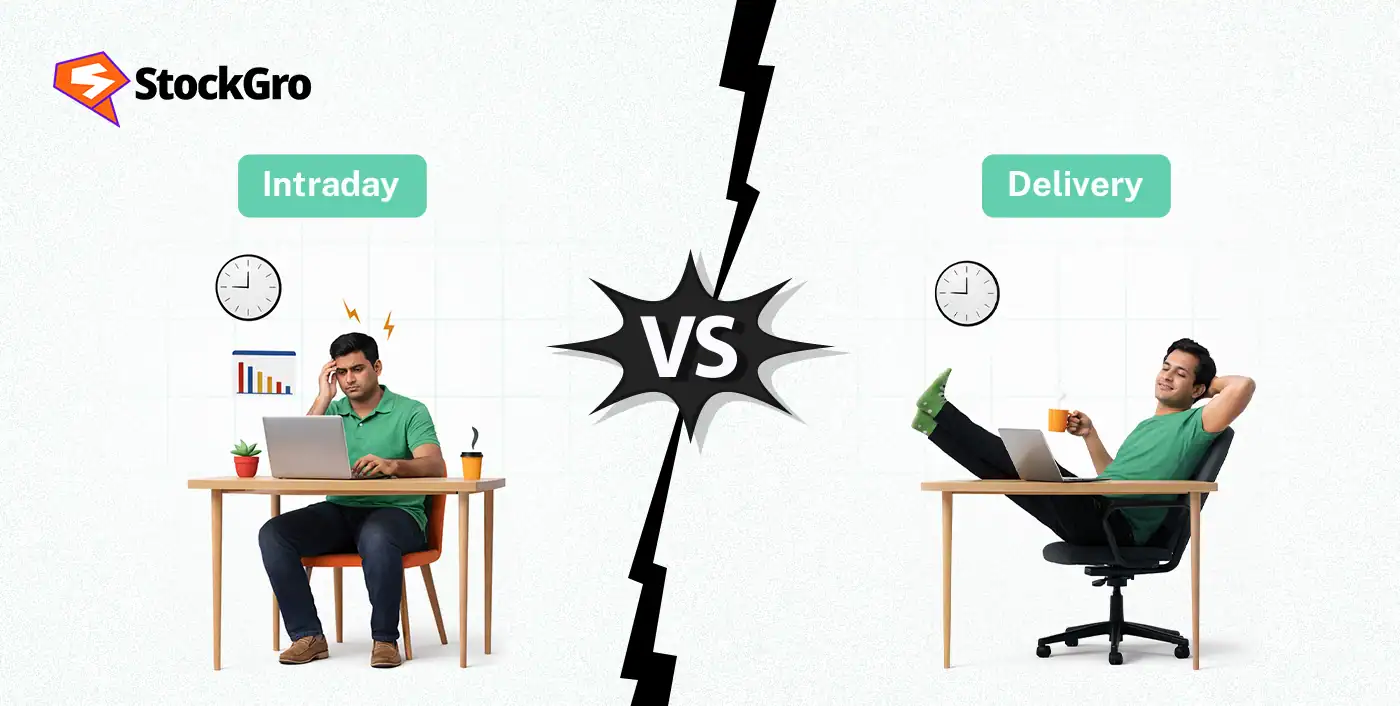
Intraday Trading
Intraday trading refers to buying and selling stocks within the same trading session, typically between 9:15 AM to 3:30 PM in the Indian stock market. The objective is to capture short-term price movements without holding any position overnight.
This form of trading relies heavily on timing and market movement. Traders usually make decisions based on technical indicators, chart patterns, trading volumes, and news flow. Since positions are closed on the same day, there is no carry-forward of trades.
For example, if a stock is bought at ₹100 and sold at ₹102 within the same day, the difference becomes the profit.
Advantage of Intraday Trading
Intraday trading offers several advantages for active participants:
- No Overnight Risk: Positions are closed before the market ends, reducing exposure to unexpected news or global events.
- Leverage Availability: Brokers often allow traders to take larger positions with limited capital.
- Frequent Opportunities: Market movements throughout the day provide multiple trading opportunities.
- Two-Way Trading: Traders can benefit from both rising and falling markets.
- Efficient Use of Capital: The same capital can be used for multiple trades within a single day.
However, it is important to note that intraday trading also involves higher risk due to rapid price fluctuations.
Delivery Trading
Delivery trading involves buying stocks and holding them in a Demat account beyond a single trading day. Investors can hold these stocks for the short term or long term, depending on their goals.
This approach focuses on the performance and growth potential of companies rather than short-term price movements. It is generally used by individuals looking to build wealth over time.
For example, an investor may buy shares of a company and hold them for several years to benefit from price appreciation and dividends.
Advantages of Delivery Trading
Delivery trading is suitable for individuals who prefer a more stable and less time-intensive approach:
- Long-Term Wealth Creation: Investors can benefit from the growth of businesses over time.
- Lower Time Requirement: Continuous monitoring of the market is not necessary.
- Reduced Impact of Short-Term Volatility: Temporary price fluctuations have less impact on long-term investments.
- Ownership of Shares: Investors hold actual shares and are eligible for dividends, bonuses, and other corporate benefits.
- Flexible Exit: There is no obligation to sell within a fixed time frame.
Additionally, delivery trading often provides more favorable tax treatment when investments are held for longer durations.
Difference Between Intraday and Delivery Trading
| Factor | Intraday Trading | Delivery Trading |
| Holding Period | Same day | More than one day |
| Ownership | No ownership of shares | Full ownership of shares |
| Risk Level | High | Moderate to low |
| Time Requirement | High | Low |
| Leverage | Available | Generally not used |
| Analysis Type | Technical analysis | Fundamental and technical analysis |
| Taxation | Business income | Capital gains |
| Objective | Short-term profit | Long-term wealth creation |
Which Trading is Suitable for You
The choice between intraday and delivery trading depends on your time availability, risk tolerance, and financial goals.
Intraday trading may be suitable if:
- You can actively monitor the market during trading hours
- You are comfortable with higher risk
- You prefer short-term opportunities
- You have a basic understanding of technical analysis
Delivery trading may be suitable if:
- You prefer a long-term investment approach
- You cannot monitor markets regularly
- You aim to build wealth gradually
- You focus on company fundamentals
Conclusion
Delivery vs Intraday Trading ultimately depends on how you approach risk, time, and capital. Intraday trading demands precision, speed, and constant market engagement, while delivery trading rewards patience and long-term conviction.
Therefore, the practical choice shall align with financial goals, risk appetite, and the level of involvement one can sustain. A disciplined understanding of these differences strengthens decision-making and builds a structured investment approach.