What is Commodity Trading?
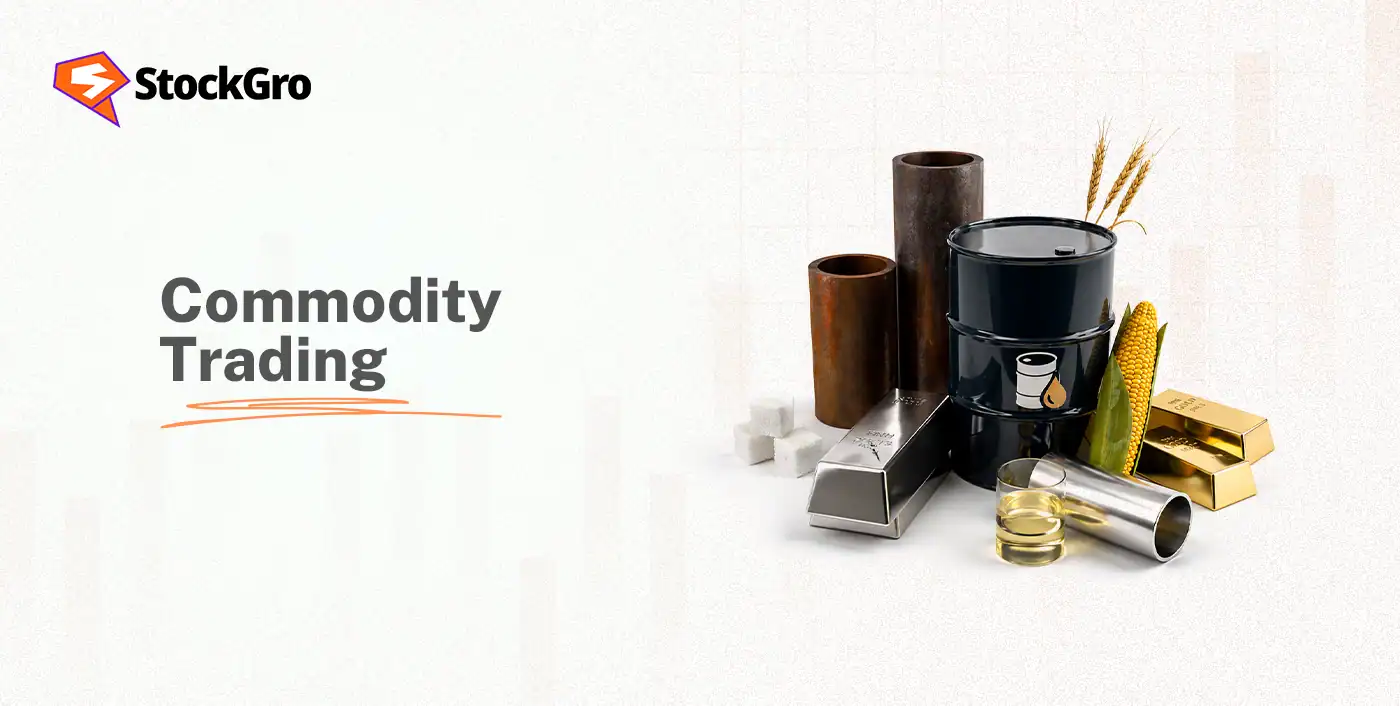
Commodities such as crude oil, gold, and agricultural goods are the raw materials that power the global economy. These assets are actively traded across markets worldwide, including online commodity trading platforms, forming the base of commodity market basics. Their prices respond to factors such as weather, geopolitics, and demand cycles, which is why traders watch them closely while applying commodity trading strategies to interpret trends and position themselves effectively.
Commodity trading meaning is built on this price movement. Traders/investors participate in these markets through instruments such as futures and options, where the focus is on anticipating how the price will change over time, instead of owning the physical commodity.
Types of Commodities You Can Trade
Understanding the types of commodities forms the base of commodity trading and sharpens your commodity market basics. These categories help to identify the best commodities to trade based on price behaviour and market trends.
- Energy:
Energy commodities include crude oil, natural gas, gasoline, and coal. These assets are the centre of how the commodity market works, as their prices respond promptly to geopolitical shifts, production cuts, and global demand cycles.
- Metals:
Metals are broadly divided into: precious metals, such as gold, silver, platinum, and industrial metals, such as copper, aluminium, and zinc. This segment reflects the commodity trading definition. Precious metals often act as defensive assets, while industrial metals track economic activity and infrastructure demand.
- Agricultural:
Agricultural commodities include wheat, corn, soybeans, coffee, cotton, and sugar. These are heavily influenced by weather patterns and harvest cycles, which makes them essential for understanding how commodity markets work in real time.
- Livestock:
Livestock commodities such as cattle and hogs are linked closely to consumption trends, feed costs, and supply conditions. Their pricing behaviour adds another layer to the overall commodity market.
How Does Commodity Trading Work?
Now that we have understood the types of commodities, let us see how commodity trading work in practice.
- Market structure: Commodity trading takes place on regulated exchanges where buyers and sellers transact through standardised contracts, ensuring transparency, liquidity, and efficient price discovery.
- Contracts: Traders primarily use futures and options contracts to participate, allowing them to trade on expected price movements without directly owning the physical commodity.
- Price drivers: The prices move based on supply-demand dynamics, along with factors like weather conditions, geopolitical events, currency movements, and economic data releases.
- Participation: The producers hedge against price risk, while traders speculate on price direction, together creating continuous activity and defining how commodity markets work in real-time.
Why Do Investors Trade Commodities?
Commodity trading provides a protective layer during economic slowdowns or global conflicts. Here are the main reasons why investors trade commodities:
- Inflation hedge: Commodity prices tend to increase during inflation, as they are core inputs in production, helping investors protect purchasing power when costs rise.
- Hedging against risk: The producers and consumers use futures and options contracts to manage uncertainty, secure selling prices or input costs and reduce the impact of adverse price movements.
- Speculation: The price fluctuations driven by demand shifts, weather changes, or geopolitical events allow traders to take positions and benefit from directional market moves.
- Leverage: Commodity derivatives allow traders to enter positions by paying a fraction of the contract value, amplifying both potential returns and associated risks.
Risks & Common Mistakes in Commodity Trading
Here are some common mistakes and risks that take place in commodity trading:
- Highly volatile: Commodity prices react strongly to global events, supply shocks, and demand shifts, which could lead to sudden and significant losses for unprepared traders.
- Overleveraging: Using too much capital relative to margin amplifies losses, especially when trades move against expectations in fast-moving market conditions.
- Lack of understanding: If you enter trades without understanding price drivers, contract specifications, or market behaviour, it could lead to poor decisions and unavoidable losses.
- Emotional trading: Decisions driven by fear or greed, rather than analysis, result in inconsistent trades and repeated mistakes over time.
Commodity Trading Strategies for Beginners
With risks in view, the next step is learning commodity trading strategies:
| Trend following: | This strategy involves identifying an upward or downward trend and trading along it, and holding positions until signs of trend weakness begin to appear. |
| Range trading: | When prices move within a fixed band, traders buy near support and sell near resistance, focusing on repeatable patterns during stable, low-volatility phases. |
| Breakout trading: | Trades are initiated when price breaks above resistance or below support, often supported by rising volume, indicating the start of a fresh directional move. |
| Hedging: | Participants take offsetting positions in futures or options to protect against adverse price movements in the physical market or existing holdings. |
| Arbitrage: | This strategy involves exploiting price gaps for the same commodity across exchanges or between cash and futures markets to capture low-risk gains. |
| Seasonal trading: | Traders analyse historical trends driven by weather, demand cycles, and seasonal factors to anticipate and plan trades around predictable movements. |
Learn More about Commodity Trading Strategies
How to Start Commodity Trading (Step-by-Step)?
Now that we have understood the strategies, let us move on to how to start commodity trading.
| Access point: | Commodity trading begins with a broker, who provides access to exchanges and enables execution, whether through full-service support or low-cost trading platforms. |
| Account setup: | Next, you are required to open a trading account by completing KYC formalities, including identity and income verification, before entering the commodity market. |
| Understand contract details: | Each commodity is traded in fixed quantities known as lot size in commodity trading, which defines the minimum volume and capital required per trade. |
| Capital deposit: | After that, you require an initial deposit, often a fraction of the contract value, along with maintaining margin levels as defined by the exchange. |
| Execution layer: | Finally, place the orders through exchanges or digital platforms, where pricing, liquidity, and counterparty matching define how commodity markets work in real time. |
How to Learn Commodity Trading Without Risk?
The early stage of trading is best spent building skill through observation and controlled, risk-free practice.
- Paper trading: Use demo accounts to simulate trades in real market conditions, helping you understand price movement and execution without financial risk.
- Market observation: Follow commodities like gold, crude oil, and agricultural products to study trends, reactions, and how price behaviour develops over time.
- Learn fundamentals: Understand demand-supply dynamics, global triggers, and contract specifications to develop a solid foundation before entering live trades.
- Backtesting strategies: Apply trading strategies to historical price data to evaluate performance, identify weaknesses, and refine your approach systematically.
Final Thoughts
Commodity trading stands at the intersection of price movement and real-world demand. It reflects how economies function beneath the surface, from energy consumption to agricultural cycles.
For beginners, the focus should remain on discipline and gradual learning. With the right approach, commodities can serve both as a trading avenue and a lens to understand broader market behaviour.
FAQs
Commodity trading can be safe for beginners when it is approached with proper understanding and risk control. They can start with small positions, study price drivers carefully, and avoid excessive leverage to reduce the chances of losses caused by market volatility.
You can trade commodities without prior experience, but it is not advisable to begin with real capital immediately. A beginner should first use demo accounts, study market behaviour, and understand contract details before entering live trades.
Commodity trading is the process of buying and selling raw materials such as gold, crude oil, or agricultural products with the aim of benefiting from price changes in the market. Traders focus on price direction rather than physical ownership.
The amount required to start commodity trading depends on the specific commodity and its lot size. A trader is required to deposit a margin, which is a percentage of the total contract value, allowing participation with a relatively lower initial investment.