
A SEBI study found that around 71% of individual intraday traders in the equity cash segment incurred net losses in FY23, showing how unforgiving this space can be for unprepared beginners. The issue isn’t the market; it’s the lack of a proper roadmap. Before you place a single buy-sell order, here’s a complete beginner’s guide on how to learn intraday trading the right way from day one.
What Is Intraday Trading?
Intraday trading, often referred to as day trading, is the practice of buying and selling financial instruments, such as stocks, within the same trading day. The objective is to capitalise on small price movements occurring throughout the session. Positions are closed before the market closes to ensure no holdings are carried over to the next day, thereby avoiding overnight risks.
Who Should Learn Intraday Trading?
Intraday trading for beginners is a demanding activity suitable for specific individuals who can align their lifestyle and skills with market requirements, as follows:
- Individuals with time availability: Traders must be present during market hours (9:15 AM to 3:30 PM in India) to monitor charts and execute orders instantly, as missing a move by minutes can alter outcomes.
- Those with strong emotional control: Success requires the ability to remain calm under pressure, managing fear and greed to avoid impulsive decisions during rapid market movements.
- Analytical thinkers: People who enjoy analysing data, reading charts, and interpreting technical indicators often find themselves better equipped to understand how to learn intraday trading effectively.
- Risk-tolerant personalities: Candidates must be comfortable with the possibility of losing capital on a daily basis and have the financial stability to withstand short-term drawdowns without affecting their livelihood.
- Quick decision makers: The fast-paced nature of intraday trading demands the capacity to process information and act immediately without hesitation or second-guessing.
Step-by-Step Guide to Learn Intraday Trading
The main steps in building a solid trading foundation in how to learn intraday trading include:
- Understand Fundamentals
- Know Market Trends & Charts
- Choose Right Tools and Platforms
- Learn Technical Indicators
- Chose Best Time Frame
- Learn Risk Management
- Practise Using Paper Trading
- Understand Fundamentals
Beginners must first grasp the core concepts of the stock market, including the difference between intraday (MIS) and delivery (CNC) orders. It is essential to understand how supply and demand drive price changes and the significance of market liquidity. Learning about order types like market, limit, and stop-loss orders is fundamental to executing trades correctly and avoiding costly execution errors.
- Know Market Trends & Charts
Identifying the general direction of the market is vital. Trends can be upward (bullish), downward (bearish), or sideways (consolidation). Beginners must learn to read candlestick charts, which provide visual representations of price movements over specific periods, helping to identify patterns that signal potential future movements.
- Choose Right Tools and Platforms
Efficiency in intraday trading relies heavily on the technology used to access data and analyse trends. Traders use AI-driven research platforms like Stoxo, which functions as an automated assistant to generate stock ideas, perform in-depth market analysis, and help plan trading goals. Seeking assistance such AI tools alongside a reliable brokerage platform ensures that traders can process information and execute decisions quickly during live market hours.
- Learn Technical Indicators
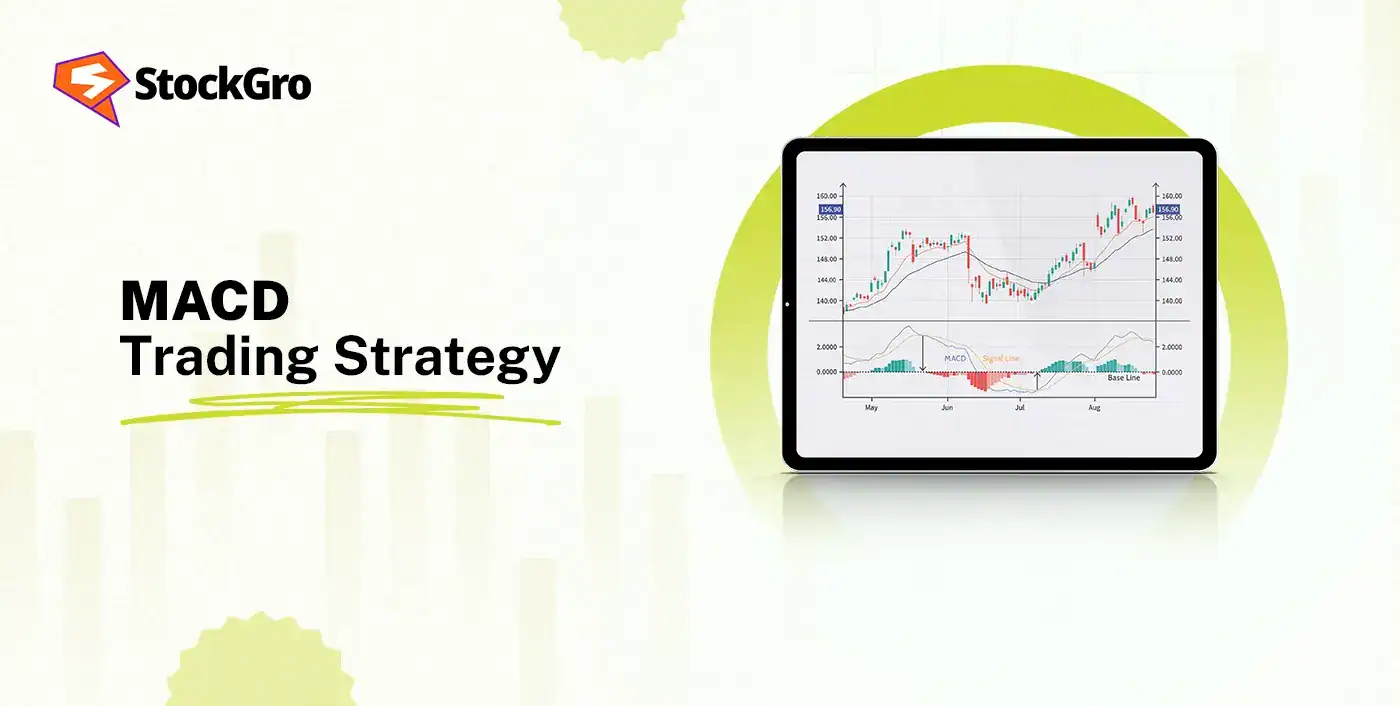
Technical analysis is the backbone of intraday strategies. Traders use mathematical calculations based on historic price, volume, or open interest information to forecast financial market direction. Common indicators include Moving Averages (to smooth out price data), the Relative Strength Index (RSI) to ascertain overbought or oversold conditions, and MACD (Moving Average Convergence Divergence) to identify momentum changes.
- Chose Best Time Frame
Traders must select the best time frame for intraday trading that suits their trading style, as different intervals reveal different market perspectives. Scalpers may use 1-minute or 5-minute charts for quick trades, while momentum traders might prefer 15-minute or 1-hour charts to capture larger moves. Sticking to a consistent time frame helps in maintaining clarity and avoiding the confusion of conflicting signals from multiple chart periods.
- Learn Risk Management
Capital protection is more important than profit generation for beginners. Intraday risk management involves setting a strict stop-loss, a predetermined price at which a losing trade is automatically sold to prevent further loss. Position sizing is also critical; it ensures that a single bad trade does not wipe out a significant portion of the trading capital.
- Practise Using Paper Trading
Before risking real money, beginners are advised to simulate trading in a risk-free environment. Paper trading allows one to apply strategies, test indicators, and get comfortable with the trading interface without the financial stress, helping to build confidence and refine techniques.
How to Select Stocks for Intraday
Choosing the right stocks is critical for intraday success, as traders need assets that offer sufficient movement and liquidity within a single day, which include:
- High liquidity stocks: Traders should select stocks with high trading volumes to ensure they can enter and exit positions easily without significantly impacting the price.
- Volatile scripts: Stocks that exhibit adequate price fluctuation provide the necessary range for booking profits, whereas stable stocks offer few opportunities for day traders.
- Sectoral correlation: It is often effective to pick stocks that are moving in sync with their respective sector indices or the broader market trend for higher probability trades.
- News-driven stocks: Companies in the news due to earnings, announcements, or global events often see increased activity, making them prime candidates for intraday setups.
- Technical breakout candidates: Stocks that are breaking key support or resistance levels on the charts often witness sharp moves that are ideal for capturing quick intraday gains.
Psychology Required for Successful Intraday Trading
Intraday trading psychology is often the determining factor between profitable and unprofitable traders, as mental discipline controls execution, which includes:
- Emotional stability: Traders must learn to control emotions like fear of missing out (FOMO) and greed to prevent irrational decisions that deviate from their plan.
- Discipline to follow rules: Success comes from strictly adhering to entry and exit rules, regardless of how the market “feels” or what external noise suggests.
- Resilience in loss: Accepting that losses are a part of the business allows traders to move on to the next trade without trying to seek revenge on the market.
- Patience: Waiting for the perfect setup rather than chasing every minor price movement is a hallmark of a disciplined and successful intraday trader.
- Objectivity: Maintaining a neutral mindset helps in analysing the market without bias, preventing traders from holding onto losing positions due to hope or ego
How Much Capital You Need to Start Intraday
The amount of capital required to start intraday trading varies based on the trader’s goals and the broker’s leverage, as follows:
- No fixed minimum: Technically, one can start with a very small amount, such as ₹5,000, to understand the mechanics of buying and selling in the live market.
- Recommended learning capital: A capital of around ₹50,000 is often suggested to allow for proper risk management and position sizing while learning.
- Leverage considerations: Brokers provide margin (leverage) for intraday trades, allowing traders to buy shares worth 5 times or more of their actual cash balance.
- Risk buffer: The initial capital should include a buffer for inevitable learning losses, ensuring that a string of bad trades does not deplete the entire account.
- Affordable loss: Traders should only deploy funds they can afford to lose, as intraday trading carries a high risk of capital erosion for beginners.
Live Trading With Small Capital
Starting with small capital base allows beginners to experience real market sentiment without risking financial ruin, involving steps such as:
- Focus on process: The primary goal when trading small is to refine execution and discipline rather than chasing significant monetary profits.
- Testing strategies: Small capital allows traders to test their understanding of how to learn intraday trading strategies in real-time market conditions.
- Strict stop losses: Even with small amounts, using strict stop-losses builds the habit of cutting losses early, which is essential for scaling up later.
- Trade selection: Traders with limited capital should focus on lower-priced liquid stocks to ensure they can buy enough quantity to practice position sizing.
- Emotional conditioning: Experiencing real profit and loss fluctuations, however small, helps in building the emotional resilience required for larger capital trading.
Intraday Brokerage & Charges You Must Know
Traders must be aware of the various costs associated with intraday trading to calculate their true break-even points, which include:
- Brokerage fees: Brokers charge a fee for every executed order, which can be a flat rate per trade or a percentage of the turnover.
- Securities transaction tax (STT): A tax levied on the sell side of intraday equity transactions at the rate of 0.025% of the sell-side turnover, which is lower than the 0.1% charged on both sides for delivery trades.
- Exchange transaction charges: The stock exchanges (NSE/BSE) charge a transaction fee on the total value of the trade; this is currently around 0.00297% of turnover for NSE equity and about 0.00375% for BSE equity, applied on both buy and sell sides.
- GST: Goods and Services Tax is applied at 18% on the brokerage plus exchange transaction and other statutory charges (not on the entire trade value), adding to the overall cost of the trade.
- Stamp duty: A state-levied tax (now largely uniform nationally) applied on the buy side of the transaction for intraday equity at 0.003% or ₹300 per crore of buy-side turnover, though actual collection may reflect minor broker or platform rounding differences.
Taxes on Intraday Trading
Income tax on intraday trading in India is governed by the Income‑tax Act, 1961, and is assessed as of the prevailing law in 2025.
- Under Section 43(5), a transaction in stocks or shares settled otherwise than by actual delivery is a “speculative transaction”; intraday trades fall in this definition and are therefore treated as speculative business.
- Income from intraday trading is treated as business income and is taxed under the head “Profits and gains of business or profession” at the taxpayer’s normal slab rate, not at special capital‑gains rates.
- Filing is done through the Income Tax Department’s e‑filing portal using the appropriate business‑income ITR form (e.g., ITR‑3), with books and audit requirements governed by Sections 44AA and 44AB where thresholds are crossed.
- A tax audit is mandatory if the turnover exceeds ₹10 Crores (for digital transactions) or if the trader declares profit less than 6% of turnover.
- Speculative losses offset only against speculative profits same year; carry forward up to 4 assessment years, usable only against future speculative gains. No set-off against salary or other income.
- A tax audit is mandatory if turnover exceeds ₹3 crore generally (₹1 crore for cash-dominant businesses), or if declared profit is less than 6% of turnover (digital receipts) or 8% (cash receipts); Section 44AD presumptive scheme deems profits at these rates if eligible.
- Advance tax on intraday-trading income must be paid in four instalments during the year if your total tax liability for that year exceeds ₹10,000 (15% by 15 June, 45% by 15 September, 75% by 15 December and 100% by 15 March).
- For intraday trading in cryptocurrencies and other Virtual Digital Assets (VDAs) such as non-fungible tokens (NFTs), TDS is deductible under Section 194S on qualifying transactions. It requires TDS at 1% (or a lower rate if notified) when the payment for transfer of such VDAs crosses the prescribed thresholds.
Best Platforms to Learn Intraday
Aspiring traders can leverage a variety of educational resources and digital environments designed to bridge the gap between theory and practice, which include:
- Social investment & expert analytics platforms: These applications merge virtual trading with professional guidance, such as StockGro, which allows users to practice in real-time markets while accessing insights and portfolios from SEBI-registered experts.
- Paper trading simulators: Standard virtual trading applications mimic live market conditions, allowing users to practice execution and test strategies using fake money to build confidence without financial risk.
- Financial news portals: Dedicated websites provide real-time updates, economic calendars, and global market news that are essential for understanding daily price volatility.
- Online course providers: Structured learning platforms host comprehensive modules and certification programs created by market experts to teach trading systematically.
Common Mistakes Beginners Should Avoid
New traders often fall into traps that can lead to significant capital loss if not identified early, which include these specific intraday trading mistakes to avoid:
- Overtrading: Executing too many trades in a single day often leads to high brokerage costs and emotional burnout without guaranteeing profits.
- Ignoring stop-losses: Trading without a stop-loss exposes the capital to unlimited risk, as a single adverse market move can wipe out gains from multiple days.
- Revenge trading: Trying to recover losses immediately by increasing position size or taking impulsive trades usually results in further losses.
- Lack of planning: Entering the market without a predefined plan or strategy forces traders to rely on guesswork and emotions.
- Averaging losing positions: Adding more money to a losing trade in the hope of a reversal is a dangerous practice that often leads to catastrophic losses.
Intraday Trading Checklist
A daily checklist ensures that traders remain disciplined and only enter trades that meet their specific criteria, which include:
- Global market check: Reviewing global indices and news helps in understanding the broader market sentiment before the domestic market opens.
- Sector strength analysis: Identifying which sectors are strong or weak helps in selecting stocks that are likely to move in the desired direction.
- Trend confirmation: ensuring the stock is trading above or below the main technical levels like the VWAP or moving averages confirms the intraday trend.
- Risk-reward ratio: Verifying that the potential profit is at least 1.5 to 2 times the risk involved ensures the trade is mathematically viable.
- Event calendar: Checking for any scheduled corporate announcements or economic data releases prevents getting caught in unexpected volatility.
Conclusion
Success in the market relies on patience and steady practice rather than shortcuts. As you figure out how to learn intraday trading, focus on protecting your capital and improving your skills daily. Treat this as a long-term process where discipline is more important than speed.
FAQs
A beginner can learn intraday trading if they have time during market hours, emotional control, and willingness to follow rules. The guide emphasises treating it like a skill-based business with a structured roadmap, not a quick-profit shortcut.
It generally takes a few months to understand basics like orders, charts, and indicators, and at least a year to build consistency. The blog frames learning as gradual: theory, paper trading, small real trades with strict risk control.
For most beginners, intraday trading is not initially profitable because they overtrade, skip stop-losses, and trade emotionally. The blog highlights that high loss rates come from poor preparation, so early focus should be on learning and capital protection, not big profits.
The suggested path is: learn market basics and
order types, study trends and candlesticks, add key indicators (moving averages, RSI, MACD), choose a time frame, define risk rules, then practise via paper trading before trading small amounts with a written plan.
A formal course is helpful but not mandatory. The blog recommends structured learning from quality resources, broker platforms, and simulators, combined with a clear process. Random tips and unplanned trading are discouraged more strongly than the absence of a paid course.
Yes, you can start with small capital if it is money you can afford to lose. The blog recommends using it mainly to practise execution, position sizing, and emotional control, keeping risk per trade tiny and accepting early losses as tuition.
Before going live, practise paper trading strategies, reading candlestick charts, using indicators, and placing simulated orders. The guide also suggests rehearsing stop-loss and target setting, maintaining a trading journal, and running a daily checklist until these habits feel automatic.