
Summary
Equity funds invest primarily in stocks and focus on long-term wealth creation, while debt funds invest in fixed-income securities and prioritise capital preservation and stable returns. Equity funds generally carry higher risk and return potential, whereas debt funds are comparatively less volatile. Choosing between them depends on an investor’s goals, risk tolerance, and investment horizon.
What is an equity fund?
An equity fund is a type of mutual fund that primarily invests in shares of publicly listed companies. The main objective of these funds is to generate long-term capital appreciation by participating in the growth of businesses across sectors and industries. Since equity funds are linked to stock market performance, their returns may fluctuate in the short term, but they have historically delivered inflation-beating returns over longer investment horizons.
An equity mutual fund pools money from multiple investors and allocates it across equities based on the fund’s investment objective. Fund managers actively analyse company fundamentals, industry trends, economic indicators, and valuation metrics before selecting stocks for the portfolio.
There are different types of equity funds available in the market, including large-cap funds, mid-cap funds, small-cap funds, ELSS funds, sectoral funds, thematic funds, flexi-cap funds, and index funds. Investors can choose among these based on their risk appetite, financial goals, and investment horizon.
Equity funds are generally considered suitable for investors seeking long-term wealth creation, retirement planning, or achieving major financial goals such as buying a home or funding education.
Features
- Equity-focused investments: Equity funds invest a majority of their corpus in stocks and equity-related instruments.
- Higher return potential:These funds aim to generate long-term wealth through capital appreciation.
- Market-linked performance: Returns depend on stock market movements, company earnings, and economic conditions.
- Diversified portfolio: Investments are spread across multiple companies and sectors to reduce concentration risk.
- Professional fund management: Fund managers actively monitor and rebalance the portfolio to optimise returns.
- Liquidity advantage:Open-ended equity funds allow investors to buy or redeem units on any business day.
- SIP investment option: Investors can start investing with relatively small amounts through Systematic Investment Plans.
- Long-term investment suitability: Best suited for investors with a horizon of 5 years or more.
Benefits and risks
Benefits
- Long-term wealth creation: Equity funds have historically outperformed many traditional investment options over long periods.
- Inflation-beating returns: Equity investments have the potential to generate returns higher than inflation.
- Compounding advantage: Long-term investing allows wealth to grow exponentially through reinvested gains.
- Diversification benefits: Exposure to multiple sectors and companies reduces stock-specific risk.
- Professional expertise: Investors benefit from the research and portfolio management expertise of fund managers.
- Tax-saving opportunities: ELSS funds offer deductions under Section 80C of the Income Tax Act.
Risks
- Market volatility:Equity fund returns may fluctuate sharply during market corrections or economic uncertainty.
- Higher risk exposure: Equity funds carry relatively higher risk compared to debt-oriented investments.
- Short-term losses: Investors may face temporary declines in portfolio value during bearish phases.
- Sectoral concentration risk: Thematic and sectoral funds can underperform if the chosen sector faces challenges.
- Economic and geopolitical risks: Global events, inflation, interest rate hikes, and policy changes may impact returns.
How Equity Funds Work
Equity funds collect money from investors and invest it in a diversified basket of stocks. The fund manager selects companies after analysing factors such as revenue growth, profitability, debt levels, management quality, and future growth potential.
The value of the fund is represented through NAV (Net Asset Value), which changes daily based on the market value of underlying securities.
The NAV formula is:

Returns are generated mainly through:
- Capital appreciation from rising stock prices
- Dividend income received from companies
The return calculation formula is:

For example, if the NAV rises from ₹50 to ₹65:
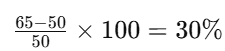
This means the investor earned a 30% return before taxes and expense ratios.
What is a debt fund?
A debt fund is a mutual fund that primarily invests in fixed-income securities such as government bonds, treasury bills, corporate bonds, commercial papers, certificates of deposit, and money market instruments. The primary objective of debt funds is to generate relatively stable returns while preserving capital.
For investors wondering what is a debt fund, it is essentially an investment vehicle designed for lower volatility and predictable income generation compared to equity-oriented investments.
Debt funds are influenced mainly by interest rate movements, bond yields, credit quality, and economic conditions rather than stock market fluctuations. These funds are generally preferred by conservative investors, retirees, or individuals with short-to-medium-term financial goals.
Debt funds are commonly used for emergency funds, parking surplus cash, short-term investments, and balancing portfolio risk during uncertain market conditions.
Features
- Fixed-income investments: Debt funds invest in bonds and interest-bearing securities.
- Lower volatility: They generally experience less fluctuation compared to equity funds.
- Regular income generation: Interest earned from debt instruments contributes to overall returns.
- Different fund categories: Includes liquid funds, overnight funds, gilt funds, dynamic bond funds, and corporate bond funds.
- Interest rate sensitivity: Bond prices are affected by RBI policy decisions and market interest rates.
- Short-to-medium investment horizon: Suitable for investors seeking relatively stable returns over shorter durations.
- High liquidity: Many debt funds offer quick redemption facilities.
Benefits and risks
Benefits
- Capital protection: Debt funds are generally less risky and more stable than equity funds.
- Stable returns: They aim to provide relatively predictable income over time.
- Portfolio diversification: Debt funds help reduce overall portfolio volatility.
- Suitable during uncertain markets: Investors often shift toward debt funds during market downturns.
- Professional management: Fund managers actively manage bond duration and credit quality.
- Better liquidity compared to traditional deposits: Investors can redeem units more flexibly.
Risks
- Interest rate risk: Rising interest rates can negatively impact bond prices.
- Credit risk: Bond issuers may default on interest or principal payments.
- Inflation risk: Returns may not always outperform inflation.
- Lower growth potential: Debt funds usually generate lower long-term returns than equity funds.
- Liquidity risk: Certain lower-rated bonds may become difficult to sell during stressed markets.
How Debt Funds Work
Debt funds earn returns primarily through:
- Interest income from fixed-income securities
- Capital gains from changes in bond prices
Bond prices and interest rates have an inverse relationship:
Bond Price∝1Interest Rate\text{Bond Price} \propto \frac{1}{\text{Interest Rate}}Bond Price∝Interest Rate1
When interest rates decline, existing bonds with higher coupon rates become more valuable, increasing their market price.
Debt fund performance depends on:
- Interest rate trends
- Bond maturity duration
- Credit quality of issuers
- Economic conditions
Equity fund vs debt fund
| Basis | Equity Funds | Debt Funds |
| Investment type | Stocks and equities | Bonds and fixed-income securities |
| Risk level | High | Low to moderate |
| Return potential | Higher in the long term | Stable but comparatively lower |
| Volatility | High | Lower |
| Investment horizon | 5 years or more | Few months to 3 years |
| Ideal for | Wealth creation | Capital preservation |
| Returns depend on | Stock market performance | Interest rates and bond yields |
| Inflation protection | Better potential | Limited |
| Suitable investors | Aggressive investors | Conservative investors |
Many beginners often ask whether mutual fund is good or bad. The answer depends on factors such as investment goals, risk appetite, fund selection, and investment horizon. Mutual funds can be effective wealth-building tools when selected and managed appropriately.
Similarly, investors frequently ask is it safe to invest in mutual funds. Mutual funds are regulated by SEBI, but market-linked funds still carry investment risks. Diversification and long-term investing help reduce these risks significantly.
Which one should you choose?
The choice between equity funds and debt funds depends on several personal financial factors such as:
| Factors | Choose Equity Funds If | Choose Debt Funds If |
| Investment goal | You want long-term wealth creation | You want capital preservation and stability |
| Risk appetite | You can tolerate higher market volatility | You prefer lower-risk investments |
| Investment horizon | Your horizon exceeds 5 years | Your horizon is short to medium term |
| Return expectation | You aim for higher, inflation-beating returns | You prefer relatively stable and predictable returns |
| Market fluctuations | You are comfortable with temporary losses | You want lower portfolio volatility |
| Income stability | You have stable income and can stay invested during downturns | You may need safer and more liquid investments |
| Liquidity needs | You do not require immediate access to funds | You may require liquidity for upcoming expenses |
| Suitable investors | Aggressive and long-term investors | Conservative and risk-averse investors |
Balanced portfolio approach
Many investors combine equity and debt funds to create a diversified portfolio balancing growth and stability.
A commonly used asset allocation formula is:
Equity Allocation=100−Investor Age\text{Equity Allocation} = 100 – \text{Investor Age}Equity Allocation=100−Investor Age
For example, a 35-year-old investor may allocate approximately 65% toward equities and 35% toward debt instruments.
Investors who are just starting often wonder what is the mutual fund minimum investment amount. Most mutual funds allow SIP investments starting from as low as ₹100 to ₹500, making them accessible to a wide range of investors.
Bottomline
Equity funds and debt funds serve different financial purposes within an investment portfolio. Equity funds focus on long-term capital appreciation and wealth creation, while debt funds prioritise stability, capital preservation, and regular income generation.
There is no universally superior option between the two. The ideal choice depends on your financial goals, investment horizon, and risk tolerance. Investors seeking balanced growth and reduced volatility often combine both equity and debt funds to build a diversified portfolio capable of performing across varying market conditions.
FAQs
Debt funds are generally safer because they invest in fixed-income securities and experience lower volatility than equity funds.
Yes, beginners can invest in equity funds through SIPs. Starting with diversified large-cap or index funds may help reduce risk.
Yes, debt funds are generally more stable during market downturns because they are less exposed to stock market volatility.
Equity funds generally provide higher long-term return potential, while debt funds offer relatively stable but lower returns.
Yes, combining both can help create a diversified portfolio with balanced risk, stability, and growth potential.
Equity funds are generally suitable for a minimum investment horizon of 5 years to manage volatility and maximise compounding benefits.