Summary
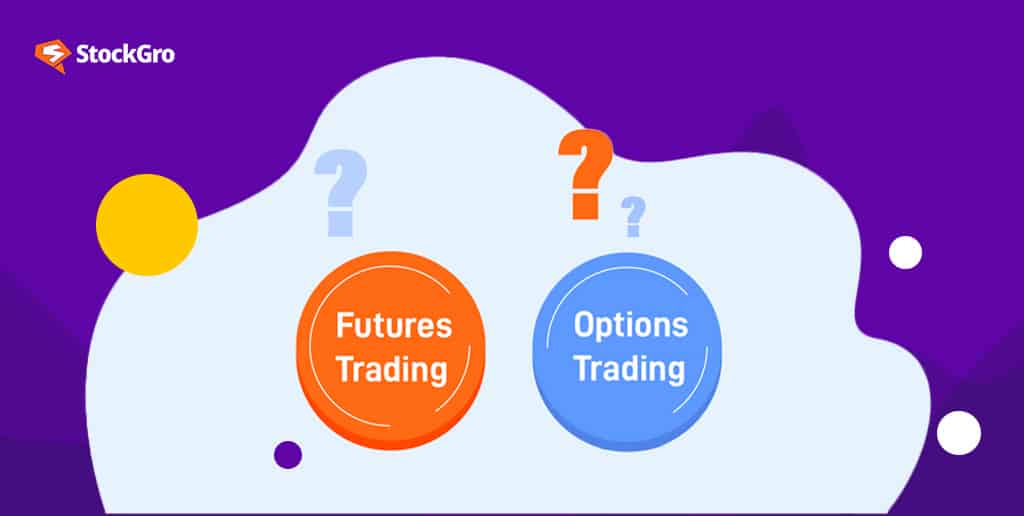
Futures and options are derivative contracts based on underlying assets like stocks, indices, or commodities.
Futures obligate buying/selling at a future date, while options give the right but not the obligation to trade.
They are used for hedging, speculation, and managing market risk.
Futures vs Options: Key Differences and Which One Suits Your Risk Appetite?
| Feature | Futures | Options | Suitable For |
| Obligation | Must execute the contract at expiry | Buyer has the right, not the obligation | Traders with high risk tolerance vs risk-averse traders |
| Risk | Unlimited for both parties | Limited for buyer; seller has high risk | Experienced traders vs beginners |
| Leverage | High, requires margin | Moderate, premium paid upfront | Aggressive trading vs hedging |
| Cost | No premium, only margin required | Premium paid by buyer | Traders with available capital |
| Profit Potential | Unlimited | Limited for buyer, potentially unlimited for seller | Speculators vs hedgers |
| Complexity | Requires understanding of margins & MTM | Requires understanding of Greeks, implied volatility | Experienced vs semi-beginners |
| Hedging | Direct, strong exposure to underlying | Flexible hedging options | Risk management for portfolios |
What Are Futures Contracts?
Futures contracts are standardized legal agreements to buy or sell a specific quantity of an underlying asset at a predetermined price on a specified future date. These contracts are exchange-traded, meaning they are regulated, transparent, and standardized in terms of size, expiry, and settlement procedures. Investors and traders use futures-trading to hedge against price fluctuations in assets like stocks, indices, commodities, or currencies, as well as for speculative purposes.
Futures allow both long and short positions, meaning traders can profit from both rising and falling markets. For instance, a trader who expects the NIFTY 50 index to rise can buy a futures contract, and if the index increases, the trader can sell the contract at a higher price to capture profits. The leverage inherent in futures amplifies both potential gains and losses, making strict risk management essential. Daily mark-to-market (MTM) settlement ensures that profits and losses are reflected in real time, which increases transparency but also requires careful margin monitoring.
How Futures Trading Works
Futures trading involves buying or selling a standardized contract for an underlying asset at a predetermined price and date. Investors can take long or short positions depending on market expectations. The leverage provided allows traders to control large positions with a relatively small initial margin, which is adjusted daily through mark-to-market (MTM) settlements. This ensures profits and losses are updated in real time, requiring active monitoring.
For example, a trader buys NIFTY futures at 18,000 and the index moves to 18,200. The daily MTM settlement credits the trader’s margin account with gains immediately. Conversely, a fall in price results in a margin debit. Because of this, futures-trading is particularly sensitive to market volatility, and traders often implement strict how-to-calculate-stop-loss strategies to manage risk effectively.
What Are Options Contracts?
Options contracts give the buyer the right, but not the obligation, to buy (call option) or sell (put option) an underlying asset at a predetermined strike price on or before a specified expiration date. Unlike futures, the buyer’s risk is limited to the premium paid for the option, while the seller may face significant potential losses. Options can be used for hedging, speculation, or income generation, with strategies ranging from simple calls and puts to more advanced options-trading-strategies like spreads and straddles.
For example, a trader expecting NIFTY 50 to rise may purchase a call option at a strike price of 18,000. If the index rises above this price, the trader can either exercise the option or sell it for a profit, while if the index falls, the maximum loss is limited to the premium paid. Options also allow traders to implement complex strategies, like intraday options trading strategies, to profit from volatility, time decay, or directional movements, making them versatile instruments for managing market exposure.
How Options Trading Works
Options trading gives the buyer the right, but not the obligation, to buy (call option) or sell (put option) the underlying asset at a specified strike price within a set timeframe. The buyer pays a premium, which is the maximum possible loss, while the seller takes on potentially unlimited risk if the market moves against them. Options can be used for speculation, hedging, or income generation through strategies like covered calls or protective puts.
For instance, a trader purchases a NIFTY call option with a strike price of 18,000, paying a premium of ₹100 per unit. If the index rises to 18,500, the option gains intrinsic value, and the trader may sell it for a profit without ever exercising it. Conversely, if the index falls below the strike price, the trader’s loss is limited to the premium paid. This flexibility makes options-trading-strategies ideal for hedging and managing risk in volatile markets.
Futures vs Options: Key Differences
| Feature | Futures | Options | Key Considerations |
| Contract Obligation | Binding; must buy/sell at expiry | Buyer has right, not obligation | Futures are binding, options provide flexibility |
| Risk Profile | Unlimited loss potential | Limited for buyer; high for seller | Options are safer for beginners, futures require high risk tolerance |
| Upfront Cost | Only margin required | Premium paid by buyer | Options require less initial capital for exposure |
| Profit Potential | Symmetrical; unlimited in both directions | Asymmetrical; limited for buyer, high for seller | Options allow hedging and strategic plays |
| Leverage | High leverage | Moderate leverage | Futures can amplify gains and losses |
| Hedging Usage | Straightforward hedging | Flexible hedging with protective strategies | Options better for portfolio protection |
| Complexity | Simple structure but risky | Requires understanding Greeks, volatility | Futures easier conceptually; options more versatile |
| Market Suitability | High liquidity and volatility required | Can trade liquid and illiquid assets | Choose based on experience, capital, and risk appetite |
Margin and Advance Payment in Futures and Options
In futures-trading, the trader is required to deposit an initial margin, which is a fraction of the contract value. This margin is adjusted daily according to MTM gains and losses. For instance, if the margin requirement is 10% of a ₹10 lakh contract, the trader must deposit ₹1 lakh upfront, with subsequent daily adjustments. This system ensures the counterparty risk is managed and positions are adequately collateralized.
In options-trading, the buyer pays a premium upfront, representing the maximum possible loss. Sellers, however, must maintain a margin to cover potential obligations if the option is exercised. The margin depends on volatility, strike price, and underlying asset price. This distinction makes futures more capital-intensive with ongoing adjustments, while options offer defined risk for buyers with less daily monitoring requirements.
How Contract Execution Works in Futures and Options
For futures, contract execution is automatic at expiration. Depending on the contract, settlement may be physical (delivery of asset) or cash-settled. Traders can close positions before expiry by entering an offsetting trade, which eliminates the obligation. Daily MTM ensures that profit and loss are accounted for continuously, reducing settlement risk but increasing margin calls.
For options, the execution is discretionary for the buyer. A call option allows the buyer to purchase the underlying, while a put allows selling. Most traders close the position before expiration to realize gains without exercising. Option sellers, however, are obligated if the buyer exercises, making options-trading more flexible but requiring careful risk assessment.
Similarities Between Futures and Options
| Similarity | Description |
| Derivative Nature | Both derive value from underlying assets such as stocks, indices, or commodities. |
| Exchange-Traded | Standardized contracts traded on regulated exchanges. |
| Hedging | Both instruments can be used to hedge against price movements. |
| Speculation | Traders can profit from price predictions in both markets. |
| Market Transparency | Prices, volumes, and settlement rules are publicly available. |
Advantages and Disadvantages of Futures
Advantages of Futures:
- High Leverage: Traders can control large positions with a relatively small margin, amplifying potential returns.
- Liquidity: Futures are highly liquid on major exchanges, allowing for smooth entry and exit.
- Hedging Tool: Ideal for managing risk against price fluctuations in stocks, indices, or commodities.
- Transparency: Prices, contract specifications, and margin requirements are standardized and publicly available.
- Profit from Both Directions: Long and short positions enable traders to profit in both bullish and bearish markets.
- Regulated Framework: Futures trading is monitored by exchanges and regulators, reducing counterparty risk.
Disadvantages of Futures:
- High Risk: Leverage amplifies losses, potentially exceeding the initial margin.
- Daily MTM Settlements: Traders must maintain sufficient funds to meet daily losses, which can strain liquidity.
- Complexity: Requires understanding of margin, expiry, and contract specifications.
- No Flexibility for Early Exit: While positions can be offset, actual settlement obligations are binding.
- Price Volatility: Extreme market swings can trigger margin calls or forced liquidation.
- Potential for Overexposure: Traders may unintentionally take on positions larger than their capital permits.
Advantages and Disadvantages of Options
Advantages of Options:
- Limited Risk for Buyers: Maximum loss is restricted to the premium paid.
- Flexibility: Can be used for hedging, speculation, or income generation.
- Profit Potential: Calls and puts allow profit in both rising and falling markets.
- Strategy Versatility: Options can be combined into spreads, straddles, and collars for specific objectives.
- Leverage: Options provide exposure to the underlying at a fraction of the cost.
- Portfolio Protection: Protective puts allow investors to hedge their stock holdings against downside risk.
Disadvantages of Options:
- Premium Cost: Buyers must pay an upfront premium, which can reduce net profitability.
- Complexity: Requires knowledge of Greeks, volatility, and time decay for effective trading.
- Risk for Sellers: Option writers (sellers) can face unlimited losses if the market moves against them.
- Time Sensitivity: Options lose value as they approach expiry due to time decay.
- Liquidity Issues: Certain strikes or expiration dates may have low trading volumes.
- Over-Reliance on Directional Bets: Speculative traders may focus solely on market direction, ignoring hedging opportunities.
Which Is Safer: Futures or Options?
Options are generally considered safer for buyers because the maximum loss is limited to the premium paid, unlike futures where leverage can amplify losses beyond the initial margin. For risk-averse traders or beginners, options allow controlled exposure to underlying markets, making them suitable for hedging and cautious speculation. Futures, on the other hand, are ideal for experienced traders seeking high leverage and are comfortable with daily margin adjustments. Safety also depends on strategy selection, market volatility, and risk management practices; no derivative is inherently risk-free.
Is Trading in Futures and Options Always Profitable?
No, trading in futures-trading and options-trading is not guaranteed to be profitable. Both instruments carry inherent market risk, leverage, and volatility exposure. Profits depend on correct market predictions, timing, position sizing, and disciplined risk management. Misjudgments, ignoring how-to-calculate-stop-loss strategies, or over-leveraging can result in substantial losses. However, with proper education, planning, and types of stock market trading strategies, traders can improve the probability of consistent profits over time.
Conclusion
Futures and options are powerful tools for investors and traders but differ in risk profile, obligation, and flexibility. Beginners should start with options to manage risk while learning market dynamics. Strategic use of intraday options trading strategies and proper how-to-calculate-stop-loss techniques enhances trading efficiency and portfolio safety.