Summary
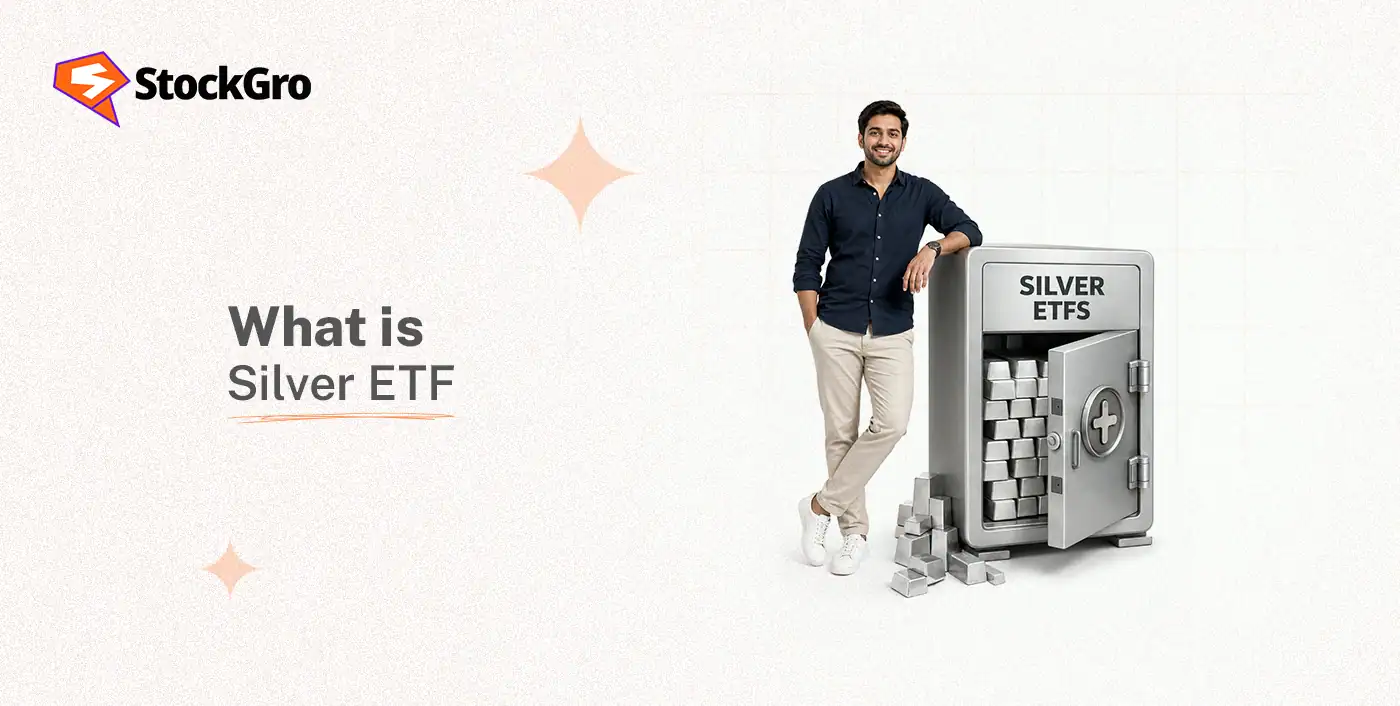
A Silver ETF is an exchange-traded mutual fund scheme that invests mainly in physical silver and permitted silver-related instruments to track the domestic price of physical silver.
Investors can gain exposure to silver without purchasing, checking or storing physical bars and coins.
Silver ETF units require a demat and trading account and can be bought or sold during market hours.
Returns depend on silver prices and may also be affected by tracking error, liquidity, currency movements and investment costs.
Investors should compare expense ratios, tracking performance, trading activity and scheme disclosures before choosing a Silver ETF.
What Is a Silver ETF?
A Silver ETF is an exchange-traded mutual fund scheme that invests mainly in physical silver and permitted silver-related instruments. It aims to track the domestic price of physical silver, subject to tracking error.
Instead of buying and storing silver bars or coins, investors hold ETF units electronically in a demat account. These units can be bought and sold on a recognised stock exchange during trading hours.
Silver ETFs generally invest at least 95% of their assets in silver and permitted silver-related instruments. Physical silver held by the scheme must also meet the prescribed purity and quality standards.
How Does a Silver ETF Work?
A Silver ETF pools investor money and maintains a portfolio primarily comprising physical silver and permitted silver-related instruments. The scheme calculates its NAV based on the value of its assets after accounting for liabilities and expenses.
After the ETF is listed, retail investors generally buy and sell its units on the stock exchange. Market makers help provide liquidity, while creation and redemption of large blocks of units directly with the fund are primarily used by market makers and eligible large investors.
The ETF’s exchange price may differ slightly from its NAV because of demand, supply, trading volume and the bid-ask spread. Its returns may also differ from the movement in the silver benchmark because of expenses, cash holdings and other operational factors. This difference is reflected through tracking difference and tracking error.
Benefits of Investing in Silver ETFs
Silver ETFs offer a way to include silver in a portfolio without dealing with the practical concerns attached to physical ownership.
No physical storage
Investors hold electronic units rather than bars or coins. There is no silver to store at home or place in a locker.
No personal purity check
A buyer of physical silver may need to confirm its purity before making a purchase. A Silver ETF removes the need to evaluate individual pieces personally.
Exchange-based transactions
Units can be bought or sold through a trading account while the stock exchange is open. Investors do not need to search for a bullion dealer whenever they want to change their holding.
Visible market prices
The trading price is available during market hours. Investors can check the prevailing quote before placing an order.
Smaller starting amount
An investor can generally begin with the value of one Silver ETF unit and the applicable charges. Buying an entire silver bar is not necessary.
No making charges on jewellery
A Silver ETF is bought only for price exposure to the metal. Since no ornament or decorative item is being produced, there is no making charge. The costs instead come from the ETF’s expense ratio, brokerage and demat account fees, where applicable.
Adds a different asset to the mix
Silver does not behave exactly like a company share or a bond. Holding some of it can make a portfolio less dependent on one market. This does not make the portfolio loss-proof, but it changes where the risk comes from.
Easier record-keeping
Units and transactions appear in the trading and demat account records. This can make it easier to track the purchase price, quantity and sale value.
Silver ETF vs Physical Silver vs Silver Mutual Funds
A Silver ETF, physical silver and a silver mutual fund all offer exposure to the metal, but the method of investing differs.
| Point of comparison | Silver ETF | Physical silver | Silver mutual fund |
| Form of holding | Electronic ETF units | Bars, coins, jewellery or articles | Mutual fund units |
| Where it is purchased | Stock exchange | Bullion dealer, jeweller or seller | Fund house or investment platform |
| Demat account | Required | Not required | Usually not required |
| Storage | No personal storage | Secure physical storage needed | No personal storage |
| Purity check | Investor does not inspect individual pieces | Buyer should verify purity | Investor does not inspect individual pieces |
| Trading | During exchange hours | Depends on the availability of a buyer | Redeemed through the fund |
| Pricing | Live exchange price | Seller price and applicable premium | Based on the scheme’s applicable NAV |
| Making charges | Not applicable | May apply to jewellery or articles | Not applicable |
| Investment costs | Expense ratio, brokerage and demat-related charges | Storage, GST, premium and possible making charges | Expense ratio and underlying fund costs |
| SIP facility | Generally not offered as a conventional fund SIP; some platforms may offer recurring purchases | Not ordinarily structured as an SIP | Commonly available |
| Main risks | Silver prices, liquidity and tracking difference | Silver prices, theft, purity and resale deductions | Silver prices and fund-related expenses |
A Silver ETF may suit investors comfortable with exchange trading. Physical silver may be preferred when direct ownership or personal use matters. A silver mutual fund can be more convenient for investors who want an SIP and do not have a demat account.
Who Should Invest in Silver ETFs?
Silver ETFs may suit people who want some silver exposure alongside their other investments. They are particularly relevant for those who would rather hold units electronically than arrange storage for the metal. Investors should also be prepared for changes in commodity prices and be comfortable placing trades during stock-market hours.
Silver ETFs may not suit people who:
- Need assured or regular income
- Want physical silver for personal use
- Do not have a demat account
- Are uncomfortable with market-linked losses
- Plan to place most of their savings in silver
- May need to sell immediately regardless of market liquidity
The decision should begin with the purpose of the investment. Buying because silver has recently risen is different from maintaining a planned allocation to commodities.
How to Invest in Silver ETF in India?
Investing in a Silver ETF is similar to buying a listed share. Investors need a demat account to hold the ETF units and a trading account to place buy and sell orders.
1. Open a demat and trading account
Open a trading account with a registered stock broker and a demat account through a depository participant. Many brokers provide both facilities together.
2. Complete KYC and add funds
Complete the required KYC process using details such as PAN, identity proof, address proof and bank information. Once the account is active, transfer the amount you plan to invest.
3. Search for a Silver ETF
Search for Silver ETFs available on the trading platform. For example, investors can search for schemes such as SBI Silver ETF and check the scheme name and ticker symbol before placing an order.
4. Compare available Silver ETFs
Compare factors such as the expense ratio, tracking difference, trading liquidity and bid-ask spread. These can affect how closely the ETF follows silver prices and the cost of buying or selling its units.
5. Place the buy order
Enter the number of units you want to purchase and choose the appropriate order type. A market order executes at the available market price, while a limit order allows investors to specify the maximum price they are willing to pay.
6. Monitor the investment periodically
Once the trade is settled, the Silver ETF units will appear in the demat account. Investors can periodically review the fund’s tracking performance, costs and liquidity to ensure it continues to meet their investment requirements.
Taxation on Silver ETFs
For Silver ETF units sold under the tax rules applicable in 2026, the tax treatment broadly depends on the holding period:
- Units held for more than 12 months are treated as long-term capital assets.
- Long-term capital gains are taxed at 12.5% without indexation.
- Units held for 12 months or less generate short-term capital gains, which are generally taxed at the investor’s applicable income-tax rate.
- Applicable surcharge and cess may increase the final tax liability.
Silver ETFs are not equity-oriented funds. Therefore, the ₹1.25 lakh annual LTCG threshold available for specified equity investments does not apply to Silver ETF gains.
A Silver ETF should also be distinguished from a silver fund of funds, as the listing status and product structure can result in different holding-period rules.
Risks and Things to Consider Before Investing
Silver ETFs remove the difficulties of storing the metal, but they still expose investors to several risks.
Silver price volatility
The value of a Silver ETF may move sharply over short periods. An investor could receive less than the original investment if the units are sold after a decline.
Tracking difference
The ETF may not deliver exactly the same return as its benchmark. Fund expenses and operational factors can create a gap.
Liquidity
Not every Silver ETF has the same level of trading activity. Low liquidity can make it harder to complete an order at the expected price.
Bid-ask spread
The exchange may show one price at which buyers are willing to purchase units and another at which sellers are willing to part with them. The gap between the two is the bid-ask spread. A wider gap can make entry and exit more expensive.
Currency and silver prices
International silver is quoted in dollars, whereas an Indian Silver ETF is valued in rupees. This means two prices are at work. Even if silver remains steady in dollar terms, a movement in the exchange rate may change its rupee value.
Fund expenses
The scheme deducts an expense ratio. Brokerage, demat charges and other transaction costs may also reduce the investor’s final return.
No regular income
Silver ETFs generally do not pay fixed interest. Returns depend mainly on changes in the value of the units.
Concentration
A small silver holding may add variety to a portfolio. A large one can make the same portfolio heavily dependent on a single commodity. Set the allocation according to your financial plan rather than increasing it in response to a sudden price rise.
The scheme documents can help with the final check. Read the investment objective and compare the ETF’s expenses, trading activity and history of following its benchmark.
Should You Invest in Silver ETFs?
Silver ETFs may suit investors who specifically want market-linked silver exposure and are comfortable with commodity-price fluctuations. Before investing, consider how silver fits within the overall portfolio and compare the liquidity, costs and tracking performance of available ETFs.
Final Thoughts
For investors who want silver only as an investment, an ETF removes much of the handling involved with the physical metal. The units sit in a demat account, their prices are visible on the exchange and they can be sold without first finding a bullion buyer.
The trade-off is exposure to the market. Silver can move sharply, and the ETF may not copy every change in its benchmark exactly. Costs and limited trading activity can also affect the amount an investor finally receives.
A Silver ETF can have a place in a broader portfolio when those limits are understood. It should not take the place of emergency money or become the portfolio’s only investment.
FAQs
No. Silver ETF units trade on a stock exchange and are held electronically, so a demat and trading account are generally required. Investors without a demat account may consider a silver mutual fund or fund of funds, subject to its terms and costs.
Silver ETFs may suit investors who want commodity exposure, have a demat account and can tolerate changes in silver prices. They are more appropriate when silver forms a planned part of a diversified portfolio rather than the entire portfolio.
A Silver ETF may be more convenient for investment because it avoids personal storage and purity verification. Physical silver may be more suitable for investors who want direct possession or intend to use the metal personally.
Silver ETFs operate within the mutual fund regulatory framework, but their returns are not guaranteed. Investors remain exposed to silver-price movements, liquidity risk, tracking differences and investment costs.