What is a Commodity?
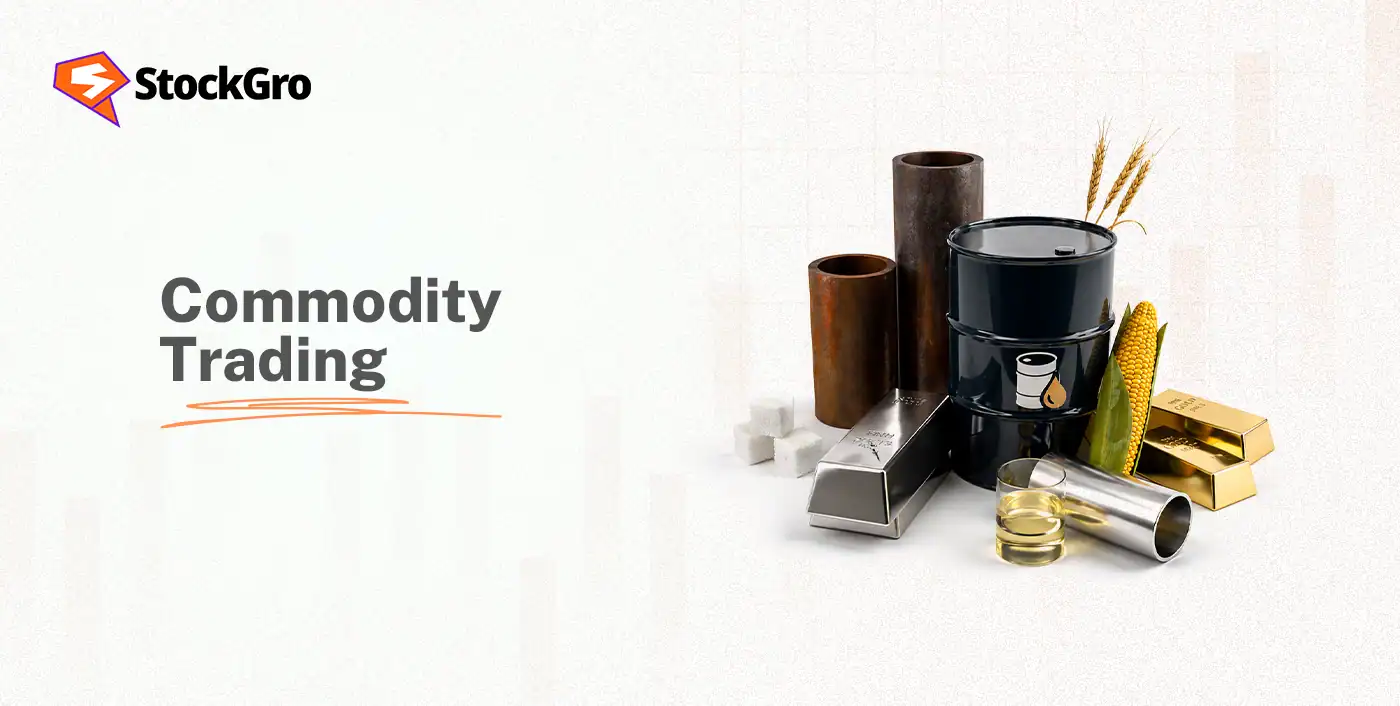
A commodity refers to general raw materials used in manufacturing other goods. They must comply with a minimum standard known as the basis grade. Commodities are defined as hard, which includes metals and oil, or soft, which includes things like maize and cattle. They are traded on commodity exchanges and form the underlying investment for commodity futures and options contracts.
Categories of Commodity
Commodities are categorised into two groups. Let’s find out what they are:
- Soft commodity
- Agricultural: Agricultural commodities are the crops and food products, such as rice, wheat, sugar and coffee, whose price is directly affected by policies made by the government and their demand and supply in the global market.
- Livestock and dairy: Livestock and dairy include cattle, milk and other animal-based products. These products are mostly used in food processing units.
- Hard commodity
- Energy: Energy commodities include coal, renewable energy and crude oil. The price of these energy commodities can rise or fall depending on the government rules, wars, big problems and what OPEC decides.
- Metal: Metal commodities are further classified into two categories, viz., precious metals and base metals. Precious metals include gold, silver, and platinum. They are treated as protection assets during a crisis. Metals such as aluminium, zinc, copper, and nickel are called base metals. They are used mostly in manufacturing and technology.
How Commodity Trading Works?
Commodities can be traded physically and through financial contracts.
The two types of commodity trading are:
- Spot Market: Spot trading refers to the market where immediate buying and selling take place. The sellers choose to trade on the spot.
- Future and Options Market: The futures market refers to the market where both buyer and seller bind an agreement to buy or sell a commodity on a future date. Both parties are obliged to do so on the predetermined date. When we talk about the options market, the buyer of the options market has the right to buy or sell a commodity at a scheduled price. This can be done before or on the expiry date of the options market.
In India, the Multi-Commodity Exchange or MCX is where people trade metals and energy, and the National Commodity and Derivatives Exchange or NCDEX is where people trade commodities like food and other things that are grown or produced. All commodity trading is, however, regulated by the Securities and Exchange Board of India or SEBI.
Real World Example of Commodity Trading
Gold as a safe haven – In 2020, the world was going through a pandemic, COVID-19. During this time, investors were unaware of the situation, so they decided to buy gold for future security. Within a few months, the price of gold went from ₹40,000 per 10 grams to around ₹56,000 per 10 grams. Therefore, investors who invested in gold, either physically or in gold ETFs, gained a substantial profit.
Wheat and war: During the Russia-Ukraine war in 2022, the price of wheat spiked more than usual. This was because both countries are the flag-bearers of the world’s largest wheat exporter. The investors who invested in the wheat earned a fair amount of gains.
Benefits of Investing in Commodities
- Portfolio Diversification: The price movement of commodities differs from that of other investment instruments such as shares and bonds. When stock markets decline, commodities like gold rise. Therefore, adding commodities to your portfolio reduces risk.
- Hedge Against Inflation: Commodities like gold and oil tend to become more expensive when inflation increases. This makes them a good protection for your money when prices rise. Commodities like gold and oil help secure the value of your money.
- Demand-Driven Growth: Raw material is the basis for a growing economy. Investing in commodities helps you benefit from trends like urbanisation and infrastructure development. This results in the rising demand for commodities.
- High Liquidity: Commodities such as gold and crude oil have liquidity. This means you can sell these commodities quickly without changing the price. Gold and crude oil are examples of liquid commodities.
- Accessible to Retail Investors: Commodity ETFs, funds and futures contracts help small retail investors in India to invest in commodities. You do not have to store or own the material yourself. This makes it easy for people to invest in commodities.
Risks and Common Mistakes to Avoid
Risks
- Price Volatility: The price of commodities moves quite often. This happens because of weather, events or changes in demand. Commodity prices can be more unpredictable.
- Leverage Risk: Most commodity traders choose futures. This means you can lose more money than you initially invested. Leverage in commodity trading can be risky.
- Expiry Risk: Futures contracts end on a particular date. If you don’t close your contract before it ends, you acquire the commodity.
- Global Macro Risk: Commodity prices rise and fall often because of things like wars, pandemics and policy changes. It is really tough to guess when these events will happen.
Common Mistakes
| Mistakes made | How to avoid |
| Trading In commodity without the knowledge of leverage and expiry date | Learn how does leverage works and importance of expiry date in commodity trading |
| Investing in only one commodity | Diversify your investment into different commodities |
| Not using stop-loss order | Using stop-loss order helps you from potential losses |
| Investing based on short-term trends | Always read the market demand and supply before investing |
How Beginners Can Start Learning Commodity Trading
Here is a beginner-friendly roadmap to start trading in commodities.
- Step 1: First, learn the basics of commodity trading. Understand what factors influence the price fluctuation, what the exchange options are, how trading works and what gains can be expected from the commodity.
- Step 2: Next, create a commodity trading account that provides MCX and NCDEX trading facilities, which are registered under SEBI.
- Step 3: Before starting to trade, you should learn to read the market, the demand and supply, the resistance and support index, etc., by doing technical analysis. For doing technical analysis, you can choose indicators such as Relative Strength Index (RSI), Moving Average Convergence Divergence (MACD), etc.
- Step 4: Once commodities that are performing well are shortlisted based on technical analysis, fundamental analyse the macro and micro trends that impact it. Research on demand and supply trends, government policies and their impact, presence of seasonal triggers, economic reports, etc., is crucial here.
Moreover, in the beginning you may focus only on only a few sectors on which you have a little knowledge and stay informed about those sectors. Focusing on too many commodities in the beginning might create confusion and cause divergence in meeting your goals.
- Step 5: Grow gradually with more practice and experience. Once you get the idea, the experience of commodity trading and how it is done, start growing your investments slowly. Always keep a record of failures and successes to understand the market better.
Final Thoughts
Commodities have a long history and have been traded by people for thousands of years. Commodities are still very important in the markets we have today. Things like gold, crude oil, wheat and copper are all commodities. These commodities are what drive the economy. People who want to invest in commodities might benefit from them if they take the time to learn about commodity trading.
FAQs
A commodity is a thing that you can touch, like food or metals, that people buy and sell in large amounts. The price of a commodity is figured out by how much of it is available in the world and how many people want to buy it. It is like a standard for things that are similar, so all commodities of the same type are basically the same.
Stock trading is when you buy shares or ownership of a company. This is different from commodity trading. Commodity trading is when you buy and sell products. The price of a stock is figured out by how the company is doing. On the other hand, the price of a commodity is determined by the demand and supply of the world.
Yes, beginners can invest in commodities trading. They can invest through Gold EFTs and Sovereign Gold Bonds to begin with. To invest in the future and the option market, certain knowledge and experience are required.
Gold and silver are the things to put your money into. They are really safe because people have used them for a long time to feel secure when things are uncertain in the future. Gold and silver have been like a safety net for a lot of people.
Yes. Commodities are really good for spreading out your investments. They can be a help when the market is all over the place or when it is doing poorly. This is because commodities do not move in the way that stocks and bonds do. Commodities are an addition to a portfolio because they are different from stocks and bonds.
Nowadays, most investment platforms offer the facility of virtual trading, where you can trade without using your real money and still gain the experience and idea of trading.