
Summary
Gold and silver, both have been historically popular as safe-havens that have the ability to retain value during fluctuating market conditions.
There are various approaches, such as balanced, speculative, growth-oriented and conservative, that can be used while investing in these precious metals.
Is Gold or Silver a Better Investment?
People have been using gold and silver for a long time to keep their money safe. Investors who prefer gold do so to keep their investment safe. However, investors who invest in silver are most likely interested to grow their money during market changes.
While stocks and mutual funds can help investments to grow gradually, gold and silver acts as a safety net for the investors. It shows its efficiency mostly during inflation, economic instability, and market volatility.
Understanding Gold and Silver as Investments
There is no universal winner between gold and silver. The better investment depends on your purpose of investing.
Gold has earned its reputation as a safe investment. Banks all around the world have vaults for gold. This is because when the economic condition of a country experiences a crisis situation, gold automatically becomes the most valuable security.
In the case of silver, it is said to have a double life. It is not stored away in vaults. It is used for multiple purposes. It serves as raw material for making coins and jewellery, alongside it is used in the production of solar panels. It is also used for making certain electronic devices, since silver is considered a good conductor of electricity.
Key Differences Between Gold and Silver
A few practical distinctions that make gold different from silver are given below.
| Basis | Gold | Silver |
| Primary role | Investment option | Industry as well as an investment option |
| Volatility | Lower | Relatively higher |
| Primary demand driver | Investments, jewellery, Banks | Solar panel, EVs, jewellery, electronics, etc |
| Portfolio Stability | Relatively stable | More volatile |
| Affordability | A little towards the expensive side | Comparatively affordable |
Historical Performance & Market Trends
Gold and silver have performed across different market cycles, and the factors that continue to influence their prices over time.
| Aspects | Gold | Silver |
| Approx price (2016) | ₹28,000 per 10g | ₹37,000 per kg |
| Approx price (2026) | ₹1,30,000 per 10g | ₹3,00,000 per kg |
| Primary Demand Driver | Investment, jewellery, Central Bank Reserves | Industrial use, Investment, jewellery |
| Price Volatility | Lower | Higher |
| Typical role | Wealth preservation and an inflation hedge | Growth potential with higher risk |
| Response to Economic Fluctuations | Usually benefits significantly | Often rises but may fluctuate more |
Changes in a decade: In the 10 years gold and silver prices in India have increased a lot. The price of gold went up from around ₹28,000 to over ₹1,30,000 for every 10 grams of gold. Gold prices have really gone up in the past decade. At the time, silver prices had risen from about ₹37,000 to over ₹3,00,000 for every kilogram of silver. Silver prices have also increased significantly.
Reading the gold-silver ratio: People keep an eye on the ratio of gold and silver value when it comes to metals. The ratio determines how many ounces of silver are required to equal one ounce of gold. This ratio acts as an underlying asset that traders use to understand market reactions.
For example, let us say that one ounce of gold costs ₹3,00,000 and one ounce of silver costs ₹3,000. The ratio of gold and silver is then 100:1. If the gold and silver ratio falls this means that silver is doing better compared to gold. On the other hand, if the gold and silver ratio drops this means that silver has become weaker when compared to the price of gold.
They do not move identically: Gold and silver usually rise together, but they don’t stay that way for long. Silver prices move more than gold because it is used in two ways. Investors buy it, and industries use it in green energy and to make electronics. Gold is more stable because people see it as a choice when they think prices will go up and their money will be worth less, which means banks and big organisations keep buying it.
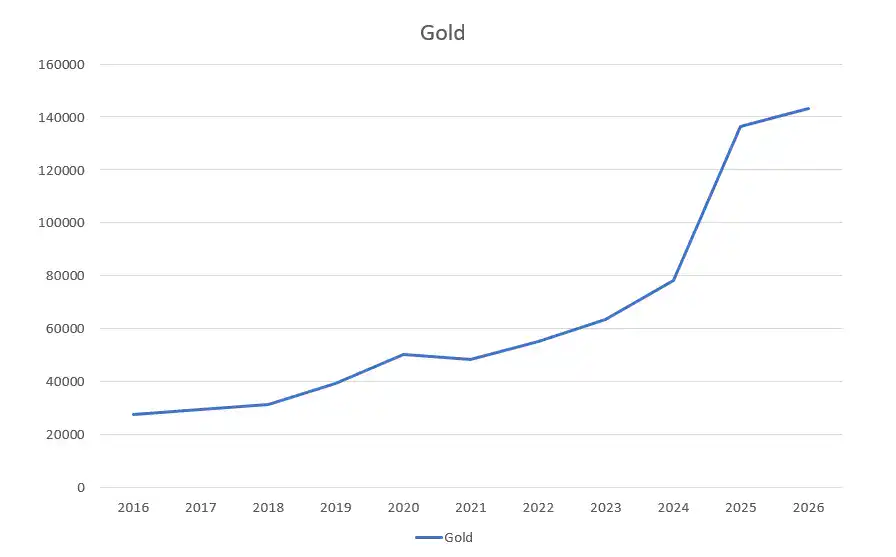
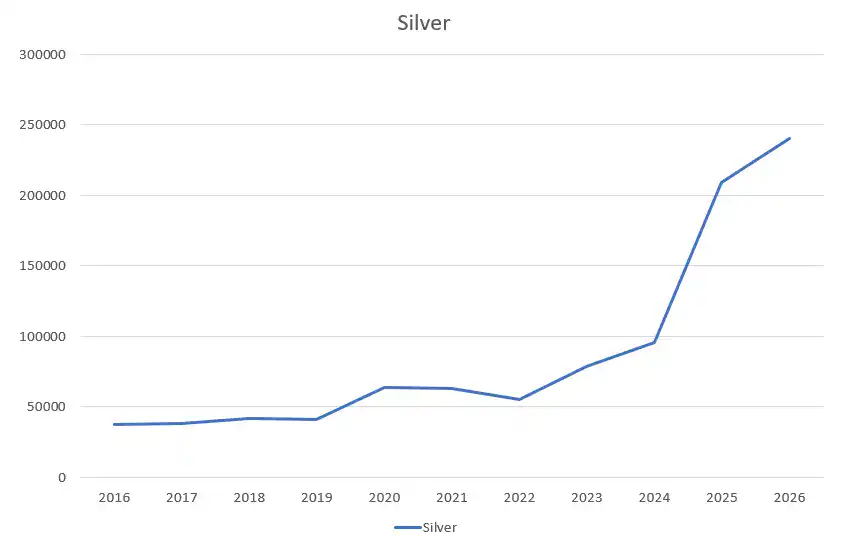
Impact of the year 2026: Gold and silver both experienced sudden spikes on its value, in the year’s opening months. Gold in India climbed above ₹1,00,000 per 10 grams and later crossed ₹1,30,000. Meanwhile, silver passed ₹1,00,000 per kg before touching nearly ₹3,00,000 per kg. That run reversed into a broad pullback as real interest rates climbed and the yield curve shifted, pulling both metals back down together.
When to Invest in Gold
Gold is not a one-size-fits-all investment. The real values show up in this specific situation.
- During high inflation: When rising prices start taking away your purchasing power, gold has a long track record of being stable. It does not lose its value effectively during inflation spikes, which is why it is often called an inflation hedge.
- Economic uncertainties: during economic volatilities, investors tend to panic. During periods of recessions, investors tend to turn towards gold more than any other securities. This is because gold stays stable in these situations and this gives assurance to the investors.
- Portfolio diversification: Because gold doesn’t move in sync with stocks or bonds, adding it to a portfolio can help cushion the overall impact when other holdings are struggling. It’s less about chasing returns and more about not having all your eggs tied to the same market forces.
- Wealth-preservation for long duration: For anyone thinking in terms of decades rather than months, gold has consistently held onto its purchasing power over long stretches of time. It’s less suited to fast gains and more suited to making sure the value you’ve built doesn’t quietly erode as the years go by.
When to Invest in Silver
There is no ‘best’ time for investing in silver, but certain conditions make it more attractive.
- During economic expansion: When factories are running at full tilt and manufacturing activity is picking up, silver tends to benefit directly, since so much of its demand comes from industrial use rather than vaults and jewellery boxes. A growing economy often means growing demand for the metal itself.
- For higher growth potential: Silver has a habit of moving harder than gold once a rally gets going, which means the upside can be more substantial for investors willing to ride out the bumpier path to get there. Silver in India has increased from ₹37,000 to approximately ₹3,00,000 per kg in the last 10 years. In the meantime, gold increased from around ₹28,000 to ₹1,30,000 per 10g.
- Minimum budget: Since silver prices are less compared to gold values, it allows investors with free capital to invest and build a diversified investment portfolio. It lowers the barriers for them.
- Industrial demand: Silvers are used in several industries as raw material, such as electric vehicles, solar panels, and other electronic products. Due to the increase in these particular industrial sectors, investing in silver may help investors to participate in these growing sectors.
Portfolio Strategy: Gold vs Silver Allocation
Combining gold and silver in appropriate proportions can help create a more balanced and resilient investment portfolio.
- Conservative Approach: This approach allocates the gold and silver ratio into 80% gold and 20% silver. This leans on gold’s stability while still leaving room to capture some of silver’s upside for investors.
- Balanced Approach: This approach represents the allocation as 60% gold and 40% silver. This provides a middle-ground split for investors who are comfortable with moderate volatility in exchange for stronger growth potential. .
- Growth-oriented Approach: This approach prefers to allocate the options as 40% gold and 60% silver. These are suitable for those investors who are chasing higher returns and willing to accept sharper price volatility along the way.
- Speculative Approach: This approach prefers to allocate 20% in gold and 80% in silver. This approach is not for the risk-averse investors. It is appropriate for periods of boom cycles and fluctuating market conditions, rather than a stable and secured position.
Real-Life Scenarios & Examples
Let us understand the conditions and scenarios appropriate for investing in gold and silver with the help of examples.
Example 1: Let us take the case of Abdul, an investor. He has just. Wants to safeguard his savings. His main goal is to preserve his wealth. So, he decided to put most of his money into gold because gold’s a precious metal. He still invested a little in silver, another metal.
This way Abdul reduces the risk of losing money while investing in gold and silver. He still gets to spread his investments around gold and silver. These helped him achieve his goal of preserving wealth with gold and silver.
Example 2: Here is an example of a young and experienced investor, named Zenida. She has a stable income and intends to invest mostly for long-term goals. She believes that renewable energy and electric vehicles have the potential to grow further in the coming years.
She had the capability to tolerate temporary market fluctuations well. Therefore, she decided to invest in both gold and silver. But because she was aware of the market volatility, she dedicated a larger portion to silver for potential long-term growth.
Example 3: Zoya is a 40-year-old investor. She has been doing this for a while. She knows about the options and approaches and wants to make sure her investments are spread out.
She wants to have funds, debt investments and other securities in her portfolio. Zoya also wants to invest in gold and silver. This will help reduce the risk. When the stock market goes up and down her investment in gold and silver helps balance things out. Zoya’s investment in gold and silver helps her investment performance.
Common Mistakes Investors Make
Even active and experienced investors can make mistakes while investing in gold and silver.
- Market rises– Investors are often attracted to rapid price fluctuations. However, purchasing solely because prices have recently increased can lead to buying near market peaks.
- Overlooking investment goals: Investors who invest in gold often think it will make them a lot of money. They ignore how its price can fluctuate. Investors should make sure their investment in gold and silver matches their investment goals.
- Solely focusing on one metal: If investors only concentrate on gold or only on silver, they might ignore the roles each metal plays. This can leave your portfolio exposed to risks because it is concentrated in just one area.
- Reaction to temporary volatility: The temporary volatility in silver prices may create a panic situation among the investors. This may lead to exiting the market at the wrong time.
- Ignoring storage and premiums. Physical purchase of metal comes with various other costs, such as storage and insurance, that can highly impact returns, especially with bulkier silver holdings.
Smart Investment Tips for Gold & Silver
The practical strategies that help you invest in precious metals with greater confidence and a long-term perspective are given below.
- Identify your goal: Analyse whether your goal is wealth preservation or long-term growth. This will help to measure the performance and expected returns.
- Consider multiple ways to invest. Physical bullion, ETFs, mining stocks, and futures all offer exposure to precious metals with different tradeoffs in liquidity, cost, and convenience. ETFs, for example, avoid storage headaches but come with management fees.
- Always analyse the dealers: When you are dealing in gold and silver, especially physical metals, verify and evaluate the dealer before making any commitment.
- Periodic Portfolio adjustment: Always review and monitor the movements of your investment, to check if they are still aligning with your goal. This will help to make necessary adjustments and reduce the risk of incurring unnecessary loss.
Final Thoughts
Gold and silver both are valuable securities for investment. However, they both serve different purposes. Gold is for investors seeking stable and secured investment security, while silver is for the investors who want to invest in the industrial sector with the potential of future growth.
Since both, gold and silver, have their own qualities and market reactions, many investors prefer to combine both the securities and maintain a balance between the both. This also helps them create a diversified portfolio while aligning their risk tolerance with long-term goals.
FAQs
Silver has the potential to generate higher returns during periods of strong industrial growth, but it is also more volatile. Gold generally delivers steadier long-term performance.
Yes. Gold is usually considered the safer investment because its prices are relatively stable and it is widely used as a hedge against inflation and economic uncertainty.
Yes. Silver can outperform gold during economic expansion or commodity bull markets due to rising industrial demand, although it also carries a higher risk.
Financial experts generally suggest allocating around 5% to 15% of your investment portfolio to gold, depending on your financial goals and risk tolerance.
Yes. Silver can be a suitable long-term investment, particularly because of its growing demand in industries such as solar energy, electric vehicles, and electronics. However, investors should be prepared for greater price fluctuations.
Investing in both can provide better diversification. Gold offers stability, while silver adds growth potential, allowing you to balance risk and return within your portfolio.