Summary
The best stock advisor app depends on your needs, including research, expert insights, portfolio tracking, education and trading tools.
StockGro offers research and trade calls from 150+ SEBI-registered experts, plus stock analysis, Stoxo, expert portfolios and Strategy Builder.
Key features include stock research, technical tools, alerts, portfolio tracking, learning resources and risk information.
Beginners can study stocks, review research, test strategies and track outcomes, while diversification and rebalancing help manage portfolio exposure.
You may come across several stock recommendations while checking the market, but finding reliable research behind them can be difficult. A stock advisor app can bring research, analyst insights, market data, and portfolio tools together in one place. However, different apps offer different features and levels of research. Knowing what to look for can help you find the best stock advisor app more easily. Let’s explore the key features and uses of stock advisor apps.
Best Stock Advisor App
The right stock advisor app depends on what you need from it, whether that is expert research, stock analysis, portfolio tracking, learning resources or trading tools. Different platforms combine these features in different ways.
- StockGro
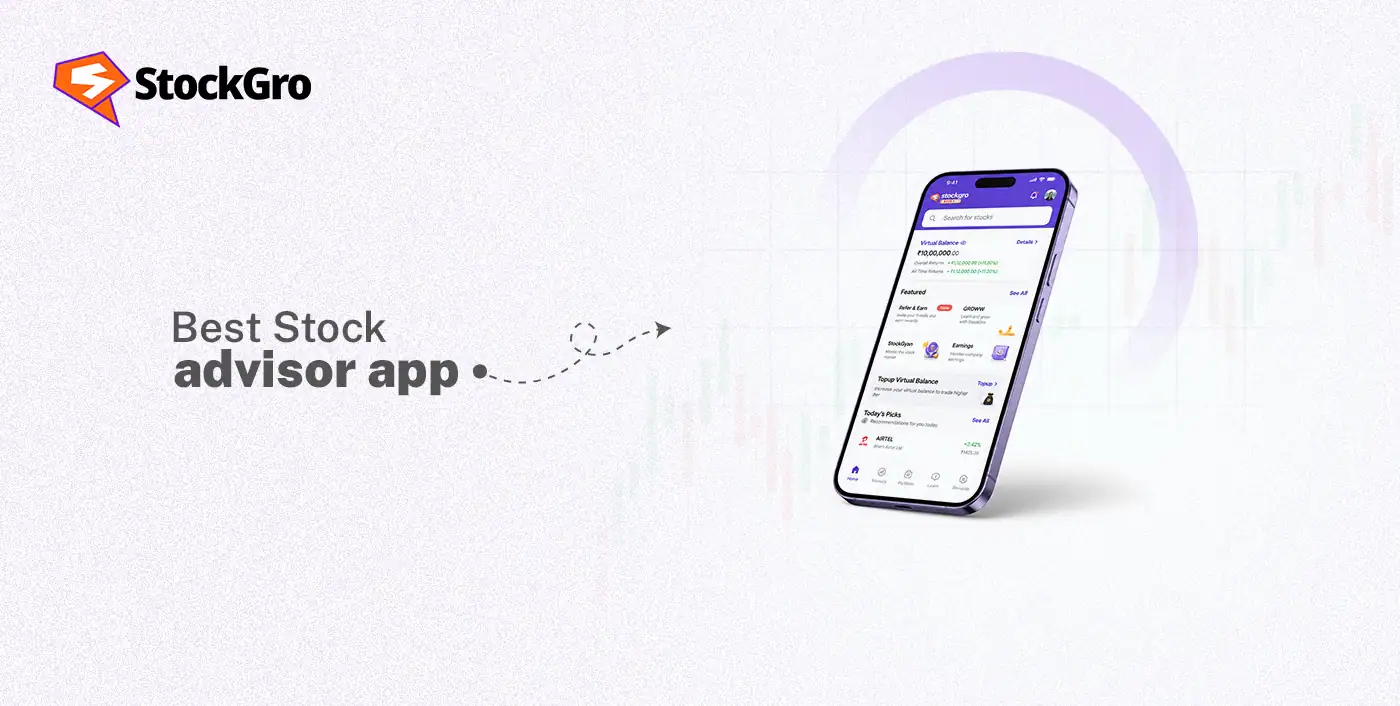
StockGro is a stock market research and advisory platform that brings together expert research, stock analysis and AI-assisted market research. It currently features 150+ SEBI-registered experts whose research and trade calls can be followed through the platform.
- Access research and trade calls from 150+ SEBI-registered experts, including their entry, exit and stop-loss rationale.
- Review stock scores, analyst ratings, fundamental analysis and technical analysis.
- Use Stoxo to research stocks, companies, sectors, market trends and related investment questions.
- Follow expert portfolios and review their research and previous track records.
- Test investment ideas through Strategy Builder before deploying actual capital.
- Track selected stocks through stock and thematic trackers available under eligible plans.
- Link an existing broker account to execute eligible expert trade calls while funds remain with the broker.
- Angel One
Angel One combines trading and investment services with research and advisory features. Its platform includes single-stock recommendations, portfolio advisory and research covering areas such as intraday, short-term and long-term investing.
- Research 360 by Motilal Oswal
Research 360 by Motilal Oswal focuses heavily on in-depth market research and analytical tools. It offers research reports, financial result analysis, technical analysis, real-time market updates and more than 50 advanced stock screeners. Investors can also explore SWOT analysis, ace investor portfolios, stock baskets, IPO analysis, option strategies and sector or industry analysis. Its Alpha Picks service provides research-backed stock, swing trade and F&O ideas with entry, target and stop-loss levels, adding a more structured approach for users looking for specific market calls.
- Univest
Univest brings stock discovery, market tracking and advisory services into a single platform. Its advisory offering scans more than 2,000 stocks daily and provides SEBI-registered analyst-backed ideas with entry, target and stop-loss levels. Beyond individual stock calls, the platform includes AI-based Buy/Sell/Hold insights, live market news, IPO analysis, company results and portfolios of prominent investors. It also covers F&O, commodities and mutual funds, with push notifications for market updates and an integrated broking facility for trade execution.
Key Features of a Good Stock Advisor App
The usefulness of a stock advisor app depends on the information and tools it provides. Research and risk analysis are two areas investors commonly look for. A recent research reported that 81% of investors seek market insights, while 80% look for risk factors and analysis data, including historical returns and past performance. Useful features can therefore include:
- Research and analysis: Company information, financial data, technical indicators and analyst research can provide more context around a stock.
- Expert insights: Platforms that offer research from registered professionals can help users distinguish structured research from unverified market tips.
- Portfolio tracking: A portfolio tracker can show holdings, current values, gains and losses in one place.
- Alerts: Price and market alerts can help users monitor selected securities without repeatedly checking them.
- Learning resources: Educational articles, courses and market explanations can help beginners understand the information shown by the app.
- Risk information: Details about stop-loss levels, position size and potential downside can help users assess a trade more carefully.
- Transparent credentials: SEBI advises investors to check the registration status of intermediaries before dealing with them.
A feature list alone does not establish the quality of an investment decision. The information still needs to be assessed against the investor’s own objectives and risk tolerance.
Beginner’s Guide to Using Stock Advisor Apps
A beginner does not need to use every feature from the first day. Starting with a simple process can make the information easier to handle.
- Define what you want to learn: Decide whether the immediate focus is long-term investing, trading, technical analysis, fundamental research or portfolio tracking.
- Start with one or two stocks: Rather than monitoring dozens of companies, begin by following a small number and learn how the app presents their information.
- Read the research behind an idea: If an app provides a recommendation or trade call, check the reasoning, entry or exit levels and other information instead of looking only at the expected price movement.
- Use learning and testing tools: Beginners can use educational resources and Strategy Builder or similar tools to examine ideas before putting substantial capital into a trade.
- Track the outcome: Record what the original idea was, what happened afterwards and whether the actual result matched the original assumptions.
- Review the source: Check who is providing the research and whether the relevant regulatory registration or disclosure information is available.
This approach helps turn an advisor app from a source of stock tips into a research and learning tool.
Trading Strategies & Portfolio Management Insights
Trading strategies provide a framework for making trading decisions, while portfolio management focuses on the effect of individual positions on overall exposure. Common approaches include:
- Trend Following: Traders identify an ongoing trend and take positions that follow its direction.
- Momentum Trading: Traders look for strong price or volume activity and trade with the existing momentum.
- Breakout Trading: Traders watch key support and resistance levels and enter when the price breaks beyond them.
- Swing Trading: Traders seek to capture short-term price movements over several days or weeks.
- Diversification: Investors spread capital across securities, sectors or asset classes to reduce concentration.
- Portfolio Rebalancing: Investors review their allocations and adjust them when they drift from the intended mix.
Benefits, Use Cases & Real-World Scenarios
Stock advisor apps offer several practical benefits for investors, which include:
- Simplifies Stock Research: Research tools can bring company information, financial data, charts and other market information together, making it easier to study a stock without switching between several sources.
- Helps Track Investments: Portfolio tracking features allow users to view their holdings, quantities, current values and gains or losses in one place.
- Supports Faster Portfolio Decisions: A 2026 CRISIL case study involving a public fund manager found that automating stock selection and portfolio monitoring reduced weekly ranking and review time from around four hours to 15 minutes. The case demonstrates how consolidated data and automated analysis can reduce the manual work involved in reviewing a large set of stocks.
- Makes Market Learning Easier: Educational content can help beginners learn terms, concepts and trading methods before they start using more advanced market tools.
- Helps Test Trading Ideas: Strategy-testing features allow users to examine how a set of trading rules may have performed before putting those rules into practice.
- Can Improve the First-Investment Experience: Guided prompts can help new investors move from exploring an investment platform to taking their first investment step. A Scripbox case study found that changes to onboarding, including goal-planning and portfolio-review prompts, were associated with a 246% increase in first-time investments.
- Keeps Research Organised: Watchlists, stock screeners and saved research can help users organise the securities they are following and return to them when reviewing the market.
- Provides Access to Expert Insights: Some apps provide research reports or insights from registered professionals, giving users additional information to consider alongside their own research.
Common Mistakes & Risk Management Tips
While stock advisor apps can provide useful insights, how you use the information matters. Relying on app-based recommendations without considering your own research, risk tolerance, or investment goals can lead to poor decisions. Some common mistakes and risk management tips are as follows.
| Common Mistake | Why It Can Be A Problem | Risk Management Practice |
| Following a recommendation blindly | The reasoning, timeframe and conditions behind a recommendation may be overlooked. | Read the supporting research and check the intended timeframe before acting. |
| Treating past performance as a guarantee | Previous returns or successful calls do not ensure similar future results. | Consider past performance as historical information rather than a promise of future results. |
| Taking a position that is too large | A sharp price movement can have a greater effect on overall capital. | Decide the amount of capital to expose before entering the trade. |
| Mixing trading and investing ideas | A short-term trade and a long-term investment can have very different objectives. | Identify the intended timeframe and purpose of the position beforehand. |
| Using too many indicators | Several indicators can produce conflicting signals and make analysis harder to follow. | Use only the tools that are relevant to the type of analysis being carried out. |
| Assuming research removes uncertainty | Even detailed research cannot predict every change in market prices. | Treat research as an input for decision-making rather than a certainty about future returns. |
Conclusion
A best stock advisor app can make market research, learning and portfolio tracking more organised, but the information still needs careful assessment.
Lastly, reconcile the app’s portfolio data with your broker statement periodically. Check quantities, average prices and realised or unrealised P&L so mismatches are noticed before the next investment decision.
FAQs
Stock advisor apps offer useful market tools, but users should check the platform’s credentials, regulatory status, data practices and recommendation sources.
Yes. Educational resources, simulated trading and strategy-testing tools allow beginners to learn market concepts and test trading ideas before committing actual capital.
No. Stock advisor apps cannot guarantee market returns. Investment outcomes depend on market movements, the security involved, the strategy used and other factors.
Stock advisor apps can earn revenue through subscriptions, advisory or research services, brokerage-related arrangements, or other platform services, depending on their business model.
They serve different purposes. A stock advisor app may focus on research and insights, while a brokerage app primarily provides tools for buying, selling and managing investments.