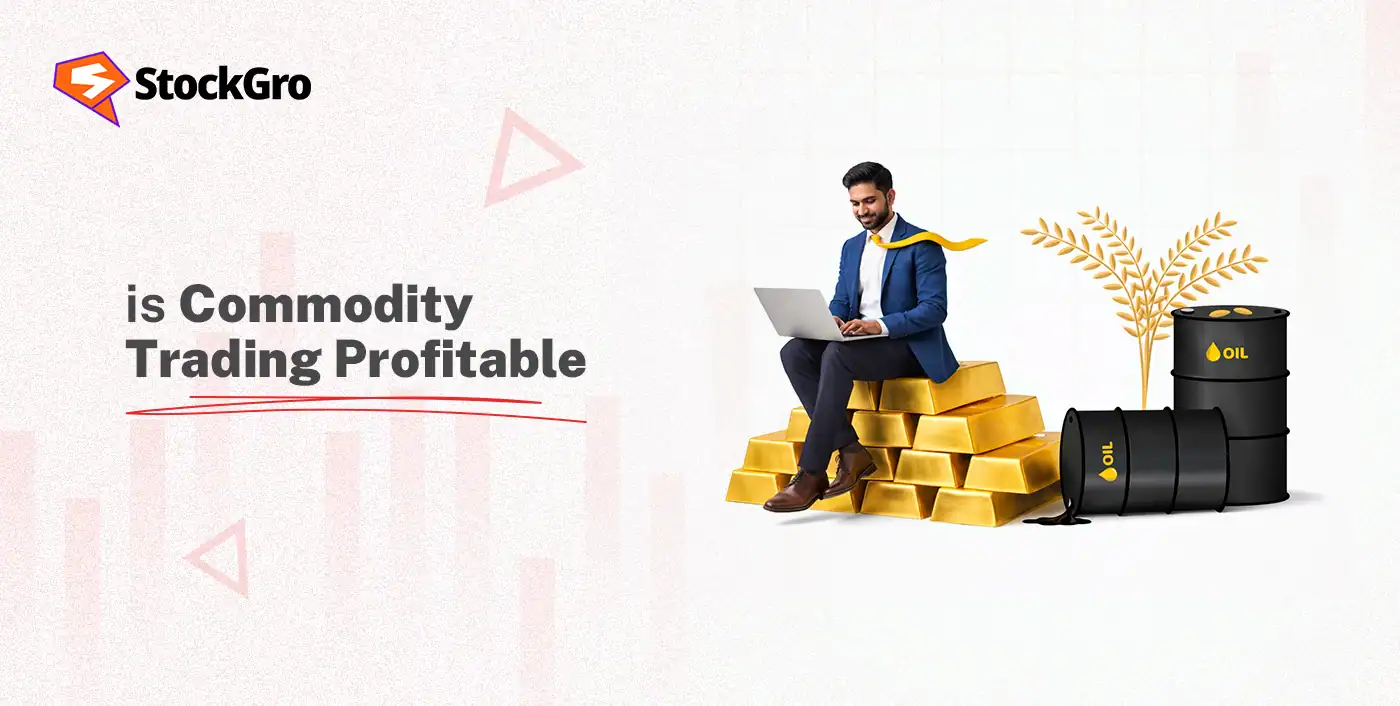
Not many markets reward curiosity the way commodity trading does. And not many punish overconfidence quite as fast, either. Gold crossing record highs on MCX, crude oil lurching on some OPEC announcement nobody saw coming, wheat contracts shifting overnight on a bad monsoon forecast, the action never really stops. But here is the thing most people miss early on: action is not the same as profit. Not even close.
This guide breaks down what commodity trading actually delivers, what it demands from you, and what separates the traders who last from the ones who do not.
What is Commodity Trading?
Simply put, commodity trading is the buying and selling of contracts for raw materials and primary goods. It takes place through regulated exchanges, without ever needing to physically handle the product itself. No warehouses. No shipping logistics. Just contracts and price movements.
After absorbing the Forward Markets Commission, SEBI has overseen the commodity derivatives market since September 2015. Most trades happen through futures and options contracts, where two parties agree on a price today for a transaction that will settle at some point in the future.
What makes this appealing is not just the exposure to raw materials. It is the ability to take a position on price direction without owning a single barrel of oil, a gram of gold, or a kilogram of anything.
The Multi Commodity Exchange, better known as MCX, holds close to 95.9% of India’s entire commodity futures market as of FY24. That figure covers precious metals, energy products, and base metals.
The sheer concentration of volume in one place creates deep liquidity and allows traders to enter and exit positions without major slippage, quietly eroding what they made. That part matters more than most beginners realise.
Leverage and Margin Trading
Futures contracts are structured around margin. What that means practically is that you put up only a fraction of the total contract value to hold a position, not the full amount.
The margin requirements typically fall somewhere between 5% and 10% of the contract value, and that range shifts depending on the commodity and whatever volatility conditions the exchange has set at the time.
Here is what this looks like with actual numbers:
Gold futures priced at ₹70,000 per 10 grams on a standard lot could represent a total contract value of around ₹7 lakh. At a 7% margin requirement, the upfront capital you actually need is roughly ₹49,000.
Now, a meaningful move in gold prices, even just a few per cent, translates into a return on that deployed capital that far outpaces the underlying price movement itself. That is the appeal. But the downside mirror image is equally sharp, and it moves just as fast.
Understanding leverage before you commit a single rupee is not optional. It is the starting point. Everything else comes after.
Supply Demand Impact
Commodity prices do not drift gently. They lurch. Sometimes violently. A drought in a major wheat-growing belt, an unexpected OPEC production cut, a shipping disruption along a critical oil route – each of these events feeds directly into futures pricing, often within hours of the news breaking.
This is what makes commodity markets fundamentally different from equities. With stocks, company fundamentals provide at least some buffer against short-term noise. With commodities, prices are wired directly to physical reality, and physical reality does not wait for you to catch up.
Advantages of Commodity Trading
There are genuine structural reasons why commodity trading attracts serious, experienced investors alongside the speculators. These are not marketing points. They are the advantages that actually hold up when you test them against reality.
- Portfolio Diversification: Commodities have low or even negative correlation with equities and bonds. When stock markets come under pressure, certain commodities move in the opposite direction. That makes them a real buffer, not just a parallel bet on the same broader economic trends.
- Inflation Protection: When the price of goods rises across the economy, the raw materials sitting underneath those goods tend to rise alongside them. Commodity exposure can preserve purchasing power during sustained inflationary periods, especially when that inflation is being driven by supply constraints rather than demand.
- Efficiency Through Leverage: Because of the margin-based structure of commodity futures, a disciplined trader can hold meaningful market exposure without locking up the full contract value in capital. For traders who manage risk tightly and are strict about position sizing, this makes commodity markets more capital efficient.
- Geopolitical Hedge: When geopolitical instability rises, assets like gold and crude oil tend to behave countercyclically relative to equity markets. It reflects real safe haven demand and supply chain anxiety playing out across global markets. Holding commodity exposure can offset losses in a portfolio when uncertainty spikes suddenly.
- Accessible Liquidity: MCX reported an average daily turnover of ₹7.5 lakh crore in Q3 FY26. That depth of liquidity means retail traders can move in and out of positions efficiently, without distorting prices or absorbing the kind of excessive bid-ask spread costs that quietly eat into returns.
Risks of Commodity Trading
Every advantage in commodity trading carries a corresponding risk on the other side of it. None of these are hypothetical. They show up in real trading accounts, often at the worst possible moments. This is where trading risk management stops being a concept and becomes a necessity.
- Volatility Moves Faster Than Decisions: Commodity markets sit among the most volatile asset classes accessible to retail traders. One news event can shift a contract price by several per cent within a single session, leaving absolutely no room for slow reactions or second-guessing yourself mid-trade.
- Leverage Cuts Both Ways: The same mechanism that amplifies your gains will amplify your losses with equal enthusiasm. A trader without a clearly defined exit can face losses that exceed the original margin deposit. This risk is particularly pronounced in fast-moving market conditions, where price swings can be brutal.
- Structural Speculation Risk: A significant portion of commodity market volume is speculative rather than coming from physical hedgers. It means that prices can stay disconnected from actual supply and demand fundamentals for long stretches. You can do a technically correct analysis and still lose money because the market is doing something the fundamentals do not justify yet.
- Regulatory Intervention: SEBI and the Government of India both have the authority to introduce position limits, circuit breakers, or even modify contract terms on relatively short notice. These interventions can lock traders into unfavourable positions, and they tend to happen when market conditions are already chaotic.
- Currency and Global Linkage Risk: India’s commodity prices are benchmarked to global markets but settled in rupees. A strengthening US dollar can suppress rupee-denominated commodity prices even when underlying global demand remains perfectly stable. This adds a forex dimension to every position that many retail traders underestimate until it costs them.
Realistic Profit Expectations in Commodity Trading
Most conversations about commodity trading dwell on the upside and quietly skip the part where expectations meet reality. That gap, more than anything else, is where trading accounts get damaged.
Profitability in commodity trading is real, but it is not guaranteed or uniform. Traders who consistently generate returns do so through disciplined risk management applied across many trades over time, not by catching a handful of big moves. They size positions conservatively, accept small losses without hesitation, and avoid the slow bleed of holding a position simply because they are not ready to admit it is wrong.
Gold futures on MCX delivered meaningful gains in January 2026, when prices crossed ₹1.58 lakh per 10 grams. Traders with clear stop loss levels and predefined exit points captured real gains. At the same time, people who entered late or without a plan had their profits wiped out due to sharp intraday reversals.
Retail participation in commodity derivatives has grown steadily over the years, yet sustained profitability remains the exception. That pattern holds globally across futures markets, not just in India.
What separates the traders who actually profit from those who do not is rarely analytical ability. It is the structure. Knowing before every single trade what a loss and what a win looks like, and having the discipline not to quietly renegotiate those parameters mid-trade just because the market is behaving unexpectedly.
Tips to Improve Commodity Trading Profitability
The traders who survive and grow in commodity markets are not necessarily the brightest ones in the room. They are usually the most consistent.
- Start with one commodity and learn it completely.
Crude oil and gold are the most actively traded contracts on MCX, with widely available data, analysis, and global context. Mastering one market’s behaviour patterns before expanding dramatically reduces the kind of costly errors that come from spreading attention too thin. - Know every contract detail before you trade it.
Each contract carries specific lot sizes, expiry dates, margin requirements, and settlement terms. Traders who skip over these details tend to discover them usually when a position is approaching expiry, and liquidity starts to thin. - Treat the stop loss as the trade, not the safety net.
Defining your maximum acceptable loss before entering a position changes how the entire trade is structured. When the stop loss is fixed in advance, leverage becomes something manageable rather than a source of unlimited downside. - Read global data, not just domestic price charts.
US crude inventory reports from the Energy Information Administration, Federal Reserve signals for gold, Chinese industrial output for base metals – these forces drive MCX contract prices directly. Limiting your analysis to domestic price action means working with an incomplete picture. - Keep a trade log and review it honestly.
Note down the reason behind every entry, the actual exit price, and your emotional state at the time of the trade. It creates a record that reveals patterns over time. Most losses in commodity trading trace back to repeating the same mistakes.
Conclusion
Commodity trading can be rewarding for people who approach it with patience, structure, and honest expectations. It demands an active stance and does not forgive carelessness. Success here is built on consistent habits, self-awareness, and a clear understanding of both the opportunity and the risks. Curiosity gets you through the door. Discipline is what keeps you in the room.
FAQ‘s
Yes, beginners can earn, but results are rarely consistent at the start. Commodity markets move fast, and without clarity on leverage, contract terms, and risk control, losses appear quickly. Starting with one commodity, trading smaller positions, and following strict stop-loss discipline improves survival and long-term profitability.
There is no fixed return in commodity trading. Profits depend on capital deployed, leverage used, and execution discipline. Even a small price movement can translate into higher percentage gains due to margin trading, but the same movement in the opposite direction can erode capital just as quickly.
Commodity trading is generally riskier than stocks because of higher volatility and leverage exposure. Prices react immediately to developments like geopolitical events, supply shocks, or currency changes. Unlike equities, there is little buffer from fundamentals, making disciplined execution and timing far more critical for traders.
Leverage increases the potential for profit, but it also magnifies losses at the same rate. It allows traders to control large positions with relatively small capital, but even minor adverse price movements can trigger significant drawdowns. Proper position sizing and predefined exit strategies are essential when using leverage.