
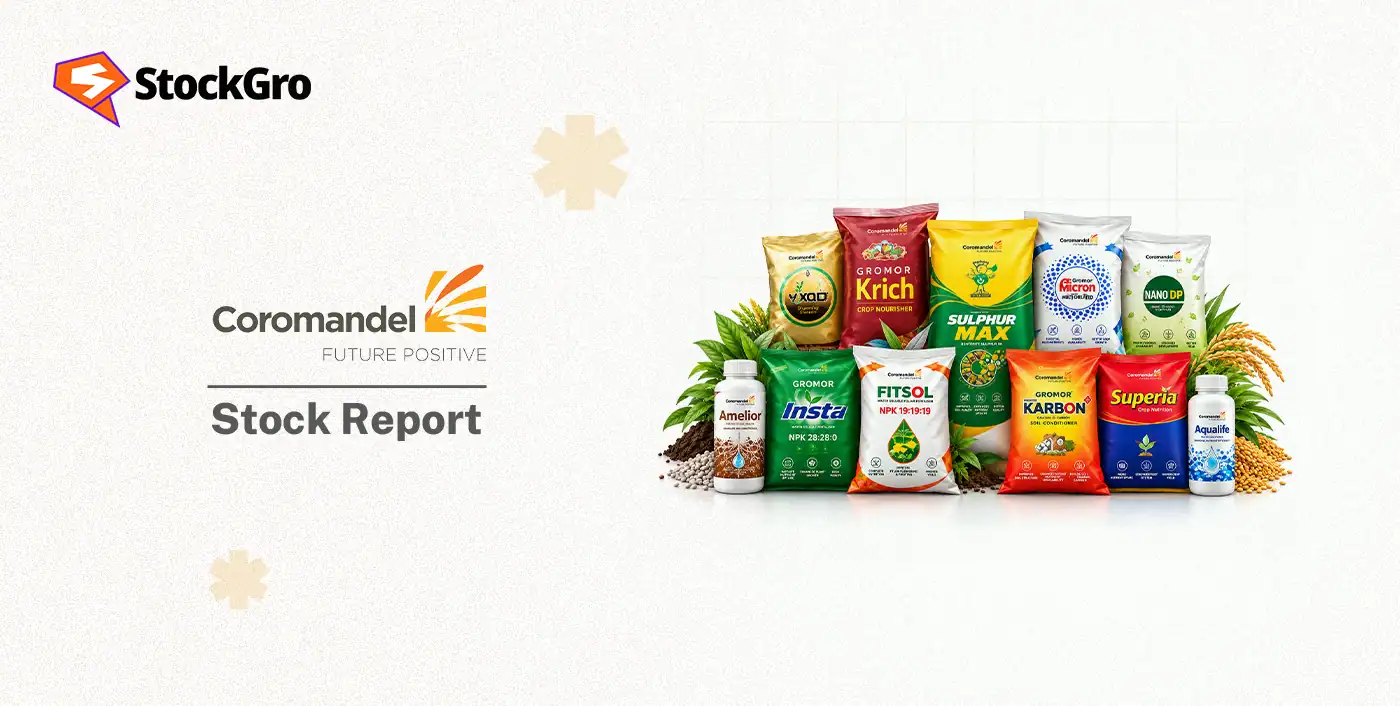
Agriculture remains one of the most important pillars of the Indian economy, making fertilisers, crop protection products and specialty nutrients critical to farm productivity. However, the industry is also shaped by volatile global commodity prices, government subsidy policies, monsoon conditions and changing farmer preferences.
Coromandel International Ltd. is positioning itself to benefit from this structural demand while evolving beyond traditional fertilisers into a broader agri-solutions platform. Its strategy combines phosphatic fertilisers, crop protection, backward integration, specialty nutrients, rural retail and agri-technology. The investment thesis centres on whether these initiatives can improve supply security, diversify earnings and deliver sustainable profitability through different agricultural and commodity cycles.
But does Coromandel International Ltd. offer a compelling case for long-term investors? Let’s delve deeper.
Stock overview
| Ticker | COROMANDEL |
| Industry/Sector | Chemicals |
| CMP | 1700.30 |
| Market Cap (₹ Cr.) | 50,261 |
| P/E | 27.83 (Vs Industry P/E of 21.67) |
| 52 W High/Low | 2499.00 / 1651.10 |
| EPS (TTM) | 60.27 |
| Dividend Yield | 0.12% |
About Coromandel International Ltd.
Coromandel International Ltd., part of the Murugappa Group, is one of India’s leading agricultural-input companies. It operates across fertilisers, crop protection, specialty nutrients, bio-products and organic fertilisers, supported by manufacturing facilities, research capabilities and an extensive rural distribution network.
The company is a major player in phosphatic fertilisers and serves farmers through its dealer network and more than 1,200 rural retail outlets. Its retail operations also provide crop advisory, soil testing and farm-mechanisation services, helping it build direct engagement with farmers.
Coromandel is strengthening its integrated operating model through investments in phosphoric and sulphuric acid production, additional fertilizer capacity, crop protection molecules and agri-drone services. This creates opportunities to improve raw-material security, expand higher-value offerings and diversify beyond subsidy-linked fertiliser earnings.
Key business segments
Coromandel International Ltd. operates primarily in the following key business segments:
- Nutrient and Allied Businesses: Phosphatic fertilisers, complex fertilisers, specialty nutrients, organic fertilisers and related crop-nutrition products.
- Crop Protection: Insecticides, fungicides, herbicides and agrochemical technical products and formulations for domestic and international markets.
- Specialty Nutrients: Water-soluble fertilisers, secondary nutrients, micronutrients and nano-fertiliser products.
- Bio-products: Plant-extract-based products and biological solutions for agricultural applications.
- Agri-Retail and Services: Rural retail outlets offering farm inputs, soil testing, crop advisory and mechanisation services.
- Agri-Technology: Drone-based spraying and emerging digital solutions intended to improve farm productivity and input application.
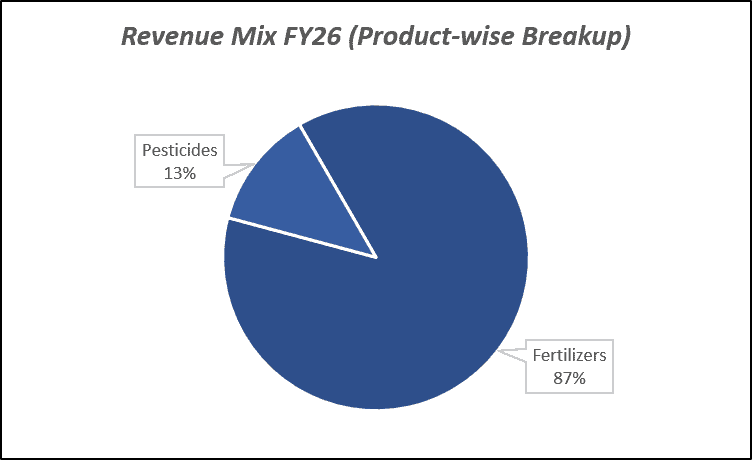
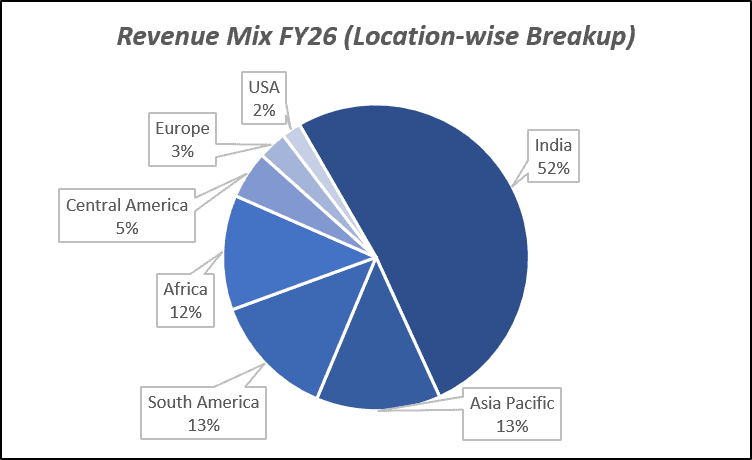
Primary growth factors for Coromandel International Ltd.
Coromandel International Ltd. key growth drivers:
- Backward Integration: In-house phosphoric and sulphuric acid production can strengthen raw-material security and reduce exposure to external supply disruptions.
- Fertiliser Capacity Expansion: The Kakinada granulation project can increase production capacity and support the company’s position in phosphatic fertilisers.
- Crop Protection Expansion: New technical molecules, export growth and the integration of NACL Industries can strengthen the agrochemical business.
- Specialty Nutrients and Premium Products: Greater penetration of micronutrients, water-soluble fertilisers and biological solutions can diversify the product mix.
- Rural Retail and Agri-Technology: A wider farmer network, agri-drone spraying and technology-led farm services can deepen customer relationships and create additional revenue streams.
Detailed competition analysis for Coromandel International Ltd.
Key financial metrics – TTM;
| Company | Sales (₹ Cr.) | EBITDA (₹ Cr.) | EBITDA Margin (%) | PAT (₹ Cr.) | PAT Margin (%) | P/E |
| Coromandel International Ltd. | 32602.01 | 3189.59 | 9.78% | 1778.13 | 5.45% | 27.83 |
| FACT Ltd. | 5293.19 | 105.38 | 1.99% | 27.96 | 0.53% | 1670.93 |
| Paradeep Phosphates Ltd. | 23447.09 | 2291.80 | 9.77% | 1072.18 | 4.57% | 14.64 |
| Chambal Fertilizers Ltd. | 20123.07 | 2768.23 | 13.76% | 1860.39 | 9.25% | 7.88 |
| Madhya Bharat Agro Products Ltd. | 1873.60 | 235.45 | 12.57% | 154.94 | 8.27% | 48.35 |
Key insights on Coromandel International Ltd.
- Phosphatic Fertiliser Leadership: The company recorded 7% growth in phosphatic fertiliser volumes, reaching approximately 4.3 million tonnes in FY26.
- Crop Protection Momentum: The crop protection business delivered 16% revenue growth and a 55% increase in profitability during FY26.
- NACL Turnaround: NACL Industries reported 28% revenue growth and returned to profitability, creating potential for further operational improvement and integration benefits.
- Backward Integration Milestone: The 2,000-tonne-per-day sulphuric acid plant and 650-tonne-per-day phosphoric acid plant at Kakinada were commissioned in FY26, strengthening supply-chain integration.
- New Capacity in the Pipeline: The Kakinada brownfield granulation project is designed to add 7.5 lakh tonnes of annual capacity, with commissioning targeted for Q4 FY27.
Recent financial performance of Coromandel International Ltd. for Q1 FY27
| Metric | Q1 FY26 | Q4 FY26 | Q1 FY27 | QoQ Growth (%) | YoY Growth (%) |
| Sales (₹ Cr.) | 7042.30 | 6003.66 | 8164.77 | 36.00% | 15.94% |
| EBITDA (₹ Cr.) | 782.12 | 487.78 | 755.65 | 54.92% | -3.38% |
| EBITDA Margin (%) | 11.11% | 8.12% | 9.26% | 114 bps | -185 bps |
| PAT (₹ Cr.) | 501.63 | 114.66 | 381.56 | 232.78% | -23.94% |
| PAT Margin (%) | 7.12% | 1.91% | 4.67% | 276 bps | -245 bps |
| Adjusted EPS (₹) | 17.13 | 4.74 | 12.91 | 172.36% | -24.64% |
Coromandel International Ltd. financial update (Q1 FY27)
Financial performance
- Revenue grew 15.94% YoY to ₹8,164.77 crore, supported by growth in the crop protection business and higher fertilizer realizations.
- EBITDA declined 3.38% YoY to ₹755.65 crore, with EBITDA margin contracting 185 bps to 9.26%, as elevated raw material costs outpaced subsidy support.
- PAT declined 23.94% YoY to ₹381.56 crore, reflecting margin pressure in the fertilizer business and higher input costs.
- Crop Protection revenue increased 73% YoY to approximately ₹1,251 crore, supported by strong export demand and improved product mix.
- Adjusted EPS stood at ₹12.91, down 24.64% YoY, reflecting lower profitability despite healthy revenue growth.
Business highlights
- Crop protection delivered strong performance, with standalone EBIT increasing 44% YoY and margins expanding by approximately 300 bps, supported by exports and favorable product mix.
- Premium and value-added products accounted for over 50% of SSP sales, while phosphoric and sulphuric acid plants stabilized, securing nearly 60% of the company’s acid requirements internally.
- The company added 22 retail stores, taking its network beyond 1,200 outlets; retail revenue grew 85% YoY, with 76% of stores profitable.
- Senegal phosphate mining operations produced over 110,000 tonnes during the quarter, strengthening backward integration and long-term raw material security.
- Specialty nutrients, biologicals and nano fertilizers continued to expand, supported by new product launches, growing farmer adoption and increasing focus on differentiated crop nutrition solutions.
Outlook
- Near-term fertilizer profitability remains under pressure from elevated sulphur and ammonia prices, with timely subsidy revisions critical to restoring industry economics.
- The company aims to increase fertilizer EBITDA per tonne from historical levels of approximately ₹5,000 to ₹6,500 as backward-integrated facilities achieve steady-state operations.
- Crop protection growth is expected to benefit from a strong export pipeline, new product launches, improved realizations and capacity additions in key active ingredients.
- The green ammonia project remains on track for commissioning in Q4 FY27, while the company continues to scale its Senegal mining operations and explore further backward integration.
- Continued expansion in crop protection, specialty nutrients, biologicals, retail and CDMO opportunities is expected to diversify earnings. However, raw material volatility and inadequate subsidy support remain key risks to monitor.
Recent Updates on Coromandel International Ltd.
- Samunnati Partnership: Partnered with Samunnati to improve agricultural-input access for FPOs.
- Responsible Care Certification: Received certification for its focus on safety, sustainability and operational excellence.
- Kakinada Integration: Commissioned acid plants to strengthen backward integration, with granulation expansion underway.
- Sarigam Expansion: Expanded crop-protection manufacturing capacity, with commissioning targeted for September 2026.
- Agri-Drone Expansion: Plans to scale Dhaksha’s fleet to 500 drones during FY27, alongside continued digitalisation initiatives.
Company valuation insights – Coromandel International Ltd.
Coromandel International is currently trading at a TTM P/E of 27.83x, above the industry average of 21.67x. The stock has delivered a 97% return over the last five years, significantly outperforming the NIFTY 50’s 22.8%, reflecting its strong long-term performance and established position in India’s agricultural inputs industry.
The investment thesis is supported by growth in crop protection, specialty nutrients, backward integration and expanding export opportunities. In Q1FY27, revenue grew 15.94% YoY to ₹8,164.77 crore, while EBITDA declined 3.38% and PAT fell 23.94%, reflecting near-term margin pressure from elevated raw material costs. However, the crop protection business delivered strong growth, supported by exports and an improved product mix. Expansion in specialty nutrients, biologicals and nano fertilizers offers additional growth opportunities, while the Senegal phosphate mining operations and internal acid production strengthen backward integration and raw material security. Planned investments in green ammonia and crop protection capacity, alongside opportunities in CDMO, could support earnings diversification and long-term growth.
We value Coromandel International at 25x FY28E EPS of ₹84, arriving at a 12-month target price of ₹2,100, implying an upside potential of 24% from current levels. While the stock trades at a premium to industry valuations, its diversified agri-input portfolio, crop protection growth, backward integration and expansion into specialty nutrients support its long-term investment case. For the near term, we maintain a 3-month target price of ₹1,800, implying a 6% upside potential from current levels.
Major risk factors for Coromandel International Ltd.
- Raw-Material Risk: Global price volatility and currency depreciation can compress fertiliser margins when higher costs are not adequately offset by subsidy support.
- Subsidy and Regulatory Risk: Changes in fertiliser subsidy rates, payment timelines or product regulations can affect profitability and working capital.
- Monsoon and Demand Risk: Weak rainfall, lower farm incomes or changes in cropping patterns can affect agricultural-input demand.
- Execution Risk: Delays, cost overruns or slower utilisation at new manufacturing facilities can reduce expected returns on capital.
- Integration and Competition Risk: NACL integration challenges and intense competition in agrochemicals may constrain margin improvement and market-share gains.
Technical analysis of Coromandel International Ltd. share
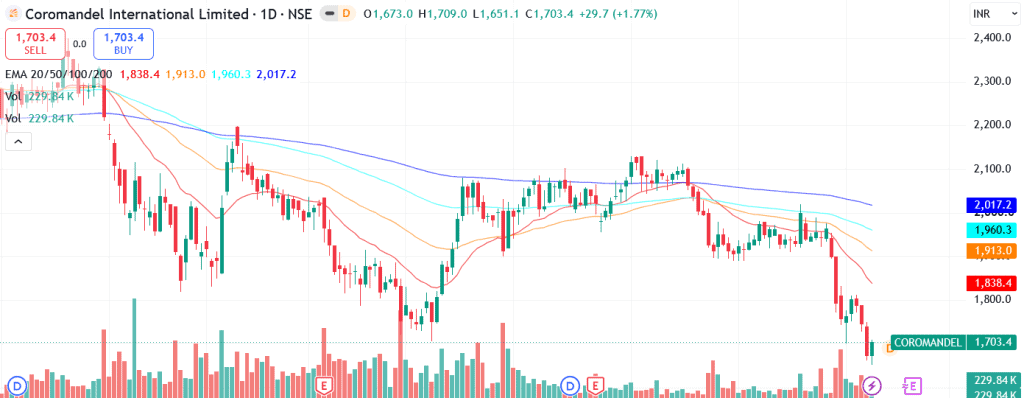
Coromandel International is currently in a downtrend but has reached an important support zone, presenting a potential buying opportunity if technical indicators begin to improve. Although the stock is trading below all its key EMAs, a recovery from the current support level could signal an improvement in its price structure. A sustained move above ₹1,800, the key resistance level, could strengthen bullish momentum and pave the way towards ₹2,100, our 12-month fundamental target.
Momentum indicators suggest that the stock is approaching oversold territory. The RSI at 30.58 indicates significant selling pressure and places the stock near the oversold zone, potentially creating an attractive entry opportunity for investors anticipating a recovery. However, the MACD at -66.94 remains negative and below its signal line, with a bullish crossover awaited to confirm improving momentum. The 21-day and 55-day Relative RSI readings of -0.08 and -0.11, respectively, indicate underperformance against the benchmarks, although this could improve if the stock stages a sustained rebound.
Trend strength remains elevated, with the ADX at 25.38, indicating a strong downward trend at present. Therefore, confirmation of a reversal through improving momentum and a sustained move above ₹1,800 would strengthen the bullish case. Such a breakout could open the way towards ₹2,100. On the downside, ₹1,600 remains the key support and stop-loss level.
- RSI: 30.58 (Near oversold territory; potential recovery opportunity)
- ADX: 25.38 (Strong downward trend; reversal confirmation awaited)
- MACD: -66.94 (Negative; below signal line, bullish crossover awaited)
- Resistance: ₹1,800
- Support: ₹1,600
Coromandel International Ltd. stock recommendation
Current Stance: Buy, with a 3-month target price of ₹1,800 (6% upside) and a 12-month target price of ₹2,100 (24% upside), based on 25x FY28E EPS of ₹84.

Why buy now?

Strong revenue growth: Q1FY27 revenue grew 15.94% YoY to ₹8,164.77 crore, supported by healthy business momentum.

Crop protection growth: Strong export demand and an improved product mix supported growth in the crop protection business.

Backward integration: Senegal phosphate mining and internal acid production strengthen raw material security.

Emerging opportunities: Specialty nutrients, biologicals, nano fertilizers and CDMO offer additional growth avenues.

Capacity expansion: Planned investments in green ammonia and crop protection capacity could support long-term growth and earnings diversification.

Portfolio fit

Coromandel International offers exposure to India’s agricultural inputs sector through fertilizers, crop protection and specialty nutrients. Its backward integration, export opportunities and diversified growth drivers support its long-term prospects, although raw material volatility and fertilizer margin pressure remain key risks.
If you found this helpful and want regular stock trade calls, check out my community on StockGro here:Coromandel International Ltd.: Budget 2026-27 opportunities
- Fertiliser Subsidies: The ₹1.71 lakh crore allocation supports fertiliser affordability and demand.
- Agricultural Research: The ₹9,967 crore allocation could support productivity and demand for advanced agri-inputs.
- High-Value Crops: Support for crops like coconut, cocoa and cashew could boost demand for specialised nutrients and crop protection.
- Balanced Nutrient Use: Policy emphasis on balanced fertilisation could drive specialty nutrients and micronutrient adoption.
- Farm Mechanisation: Greater technology adoption could create opportunities in agri-drones and precision spraying.
Final thoughts
Coromandel International is evolving from a leading phosphatic fertiliser manufacturer into a more integrated agri-solutions platform. Its investments in acid production, fertiliser capacity, crop protection, specialty nutrients, rural retail and agri-technology create multiple avenues for growth while strengthening its position across the agricultural value chain.
For investors seeking exposure to India’s agricultural productivity and farm-input market, Coromandel offers a combination of established scale, distribution reach and expansion opportunities. However, raw-material prices, subsidy economics, capacity utilisation, crop-protection margins, working-capital management and returns on new investments will remain critical. A valuation assessment is necessary before determining whether these growth opportunities are adequately reflected in the stock price.