What is a Short Squeeze?
The main base of a ‘short squeeze’ is short selling. In short selling, a trader borrows shares and offloads them at the current market rate, betting the price will decline. If that bet pays off, the shares are repurchased at a lower price, handed back to the lender, and the gap between the selling price and the buyback price is pocketed as profit.
Now consider what happens when the price rises instead of falling.
The trader is sitting on a loss — and it grows with every uptick. This is where short selling differs fundamentally from simply buying a stock. When you buy a stock, the maximum loss you can expect is your investment amount. When you short a stock, there is no hard ceiling on losses. A stock can rise indefinitely.
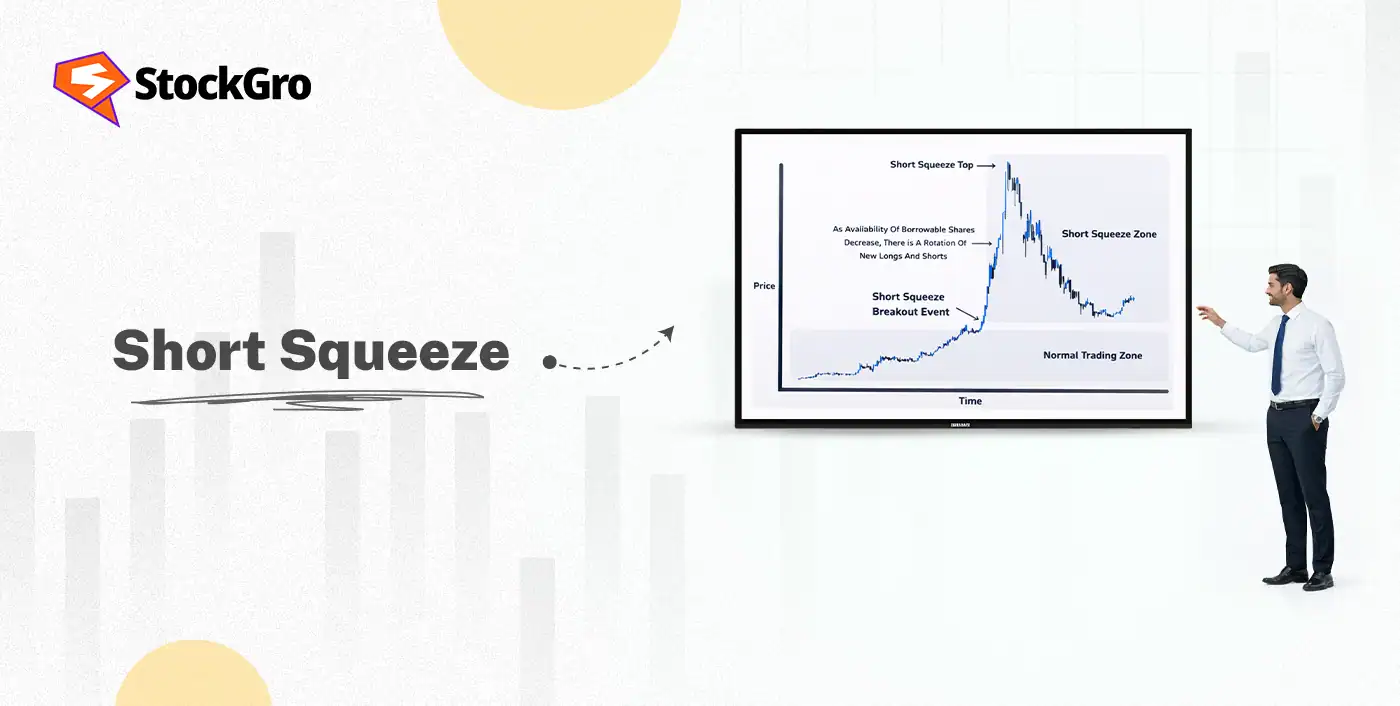
When enough traders are caught in this position, and the stock continues to climb, they all rush to exit at the same time. Every forced purchase adds upward pressure, nudging the price higher with each exit. Higher prices squeeze out more short sellers. Those exits generate more buying. The cycle keeps feeding itself. That is a short squeeze.
How Short-Covering Operates
Closing a short position requires buying back the borrowed shares. This process is referred to as short covering. In normal conditions, it is an orderly exit. In a squeeze, it becomes a chain reaction.
Most short sellers place stop-loss orders — automatic instructions to buy and exit if the price reaches a certain level. As a stock climbs, these triggers fire one by one. Each triggered stop-loss creates a buy order. Those buy orders push the price up further, which fires more stop-losses, which creates more buy orders.
Brokers add another layer of pressure. When a short seller’s losses grow large enough that their account no longer has sufficient margin, the broker issues a margin call. From there, the only two options are topping up the account with additional funds or walking away from the position entirely. Most close it, which means more shares being bought, more upward pressure on price.
What makes squeezes particularly brutal is that none of this has anything to do with the company’s actual business. No earnings surprise, no new product, no fundamental change. None of this is driven by choice. These are buyers who have no option. They pay what the market demands, regardless of the price.
How to Spot an Impending Squeeze
Three conditions, when present together, create the environment where a squeeze becomes possible.
The first is high short interest. If a large proportion of a stock’s tradable shares are already sold short, there is a significant pool of traders who could be forced to buy if prices rise. Short interest above 20% of float is generally considered elevated.
The second is low float. Float represents the portion of a company’s total shares that are freely available for trading among public investors. A smaller float means fewer shares changing hands. Even a modest wave of buying can push the price up sharply when supply is this tight.
The third is a catalyst. High short interest can sit dormant for months. It usually takes something to start the initial move — an earnings beat, a news announcement, a regulatory decision, or coordinated retail activity. Without a trigger, the conditions just wait.
Key Indicators to Spot a Short Squeeze
Apart from the typical conditions, traders use key metrics to identify squeeze candidates:
| Indicator | What It Tells You |
| Short Interest Ratio | The number of days it would take for all existing short positions to be closed out, assuming trades happen at the stock’s average daily volume. > 10 is considered high. |
| Short Interest as % of Float | Percentage of tradable shares currently shorted. Above 20% signals heavy short positioning. |
| Relative Volume | Current volume compared to the stock’s daily average. A spike of 3x or more, without obvious news, warrants attention. |
| Cost to Borrow | The cost a trader pays to borrow shares before taking a short position. A rising cost signals that borrowable supply is tight — squeeze risk increases. |
No single indicator is conclusive. A stock can carry heavy short interest for a long duration without squeezing. These signals are most meaningful when several are elevated at the same time, and a catalyst appears on the horizon.
Risk Associated with Trading During a Short Squeeze
A squeeze does not only punish short sellers. There are some serious considerations involved:
For short sellers, the danger is direct. Losses have no cap. A stock that doubles or triples in days can destroy an account. Margin calls leave no room for timing. Traders are pushed out of their positions at elevated prices, typically when the stock is already deep into its run. The speed of a squeeze leaves almost no time to think. By the time most traders react, the damage is already done.
For buyers trying to ride the move, the risks are different but equally real. During a squeeze, prices are driven by momentum, not by the company’s underlying value. Once the short sellers have all covered their positions, the buying pressure disappears instantly. The stock can give back its entire gain in the same week it made it. Traders who bought near the peak often find themselves holding shares at prices the stock never revisits.
Liquidity also becomes a problem during an active squeeze. Bid-ask spreads widen. Orders do not fill at expected prices. Some brokers have restricted trading in squeezed stocks mid-move, leaving traders unable to exit when they needed to. And when retail traders coordinate openly to force a squeeze, market regulators take notice. Thus, participation in such activity has drawn legal scrutiny in multiple jurisdictions.
Conclusion
A short squeeze builds slowly and breaks fast. The setup — heavy short interest, limited float, a waiting catalyst — can sit in place for weeks. When it finally triggers, the move can be over in days.
Understanding how squeezes work does not make them predictable. But it does make them less confusing when they happen, and it puts you in a better position to manage risk on either side of the trade. Position sizing, stop-losses, and knowing when a price reflects momentum rather than value — these basics matter more during a squeeze than at almost any other time in the market.
FAQs
- What is a short squeeze in trading?
It occurs when rising prices force short sellers to buy back shares urgently, creating a self-reinforcing cycle that drives prices sharply higher.
- What are short-term trading categories?
Short-term trading includes day trading, swing trading, and scalping. These are positions typically held from seconds to a few days.
- What type of trading is shorting?
Shorting is a speculative strategy where borrowed shares are sold first, with the aim of buying them back at a lower price later for a profit.