
MCX crude oil touched ₹10,888 on April 7, 2026, before reversing hard. Strait of Hormuz tensions, an OPEC surprise, and the kind of price action that most people could only watch from the sidelines. CFD traders were not among them. A Contract for Difference removes the ownership component. It lets you take a position on price direction with a fraction of the required capital. In this guide, you will learn how CFDs work and how to trade them.
What Is a Contract for Differences (CFD)?
A Contract for Difference is a derivative agreement in which two parties agree to exchange the difference between an asset’s price at the time a position opens and when it closes. The underlying asset never actually changes hands.
Practically speaking, CFDs sit well across asset classes. A trader can go long on gold if supply data looks tight, short crude oil if an OPEC output increase seems imminent, or hedge an existing equity position in a commodity producer without liquidating it.
The same margin account handles all of this. That multi-directional and wide market reach is why both institutional and retail traders find them useful.
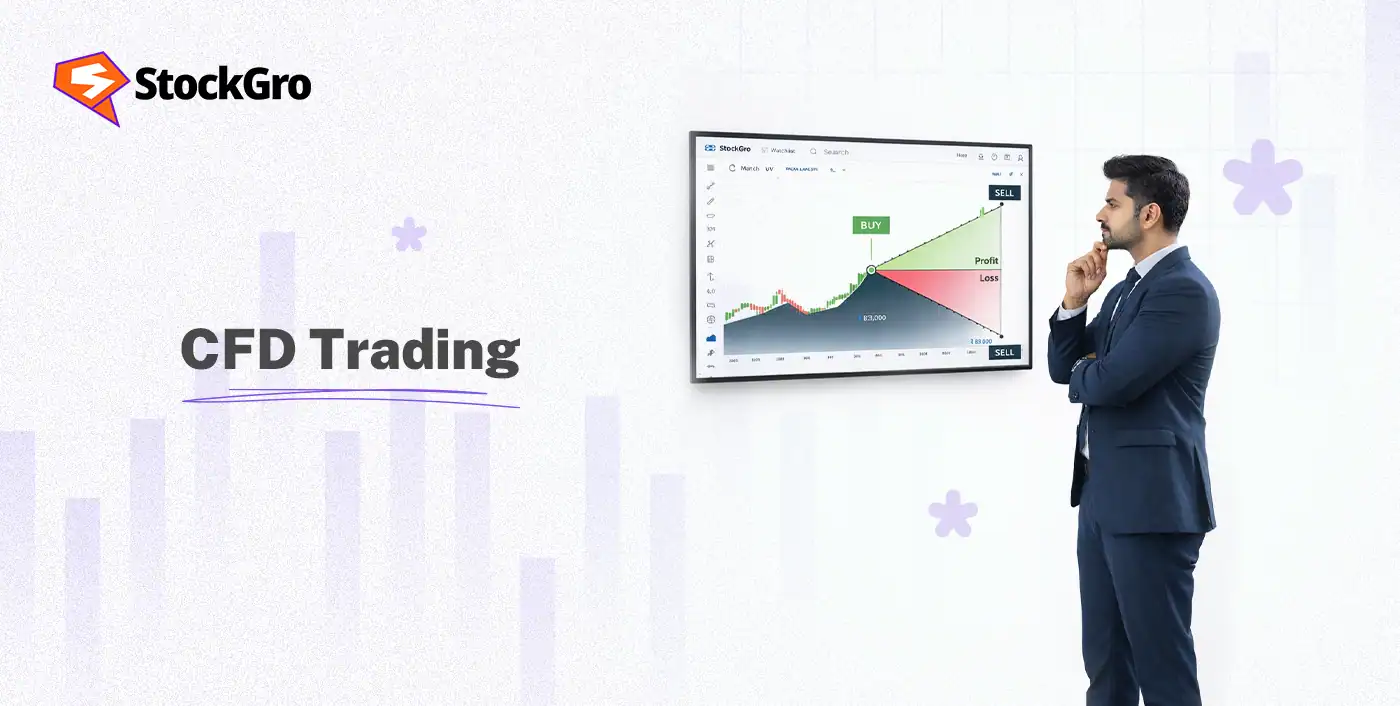
For example, say gold is trading at ₹75,000 per 10 grams. You think the price will climb. You open a long CFD on gold worth ₹1,00,000 with a 10% margin requirement, putting up just ₹10,000. The price moves in your favour, and the position is now valued at ₹1,08,000. You make a profit of ₹8,000 on a ₹10,000 outlay. Had it gone the other way, that same margin would have absorbed the loss first.
How Do Commodity CFDs Work?
The mechanics of a commodity trading instrument like a CFD are not complicated, but each one carries real financial consequences. Here are the ones that shape every position:
- Going Long or Short: Long if you expect prices to rise, short if you expect them to fall. Either direction executes with the same speed. That matters most in volatile markets where windows open and close quickly.
- Leverage and Margin: A 10% margin on a ₹50,000 crude oil position means ₹5,000 controls the full exposure. Both profits and losses move against the entire position value, not just the margin sitting in your account.
- Spread Costs: Entry is at the ask, exit at the bid. That difference is the spread, and it is the broker’s cut on every trade. Brent crude and gold carry tighter spreads than smaller or less liquid commodity markets.
- Overnight Financing: Each day a leveraged position stays open past market close, a swap charge applies. It seems small daily, but across a multi-week trade, it adds up and can quietly turn a marginal winner into a loser.
- No Fixed Expiry: MCX futures contracts have a hard end date. Most CFDs do not. You stay in the position as long as your margin holds and your view remains intact, with no forced rollover cost on expiry.
Step-by-Step Guide to a CFD Trade
Numbers make this clearer than theory. Here is a single crude oil trade, walked through from start to finish.
Step 1: Choose Your Commodity and Direction
Crude oil is at ₹6,500 per barrel equivalent. You have been tracking the Strait of Hormuz situation and believe a supply shock will push prices up. Direction: long.
Step 2: Calculate Position Size and Margin
You are seeking exposure of ₹65,000. The broker requires a 10% margin, so ₹6,500 has to be paid upfront. Make sure to maintain more than the minimum requirement. A buffer matters when prices move fast.
Step 3: Open the Position
The trade executes at the ask price. From that point, every rupee of movement in crude oil either adds to or subtracts from your open position in real time. There is no waiting for settlement.
Step 4: Monitor and Manage
Crude oil can shift quickly on a single OPEC headline. If your margin buffer erodes, the broker sends a margin call. You either top up immediately or the position closes automatically, often at a bad price.
Step 5: Close and Settle
You exit at the bid when crude oil moves from ₹6,500 to ₹6,800. Across 10 units, your gain is ₹3,000. Subtract the spread cost and any accumulated overnight charges, and what remains is your net cash settlement.
CFD vs Futures in Commodity Trading
Superficially similar, meaningfully different. Here is where CFDs and futures actually diverge:
| Parameter | CFD | Futures |
| Ownership | No ownership, purely price-based settlement | No ownership, standardised exchange contract |
| Expiry | Often open-ended; trader chooses exit | Fixed monthly or quarterly expiry (e.g., MCX crude) |
| Leverage | Set by the broker | Set by the exchange |
| Regulation | Outside SEBI framework for domestic retail | Fully regulated by SEBI via MCX and NCDEX |
| Market Access | Via international or offshore brokers | Via SEBI-registered commodity brokers |
| Contract Size | Flexible, fractional positions are possible | Standardised lots (e.g., 100 barrels on MCX crude) |
| Cost Structure | Spread plus daily overnight financing fee | Brokerage, exchange levy, and rollover costs |
| Settlement | Only cash | Cash-settled, physical delivery rare |
Advantages of CFD Trading
The genuine edge of CFDs is visible in the following benefits it provides:
- Access to global markets: One account, one margin pool, and suddenly Brent crude, COMEX gold, Chicago wheat, and London copper are all within reach. No separate exchange memberships, no delivery obligations, no geography problem.
- Ability to profit in both directions: Selling short a CFD is as straightforward as buying one. When commodity prices drop hard, as they sometimes do over weeks or months, short positions generate returns while long-only holders wait and hope.
- Capital efficiency: Margin trading lets you control larger positions by committing only a small portion of the total capital required. Capital that would otherwise sit tied up in a single position stays available for other trades.
- No physical delivery complications: Cash settlement is the only outcome, always. A trader never faces the operational headache of receiving, storing, or disposing of actual crude oil, metal, or grain at contract expiry.
- Flexible position sizing: Other derivatives have a minimum standardised lot. Many CFD platforms let you trade fractions of that. For tighter risk control, this flexibility matters.
Risks Involved in CFD Trading
Before you enter a CFD position, it is essential to understand the risks carried by CFDs:
- Leverage amplifies losses, not just gains: Even a relatively small adverse price movement can quickly erase the entire margin in a single session. Sharp intraday moves are common in volatile markets, making it a real concern.
- Counterparty risk: A CFD is a private contract with your broker. It is not traded on a regulated exchange. If that broker fails to fulfil their obligations, your funds and open positions are exposed with very little legal safety net.
- Overnight financing erodes long-term trades: At 0.05% daily on a ₹1,00,000 position, the swap cost reaches ₹1,500 over 30 days. That is before any adverse price movement. It means longer positions have to work harder just to break even.
- Commodity market volatility: The commodity prices can have rapid fluctuations caused by triggers like OPEC announcements, a weather event, or an unexpected RBI move. Market orders and stop losses can slip badly in those windows.
- Regulatory gaps: CFDs accessed through offshore platforms fall entirely outside SEBI’s framework. Disputes, fraud, or platform insolvency offer the trader limited recourse.
Conclusion
CFD trading earns its place in the toolkit of informed traders. The price exposure, directional flexibility, and capital efficiency it provides are genuinely hard to replicate through conventional instruments. What it demands in return is disciplined margin management, honest accounting of spread and financing costs, and a clear-eyed view of the regulatory gap that currently exists for Indian retail participants.
The instrument itself is neutral. What you do with it is not.
FAQ‘s
CFD trading is not regulated by SEBI for Indian retail investors. Most traders access it through offshore brokers, which involves regulatory risks and limited legal protection.
Futures are exchange-traded with fixed expiry and regulation, while CFDs are broker-based, flexible, and open-ended, with no expiry but added costs like spreads and overnight charges.
CFDs carry high risk due to leverage and volatility. Beginners should start cautiously, understand margin rules, and focus on risk management before committing larger capital.
Leverage varies by broker, but traders typically control large positions with a small margin. While this improves capital efficiency, it also significantly increases potential losses.
Common CFD commodities include gold, crude oil, silver, natural gas, and agricultural products, giving traders access to global markets without dealing with physical delivery.
CFD profits are generally treated as speculative or business income in India. Taxation depends on individual income classification, so consulting a tax expert is recommended.