Summary
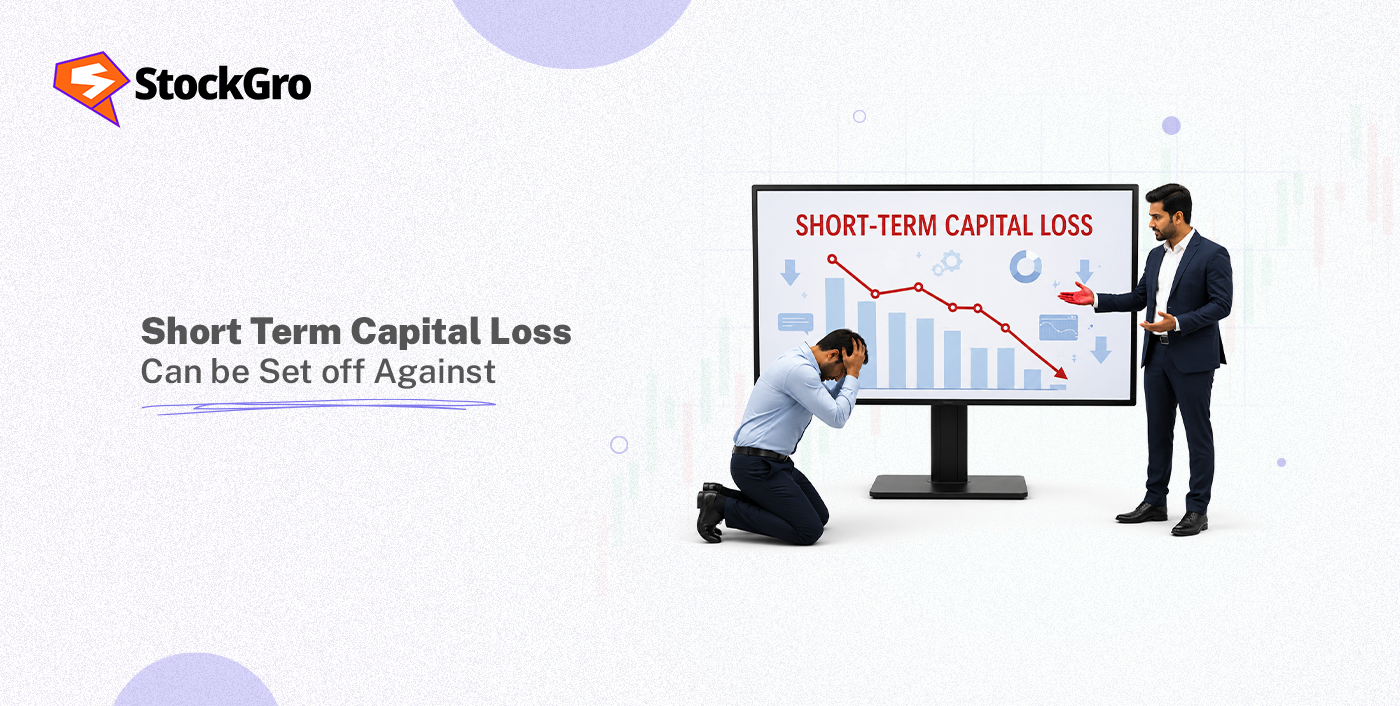
Short-term capital losses (STCL) can be used to offset short-term as well as long-term capital gains.
If there are any remaining capital losses, it can be carried forward for up to 8 assessment years.
To make sure you get to claim these STCL and carry them forward, we need to file our Income Tax Return and maintain all documents.
Can Short-Term Capital Loss Be Set Off Against Other Gains?
Yes, you can use short-term capital losses, or STCL, to offset both short-term capital gains and long-term capital gains. This is allowed under the ITA in the same financial year.
If you have a short-term capital loss and not enough short-term or long-term capital gains to offset it, you can carry forward the remaining amount for up to eight years. But the key is you have to file your ITR on time.
Meanwhile, you cannot use short-term capital losses to offset the income you get as a salary, profit from business or from renting out a place.
Understanding Capital Losses Before Claiming Tax Benefits
Investments in the stock market generally produce one of two outcomes: either a gain or a loss. Before claiming any tax benefit, it is important to understand what qualifies as a capital loss and the conditions attached to it.
What Creates a Capital Loss?
A capital loss is created when investment in shares, equity mutual funds or another capital asset is sold below its cost of acquisition.
Let us say you bought 110 shares of a company at ₹505/share, spending a total of ₹55550, thinking the company would do well.
A month later the company updated weak quarterly performance, which resulted in a decline in the share price.
Since you no longer thought the company was an investment for you you sold all 110 shares within a year at ₹420/share and you got ₹46.2K. This means you lost ₹9,350 on the deal, which is a short-term capital loss.
You can use this short-term capital loss to reduce the amount of capital gains you have according to the Income-tax Act.
If the gains arise from equity mutual funds, understanding the short term capital gain tax on mutual funds can also help you estimate your overall tax liability more accurately.
Key Conditions to Remember:
- Current year losses come first: The Income-tax Act generally requires current year’s capital losses to be adjusted before carried-forward losses.
- Use losses within eight years: Carried-forward short-term capital losses can be used for only eight assessment years, after which the tax benefit is lost.
- Maintain proper records: Keep contract notes, purchase records, and sale statements to support your capital loss claim if required.
Real-World Use Cases for Investors and Traders
Understanding the set-off rules is valuable only when you know how they work in real investing situations. Here are some common examples:
- Offsetting gains from another stock:
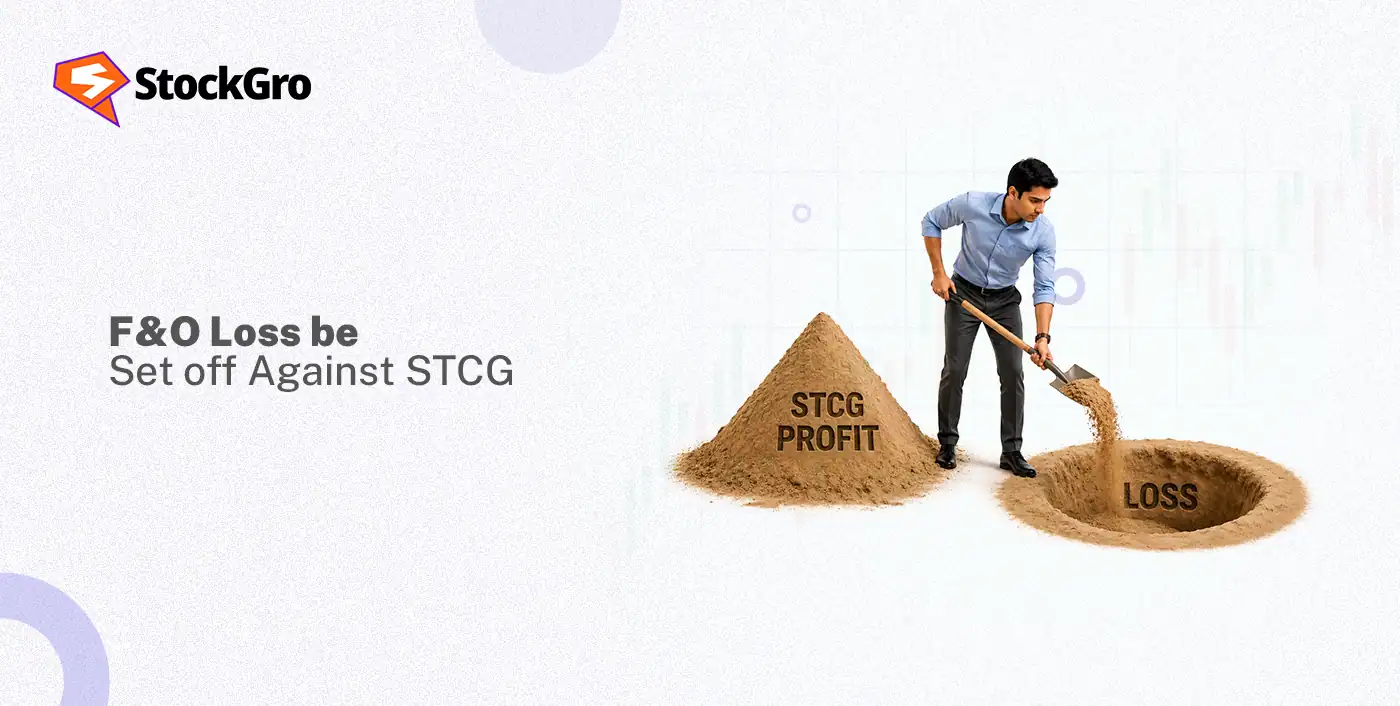
You booked a profit by selling one stock but incurred a loss on another during the same financial year. By adjusting the short term capital loss against the capital gain, you can reduce your taxable gain.
- Reducing tax through portfolio rebalancing:
While reshuffling your portfolio, you sell underperforming stocks at a loss and profitable investments at a gain. The realised loss can help lower the tax payable on the gains.
- Carrying forward unused losses:
If your short-term capital loss is larger than your capital gains for the year, the unadjusted amount can be carried forward for up to eight assessment years, subject to the applicable conditions.
- Managing tax after market volatility:
A significant market correction may force you to exit certain investments at a loss. If you also earn capital gains during the year, those losses can help in reducing your overall tax liability by being set off against eligible gains.
Common Mistakes to Avoid While Setting Off Losses
Setting off capital losses is a valuable tax benefit when you follow the rules correctly and avoid these common mistakes:
- Missing the ITR filing deadline: If you file your ITR after the prescribed due date, it can prevent you from carrying forward eligible capital losses.
- Treating unrealised losses as tax losses: A decline in a stock’s market price does not create a capital loss unless the investment is actually sold.
- Ignoring supporting documents: If you fail to retain contract notes, broker statements, and purchase records, it can make it difficult to substantiate your reported loss if required.
- Assuming all trading losses follow the same rules: Capital losses, intraday trading losses, and Futures & Options (F&O) losses are taxed under different provisions and cannot always be set off in the same manner.
Final Thoughts
A short-term capital loss is not merely the result of an unsuccessful investment. To get the most out of the losses you are allowed you need to know the rules about set-off. You have to file your ITR on time. It is also very important to keep your records accurate.
If you do all these things you will be following the Income-tax Act. You can use all the losses you are eligible for. This way you can make use of eligible losses and follow the Income-tax Act at the same time.
FAQs
No, you cannot use a short-term capital loss to reduce your salary income or other income that’s not from selling something. This includes income from a business or rent from a house. You can only use a short-term capital loss to reduce the amount of money you made from selling something.
Yes, you can use a short-term capital loss to reduce your long-term capital gains. This has to be done in the year you made the gains. You have to follow the rules that the government has made for paying taxes.
You can keep a short-term capital loss for up to eight years.. You have to use it to reduce the amount of money you made from selling something in the years after you got the loss. You also have to file your tax return on time.
Yes, you have to file a tax return to keep a short-term capital loss. You have to file it on time. If you file it late you might not be able to use the loss to reduce your taxes.
No, intraday trading losses are treated as speculative business losses, not capital losses. They can be set off only against speculative business income and cannot be adjusted against capital gains or other heads of income.
If carried-forward short-term capital losses are not adjusted against eligible capital gains within eight assessment years, they lapse and cannot be carried forward or claimed in future years.