8th May 2025 · SEBI-Registered Analyst
Investment Insights with Adarsh · 8th May 2025
Alpha – The True Measure of Investment Outperformance
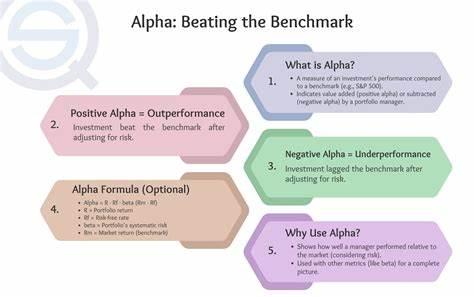
Alpha is a key metric that tells investors whether a portfolio manager has added value over and above the expected market returns, adjusted for risk. It’s commonly referred to as “excess return” or “abnormal return.” Definition Alpha = Portfolio Return – [Risk-Free Rate + Beta × (Market Return – Risk-Free Rate)] This formula is based on the Capital Asset Pricing Model (CAPM). It compares the actual return of the investment to what it should have earned given its risk level (Beta). Interpretation • Alpha = 0: Performance is exactly in line with the market risk. • Positive Alpha (> 0): The manager outperformed expectations. • Negative Alpha (< 0): The manager underperformed based on the risk taken. Why Alpha Matters 1. Evaluates Fund Manager Skill: Consistently positive alpha shows that a manager is doing more than riding the market wave. 2. Performance Attribution: Alpha isolates return generated by active decisions – like stock picking, sector rotation, or timing – instead of market movement. 3. Risk-Adjusted Return: Helps investors understand whether higher returns are earned efficiently, not just by taking more risk. Example If a mutual fund has a beta of 1.1 (slightly riskier than the market), and the market returned 10%, the fund is expected to return 11%. If the fund actually returns 13%, its alpha is +2%, showing it beat expectations. Limitations • Assumes market efficiency and correct risk measurement (via Beta). • Past Alpha doesn’t guarantee future outperformance. • Influenced by model assumptions (like CAPM), which may not fully reflect real-world complexities. Final Thought Alpha is the holy grail for active managers. It tells you not just how much return you got, but whether it was truly earned. High alpha consistently over time is a strong sign of investment skill.