6th May 2025 · SEBI-Registered Analyst
Investment Insights with Adarsh · 6th May 2025
Beta in Stock Market: Understanding Volatility
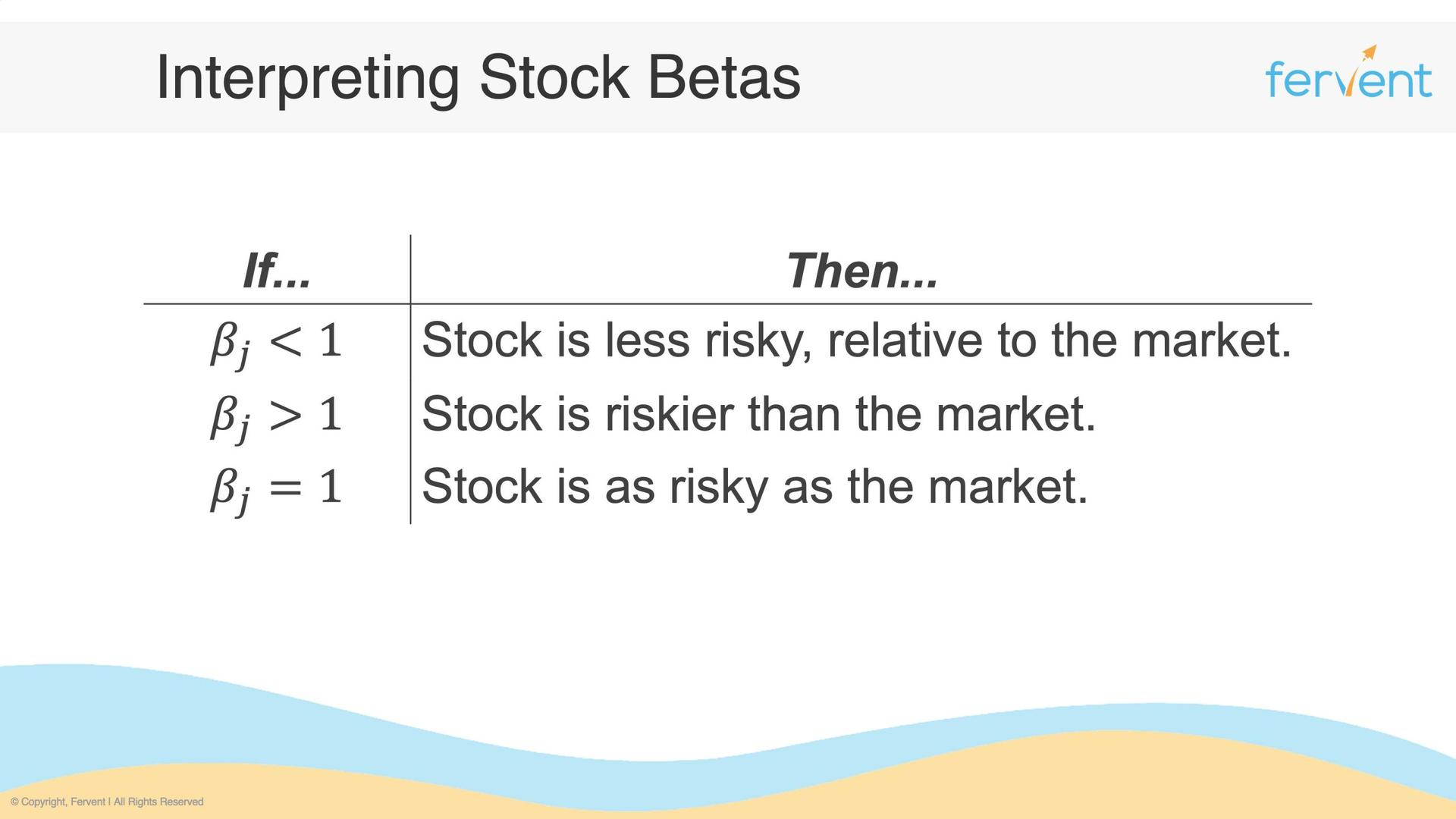
Beta (β) is a numeric value that measures how much a stock's price moves compared to the overall market. Think of it as a stock's sensitivity to market movements. Interpreting Beta Values • Beta = 1 The stock moves exactly like the market. If the NIFTY 50 rises 1%, this stock is also expected to rise 1%. • Beta > 1 The stock is more volatile than the market. Example: A beta of 1.3 means the stock might move 1.3% for every 1% market move. • Beta < 1 The stock is less volatile, meaning it’s safer but with limited upside. Example: A beta of 0.7 means the stock may move only 0.7% for every 1% market change. • Beta < 0 Rare case where the stock moves inversely to the market. Example: Gold ETFs or certain hedge stocks. Real-Life Usage • Traders may prefer high-beta stocks for quick moves and bigger gains. • Long-term investors or conservative funds often look for low-beta stocks for steady returns with less risk. • Portfolio managers mix high and low beta stocks to achieve the desired risk level. Example in Action If you're investing ₹1 lakh and choose a stock with beta of 2, you're essentially doubling the market risk. If the market drops 2%, your stock could drop 4%. Similarly, in a bull rally, the gains could be twice as much. When Beta Misleads • It’s based on past price data, not future potential. • During market crashes or rallies, correlations break — and beta becomes unreliable. • Stock-specific events (like mergers, fraud, or product launches) may not be reflected in beta.