6th Mar 2025 · SEBI-Registered Analyst
Investment Insights with Adarsh · 6th Mar 2025
Flag Pattern: PART 1
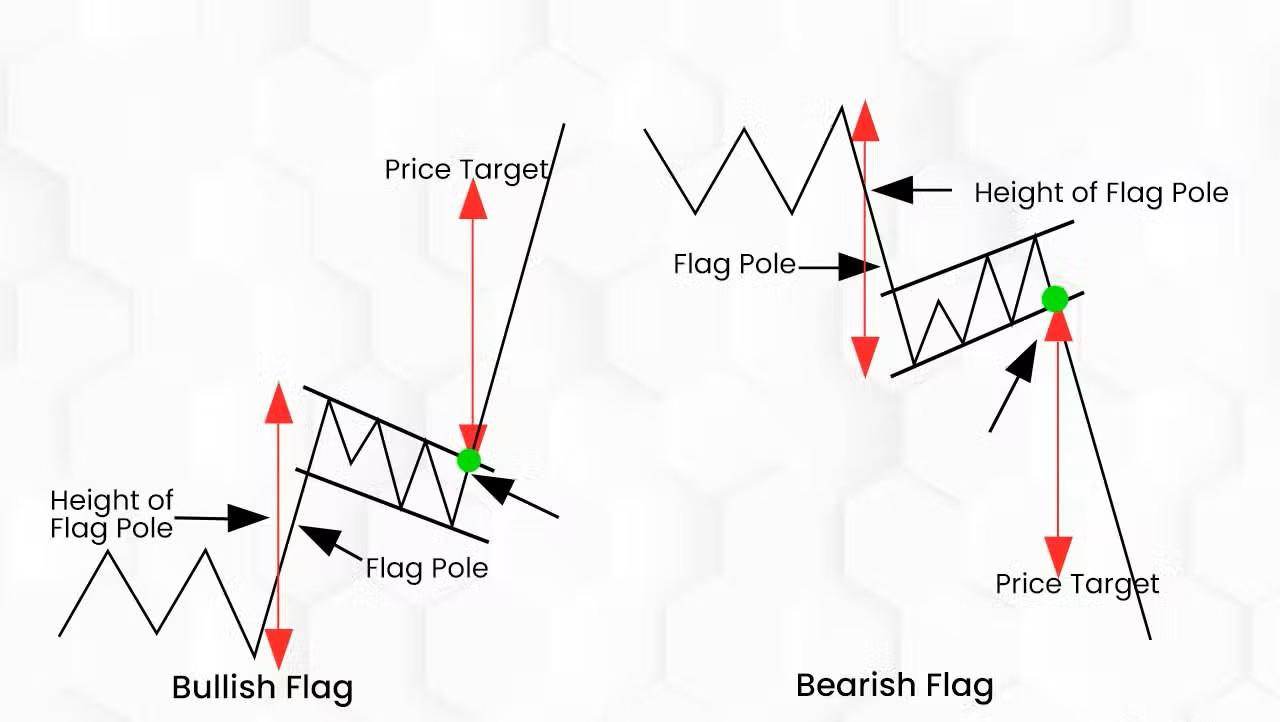
What is a Flag Pattern? A Flag is a short-term consolidation period that happens after a sharp price movement (usually an impulse move) in a strong direction. The pattern is made up of parallel or slightly sloping trendlines (forming a rectangular shape) and usually lasts for a few days to a couple of weeks. Characteristics of a Flag Pattern: 1. Strong Initial Price Move (Flagpole): The price initially makes a strong and steep movement in one direction (up or down). This is the "flagpole" of the pattern. 2. Consolidation (Flag): After the sharp movement, the price enters a consolidation phase that forms the flag. This consolidation is typically a narrow price range that slopes against the previous trend (if the previous move was up, the flag slopes down; if the previous move was down, the flag slopes up). 3. Volume Decline: Volume typically decreases during the formation of the flag. This indicates that there is a temporary pause in trading activity after the initial strong move. 4. Breakout: The breakout from the flag pattern occurs when the price breaks out of the flag’s trendlines, signaling the continuation of the previous trend. Advantages of Using the Flag Pattern: • Clear Entry and Exit Points: The pattern provides traders with well-defined entry and exit points, which is helpful for managing risk and maximizing profits. • High Probability of Continuation: Flag patterns have a high probability of continuation, especially after a strong flagpole. If the breakout occurs with increased volume, it's more likely the price will continue in the direction of the flagpole. • Versatile: Flags can form in any market, from stocks to commodities to cryptocurrencies, making it a versatile tool for traders.