8th May 2025 · SEBI-Registered Analyst
Investment Insights with Adarsh · 8th May 2025
Information Ratio – Measuring Skill in Active Management
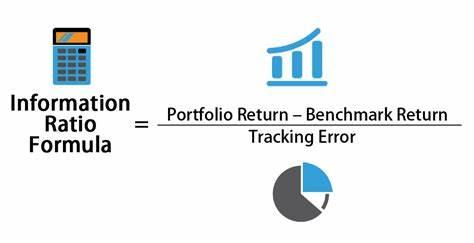
The Information Ratio (IR) is a key metric used to evaluate the performance of actively managed funds. It tells you how much excess return a portfolio manager generates for each unit of risk taken beyond the benchmark. Definition Information Ratio = (Portfolio Return – Benchmark Return) ÷ Tracking Error • Numerator: Also known as Active Return. • Denominator: The Tracking Error, which measures the volatility of those excess returns. What It Tells You The IR is essentially a risk-adjusted performance measure. A higher IR indicates: • The manager is consistently outperforming the benchmark. • The excess returns are not coming with excessive, erratic risk. Interpreting IR Values • IR > 0.5: Strong performance. • IR ≈ 0: No consistent excess return over benchmark. • Negative IR: Underperformance after accounting for risk. For example, if a fund beats its benchmark by 3% per year with a tracking error of 2%, its IR is 1.5 – which is excellent. Why It Matters • Helps compare active fund managers. • Provides context to excess returns. High returns mean little if they come with too much risk. • Preferred by institutional investors for manager evaluation. Limitations • Sensitive to short-term volatility. • May not be meaningful for passive funds. • Can be inflated by lucky performance, not skill – so use with long-term data. Conclusion The Information Ratio is one of the most respected metrics to evaluate an active manager’s skill. It goes beyond just “how much return” and asks, “how smartly was it earned?”