18th Apr 2025 · SEBI-Registered Analyst
Investment Insights with Adarsh · 18th Apr 2025
Option Max Pain Theory – The Tug of War Behind Expiry Prices
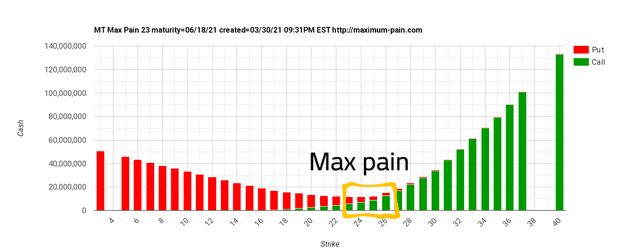
1. What Is Max Pain Theory? Max Pain (or Maximum Pain) is a concept in options trading that suggests the stock price tends to gravitate toward the strike price where the most options (both calls and puts) expire worthless. In simple terms, it's the price point where option sellers (typically institutions or market makers) incur the least payout, and buyers lose the most. 2. Why Does Max Pain Matter? The theory proposes that market participants with large capital (institutions) may influence the underlying stock price—especially near expiry—to minimize their loss from options contracts they’ve written. This behavior often results in: • Pinning the stock/index near a certain level on expiry day • Whipsaws or consolidation near that max pain level • Unexpected reversals as options get closer to expiry 3. How Is Max Pain Calculated? • It involves analyzing Open Interest across all strike prices. • For each possible expiry price, we calculate the total loss to option buyers at every strike. • The strike price where this cumulative loss is maximum is termed the Max Pain Point. Though the math involves aggregating all in-the-money call and put losses, several free websites calculate and plot this data automatically. 4. Practical Example Let’s say: • The Nifty has heavy OI at 22,000 Call and 21,800 Put. • Based on Open Interest, the Max Pain is calculated at 21,900. On expiry day, if the index trades near 21,900, both call and put sellers keep most of the premium, and buyers lose—this aligns with Max Pain theory. 5. Can Max Pain Be Used for Trading? Yes, but cautiously: • It works best in range-bound expiry weeks or low-volatility setups. • Can help identify potential expiry magnet levels. But it’s not guaranteed. External factors like news, earnings, or global cues can override it. 6. Criticism of Max Pain Theory • Retrospective Bias: It often appears accurate only in hindsight. • Assumes manipulation: Critics argue markets are too large to be controlled this way.