16th May 2025 · SEBI-Registered Analyst
Investment Insights with Adarsh · 16th May 2025
Return on Invested Capital (ROIC)
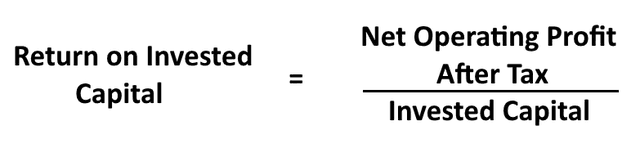
What is ROIC? Return on Invested Capital (ROIC) measures how efficiently a company uses the capital invested by both equity and debt holders to generate profits. It indicates the company’s ability to create value above its cost of capital. Formula: ROIC = (Net Operating Profit After Tax) ÷ (Invested Capital) Where: Net Operating Profit After Tax (NOPAT) = Operating Income × (1 - Tax Rate) Invested Capital = Total Debt + Total Equity - Non-Operating Assets (like cash) Why is ROIC Important? ROIC helps investors understand whether a company is generating sufficient returns from the capital it employs. A high ROIC compared to the company’s cost of capital means value creation, while a lower ROIC suggests value destruction. How to Interpret ROIC? • ROIC greater than the company’s weighted average cost of capital (WACC) indicates the company is generating returns above its costs, which is a positive sign. • ROIC lower than WACC suggests the company may be destroying shareholder value. • A consistently high ROIC signals strong competitive advantages and operational efficiency. Applications of ROIC • Evaluating management performance: ROIC shows how well management is deploying capital. • Investment decisions: Investors compare ROIC across companies in the same sector. • Identifying competitive moats: Companies with durable high ROIC often have competitive advantages like brand strength, patents, or cost leadership. Limitations: • ROIC requires accurate calculation of invested capital and NOPAT, which can sometimes be complex. • Different industries have different capital requirements; thus, ROIC benchmarks vary. • Non-operating income or one-time charges can distort the ratio if not adjusted properly. Conclusion: ROIC is a powerful tool to assess a company’s true profitability and capital efficiency beyond just earnings or revenue. It helps investors understand the quality of a company’s earnings and whether it can sustain growth by effectively reinvesting capital.