26th May 2025 · SEBI-Registered Analyst
Investment Insights with Adarsh · 26th May 2025
Shares vs Bonds – Key Differences
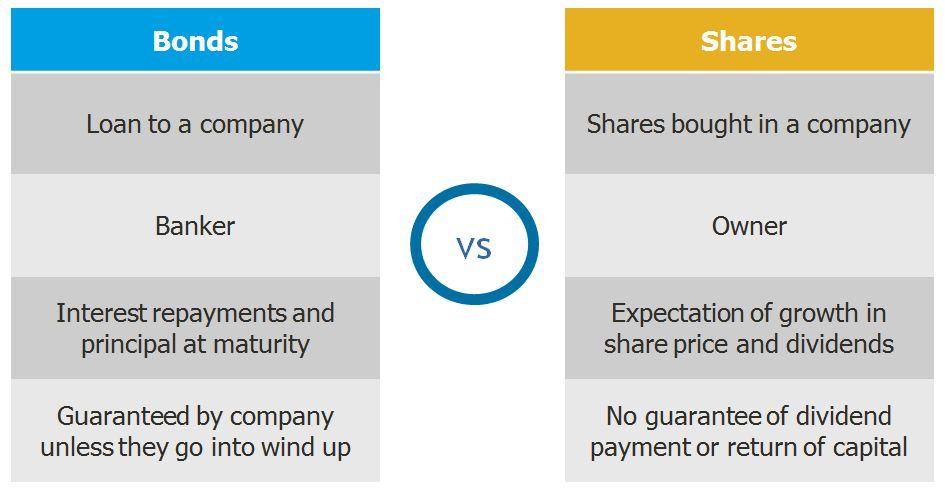
1. Nature of Investment o Shares represent ownership in a company. o Bonds represent a loan given to a company or government. 2. Role of Investor o Shareholders become partial owners of the company. o Bondholders are creditors who lend money and expect repayment with interest. 3. Returns o Shares can provide returns through dividends and capital appreciation. o Bonds offer fixed interest income (coupon) and return of principal at maturity. 4. Risk Factor o Shares are riskier due to market volatility and company performance. o Bonds are relatively safer, especially government or AAA-rated corporate bonds. 5. Capital Appreciation o Share prices can rise significantly, offering potential high returns. o Bonds usually offer limited capital gain, as prices are more stable. 6. Income Stability o Share income (dividends) is not guaranteed and depends on company profits. o Bond income is generally fixed and predictable throughout the bond's life. 7. Payout Priority o In case of bankruptcy, bondholders are paid before shareholders. o Shareholders are last to receive any money after debts are cleared. 8. Voting Rights o Shareholders may have voting rights in company decisions. o Bondholders have no voting rights. 9. Market Movement o Share prices are affected by earnings, market sentiment, and economy. o Bond prices are influenced by interest rates, credit rating, and maturity. 10. Investment Objective o Shares suit investors looking for long-term growth and higher returns. o Bonds are suitable for investors seeking stability and regular income. 11. Ownership vs Obligation o Shares imply ownership and a stake in company growth. o Bonds are obligations for the issuer to repay the borrowed money. 12. Portfolio Role o Shares bring growth potential and higher risk. o Bonds provide safety and income, balancing portfolio risk.