6th May 2025 · SEBI-Registered Analyst
Investment Insights with Adarsh · 6th May 2025
Sharpe Ratio: Balancing Return with Risk
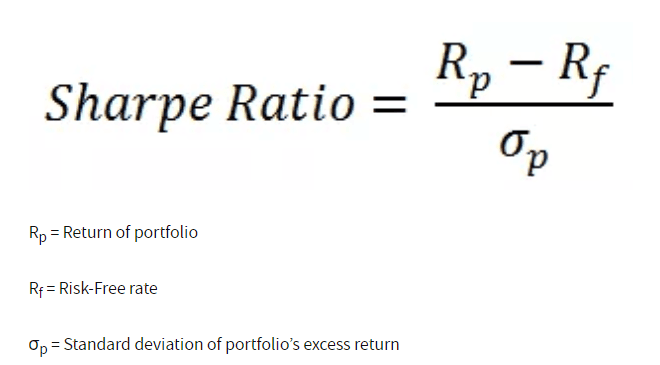
The Sharpe Ratio, developed by Nobel laureate William F. Sharpe, is one of the most widely used tools to evaluate the risk-adjusted return of an investment. It answers the crucial question: “Are you being adequately rewarded for the risk you’re taking?” Formula Sharpe Ratio = (Portfolio Return – Risk-Free Rate) / Standard Deviation of Portfolio Return • Portfolio Return: The average return earned over a period. • Risk-Free Rate: Return from a virtually risk-free asset (e.g., government bond). • Standard Deviation: Measures the volatility (risk) of returns. Interpretation • Sharpe Ratio > 1: Acceptable, implies decent risk-adjusted returns. • Sharpe Ratio > 2: Very good. • Sharpe Ratio < 1: Poor, meaning returns may not justify the risk. Practical Use 1. Comparing Funds: Investors use the Sharpe Ratio to choose between mutual funds or portfolios. A higher ratio means the fund offers better returns per unit of risk. 2. Portfolio Optimization: Helps in designing an efficient portfolio by maximizing return for a given level of risk. 3. Avoiding Illusion: High returns may look attractive, but if volatility is too high, the Sharpe Ratio exposes the real risk involved. Example If two portfolios both give 12% annual return: • Portfolio A has a volatility of 8% • Portfolio B has a volatility of 16% Assuming a 6% risk-free rate: • Sharpe A = (12–6)/8 = 0.75 • Sharpe B = (12–6)/16 = 0.375 Though returns are same, Portfolio A is more efficient due to lower risk per unit of return. Limitations • It assumes returns are normally distributed, which may not hold true in real markets. • Standard deviation alone may not capture all types of risks (e.g., black swan events). • Short-term use can be misleading if based on limited data.