7th May 2025 · SEBI-Registered Analyst
Investment Insights with Adarsh · 7th May 2025
Sortino Ratio: Improving on Sharpe by Focusing Only on Downside Risk
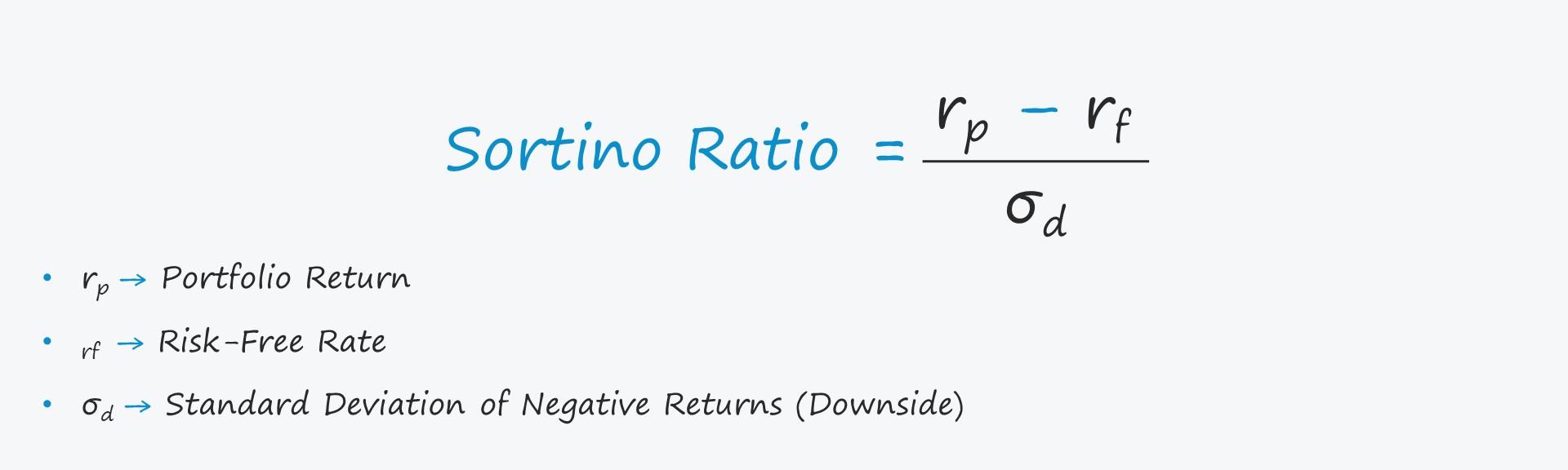
While the Sharpe Ratio considers all volatility (both upside and downside), the Sortino Ratio refines this by only considering downside deviation—that is, harmful volatility. This makes it especially useful for investors who are more concerned about losses than variability in general. Formula Sortino Ratio = (Portfolio Return – Risk-Free Rate) / Downside Deviation • Portfolio Return: Average return over the period. • Risk-Free Rate: Return from a risk-free investment. • Downside Deviation: Standard deviation of only negative returns (those below a threshold, usually the risk-free rate). Why It Matters 1. More Realistic Risk View: Most investors aren’t worried when returns are volatile on the upside. Sortino Ratio eliminates this “good” volatility and focuses on the risk of losing money. 2. Better Fund Comparison: Particularly helpful when comparing funds with similar returns but different risk profiles—especially if one has more downside risk. Practical Example Assume two portfolios both have a return of 10%. • Portfolio A has more negative-return days. • Portfolio B’s losses are minimal, but it fluctuates more on the upside. Sharpe Ratio may treat them similarly, but Sortino Ratio will favor Portfolio B for being more stable in avoiding losses. Limitations • Data-Intensive: Calculating downside deviation requires more granular data. • Threshold Sensitivity: Results can vary depending on the chosen minimum acceptable return (MAR), typically the risk-free rate. In Summary If you're evaluating a strategy where capital preservation is critical (like retirement portfolios or conservative mutual funds), Sortino Ratio offers a clearer picture than Sharpe.