18th Apr 2025 · SEBI-Registered Analyst
Investment Insights with Adarsh · 18th Apr 2025
Volatility Skew – Why All Options Aren’t Priced the Same
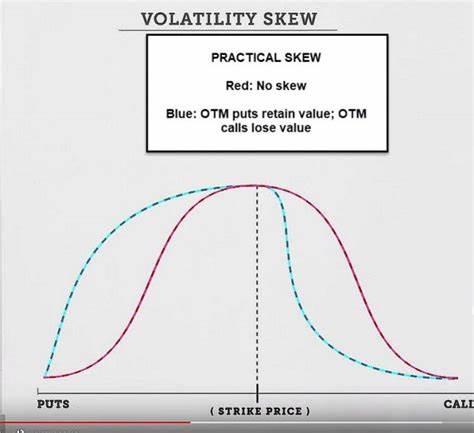
1. What Is Volatility Skew? Volatility Skew refers to the phenomenon where implied volatility (IV) differs for different strike prices or expiration dates of options—even within the same underlying stock or index. While Black-Scholes assumes constant volatility, in reality, options do not follow this symmetry. This distortion is called a skew or smile, and it reveals a lot about market expectations and fear levels. 2. Types of Volatility Skew There are three common types: • Vertical Skew (Strike-based skew): IV changes across strike prices for the same expiry. o Commonly seen as a “smile” or “smirk” on charts. • Horizontal Skew (Time-based skew): IV differs across expiration dates. o Short-term options may have higher IV than longer ones (or vice versa). 3. What Causes Volatility Skew? • Fear of Downside: Traders often hedge downside risks, making puts more expensive (higher IV). • Demand/Supply: If OTM calls are heavily bought or sold, IV adjusts to reflect that. • Event Expectations: Earnings, elections, budget announcements—skews develop around key dates. • Crash Protection: In indices like Nifty or S&P 500, deep OTM puts have inflated premiums due to hedging. 4. How Traders Use It Volatility skew is critical in designing option strategies: • Iron Condors / Butterflies: Traders adjust wings based on skew. • Skew-Based Arbitrage: Buying underpriced IV and selling overpriced ones. • Directional Bias Clues: If OTM calls have lower IV than puts, it signals bearish bias in the market. • Earnings Strategy: If IV rises sharply only for the near expiry, a calendar spread may work well. 5. Why It Matters Understanding volatility skew helps traders: • Price options more accurately • Avoid traps (like buying inflated options) • Read market psychology hidden in options data 6. Conclusion Volatility skew is not just a pricing oddity—it's a real-time window into trader sentiment and risk. For any serious options trader, reading the skew is as important as reading charts.