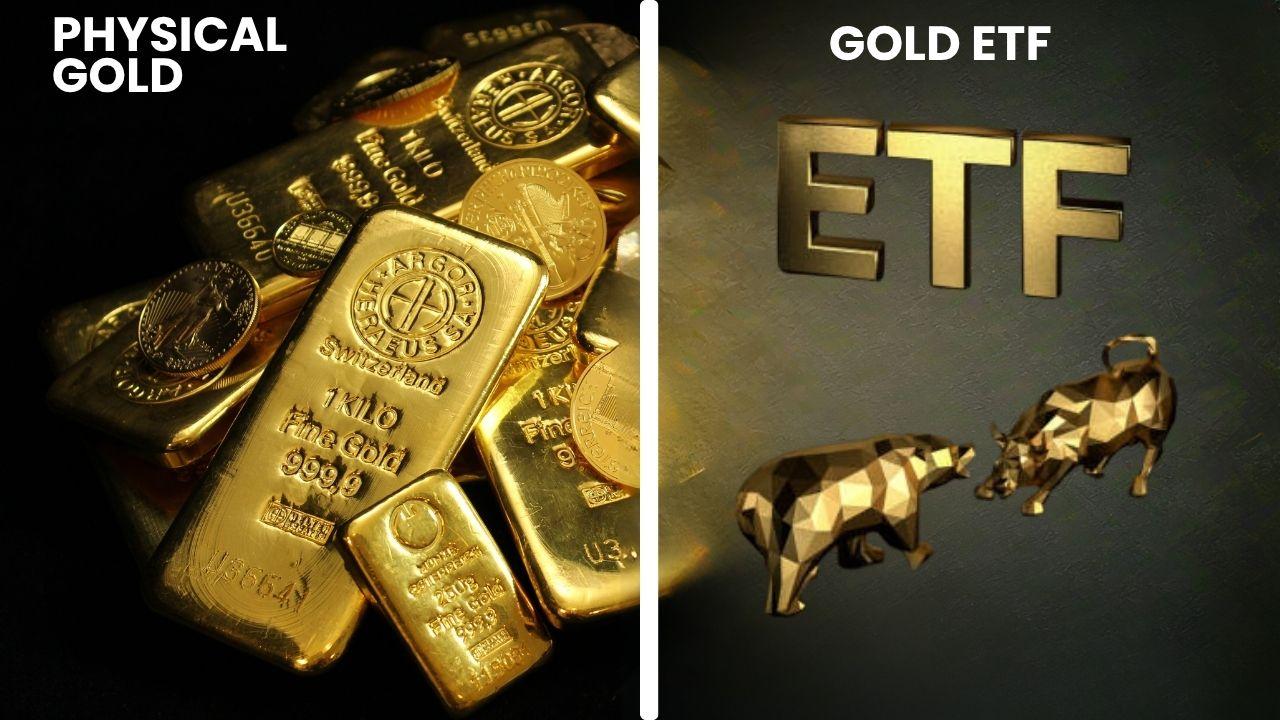
INVESTMENT IN PHYSICAL GOLD VS GOLD ETF????
Gold investments can be made through physical gold or Gold ETFs, each offering distinct advantages. Ownership and Tangibility •Physical Gold provides direct ownership of gold in forms like coins, bars, or jewellery. It requires authentication, safe storage, and insurance to prevent loss or theft. •Gold ETFs represent fractional ownership in gold reserves managed by fund houses. While you don’t hold the physical asset, you benefit from its price movements digitally. Cost Considerations •Physical Gold comes with extra costs such as making charges, storage fees, insurance premiums, and markups, which can reduce overall returns. •Gold ETFs have lower costs, mainly brokerage fees and a small annual expense ratio, making them a more cost-effective option. Liquidity and Trading •Physical Gold isn’t easy to sell quickly. Finding a buyer, verifying purity, and transaction delays can result in lower-than-market-value sales. •Gold ETFs are highly liquid, trading on exchanges at real-time prices, allowing instant buying and selling during market hours. Storage and Security •Physical Gold demands secure storage, such as bank lockers or home safes, adding risks and extra costs. •Gold ETFs eliminate security concerns, as they exist in electronic form, simplifying management. Tax Implications •Physical Gold can have varying tax policies, including capital gains tax and stamp duties, affecting returns. •Gold ETFs often receive favourable tax treatment on long-term gains, making them more efficient in some cases. Ultimately, if tangible ownership and traditional value appeal to you, physical gold might be ideal. If you prefer ease of trading, cost efficiency, and liquidity, Gold ETFs could be the smarter choice.