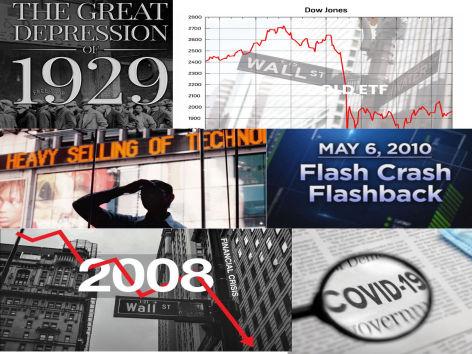
Major Historical Market Falls
Over the decades, several dramatic market declines have left indelible marks on global economies. Here are some of the key events: 1929 – The Great Crash: In October 1929, the U.S. stock market experienced a catastrophic fall known as the Wall Street Crash. This event wiped out significant wealth almost overnight and triggered the Great Depression, a period of prolonged global economic hardship. 1987 – Black Monday: On October 19, 1987, global markets, led by the U.S. Dow Jones Industrial Average, plummeted by over 20% in a single day. Automated (program trading) and herd behavior amplified investors’ panic, leaving markets worldwide reeling. 2000–2002 – The Dot‑com Bubble Burst: Following years of exuberance over the internet and technology stocks, the early 2000s saw a severe correction. Many technology companies lost the vast majority of their value as speculative bubbles burst. 2008 – Global Financial Crisis: Triggered by the collapse of key financial institutions, the crisis saw stock markets around the world fall dramatically. The crisis led to unprecedented government interventions and long‑term regulatory changes in financial systems. May 6, 2010 – The Flash Crash: Within minutes on one trading day, U.S. markets experienced a sudden, deep plunge that quickly recovered. This incident was attributed to high‑frequency trading and liquidity issues, raising questions about market safeguards. February–March 2020 – COVID‑19 Crash: As the pandemic spread globally, markets responded with severe volatility. Major indices—including the S&P 500 and India’s Nifty—suffered rapid declines amid widespread uncertainty.