9 hours ago · SEBI Registration INH000019309
SEBI Registration INH000019309 · 9 hours ago
Paytm's Five-Year Comeback: What Changed?
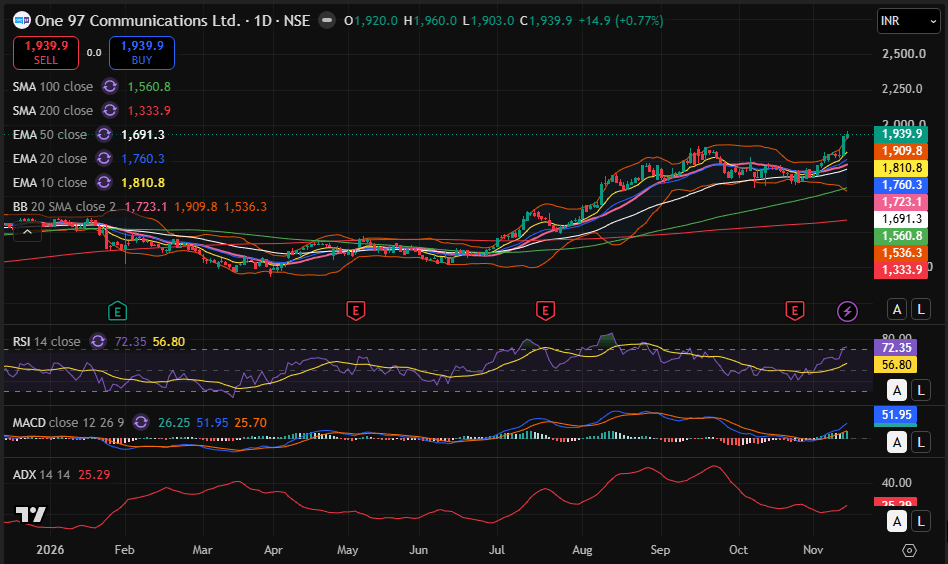
One97 Communications Ltd., the parent company of Paytm, is nearing five years since its stock market debut. Listed at ₹1,950 in November 2021 against an IPO issue price of ₹2,150, the stock has recovered significantly after a prolonged correction but remains below its IPO price. What Led to the Fall? Downfall was largely triggered by regulatory concerns. In February 2024, the RBI imposed restrictions on Paytm Payments Bank due to compliance and supervisory issues. This affected wallet services, FASTag operations, banking partnerships and investor confidence. The uncertainty around its business model, rising losses and concerns over future growth pushed the stock down to nearly ₹310 in May 2024. What Led to the Recovery? Business Restructuring: Paytm focused on strengthening merchant payments, improving payment margins and controlling operating costs. Return to Profitability: FY26 marked a major milestone, with annual net profit of ₹552 crore against a loss of ₹663 crore in FY25. Regulatory Progress: Its subsidiary received in-principle RBI authorisation for issuing prepaid payment instruments, including digital wallets, in November 2026. Final approval is still awaited. Technical Outlook The stock is trading above its 50, 100 and 200-day moving averages, indicating a strong bullish trend. RSI at 72.35 reflects strong momentum but also signals an overbought zone. MACD remains positive, while ADX near 25 indicates improving trend strength. Trading above the upper Bollinger Band suggests the possibility of short-term consolidation or profit booking. My View PAYTM 's recovery reflects improving business fundamentals, cost discipline and better profitability. However, sustaining earnings growth, regulatory developments and competition in digital payments will remain key factors. The real test is whether Paytm can convert its recovery into consistent long-term growth. Disclosure: The analyst or his family does not have any position in the stock.