UPI MDR framework is particularly relevant for YES Bank
YESBANK
For YES Bank, this could be meaningful because the bank has a very large UPI infrastructure business. Its FY25 disclosures said it supported roughly one in every two merchant collections and one in every three consumer payments on UPI, and it had also taken over Paytm's merchant-collection business, adding around ₹65,000 crore of average monthly throughput.
The new MDR is distributed across the UPI ecosystem. The reported framework allocates 40% to issuing banks, 30% to merchant-acquiring banks, and 20% to UPI apps, with the remaining share going to other ecosystem participants. Citi estimates YES Bank could potentially see a 6–12% improvement in profit before tax from the new UPI MDR framework, although this is a brokerage estimate, not company guidance, and the actual benefit will depend on eligible transaction volumes and the final revenue-sharing economics.
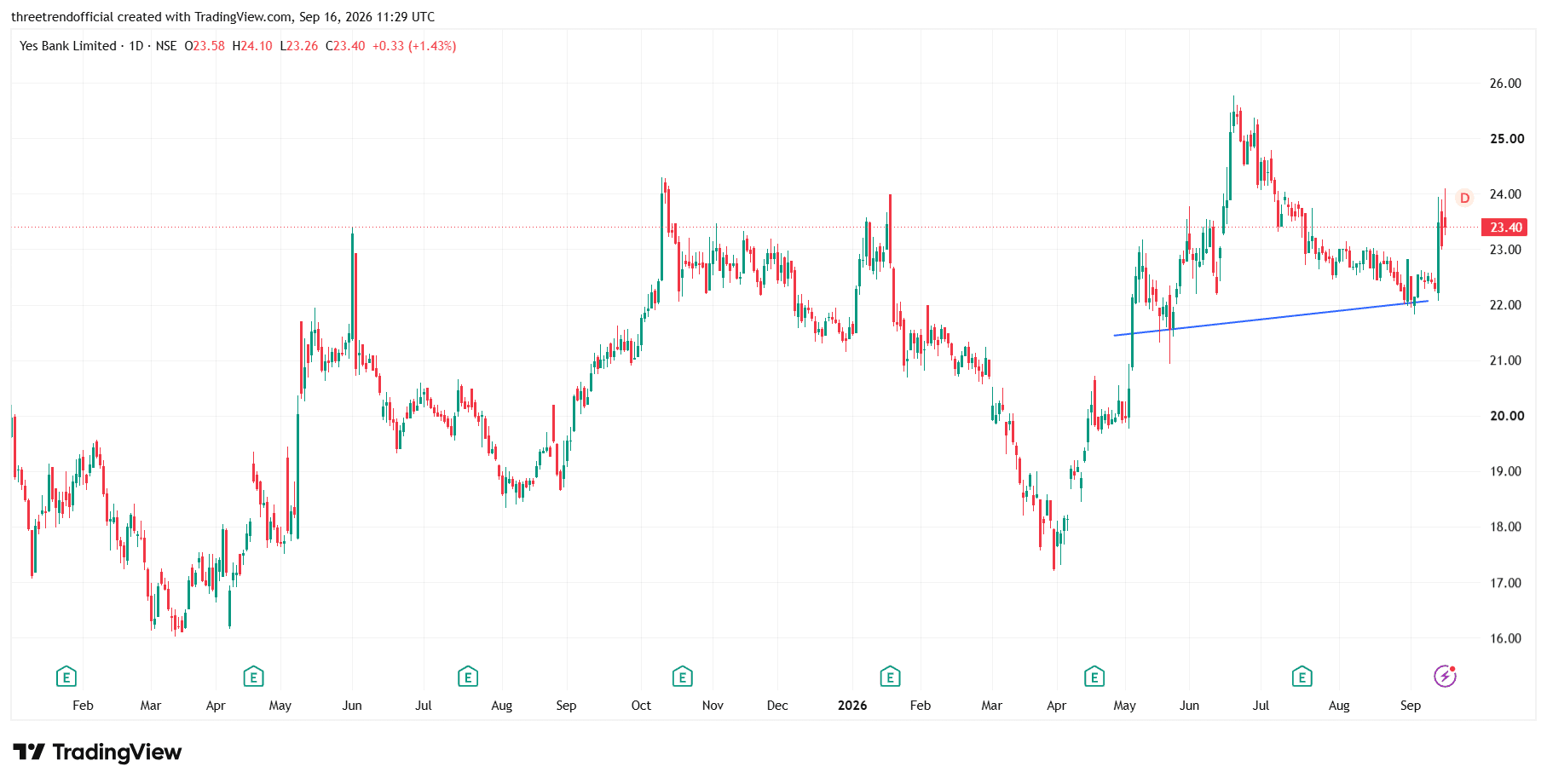
Why YES Bank is reacting: the market is treating UPI MDR as a new fee-income opportunity for YES Bank rather than simply a transaction-volume story. Reuters reported that YES Bank was among the payment/banking stocks gaining after the announcement, while Citi identified it as the standout potential bank beneficiary.
In one paragraph: The UPI MDR change can be an important potential earnings catalyst for YES Bank because of its large PSP and merchant-acquiring footprint; from October 15, eligible merchant UPI transactions above ₹2,000 will generate a 0.4% fee, creating a new revenue pool for the ecosystem. However, the actual benefit to YES Bank will depend on its eligible transaction mix and the revenue-sharing mechanism, so the 6–12% PBT estimate should be viewed as an analyst estimate rather than a guaranteed earnings increase.