23rd Apr 2025 · SEBI-Registered Analyst
Trade with Shubham Shirkar · 23rd Apr 2025
Why Do India's MSMEs Stay Small ?
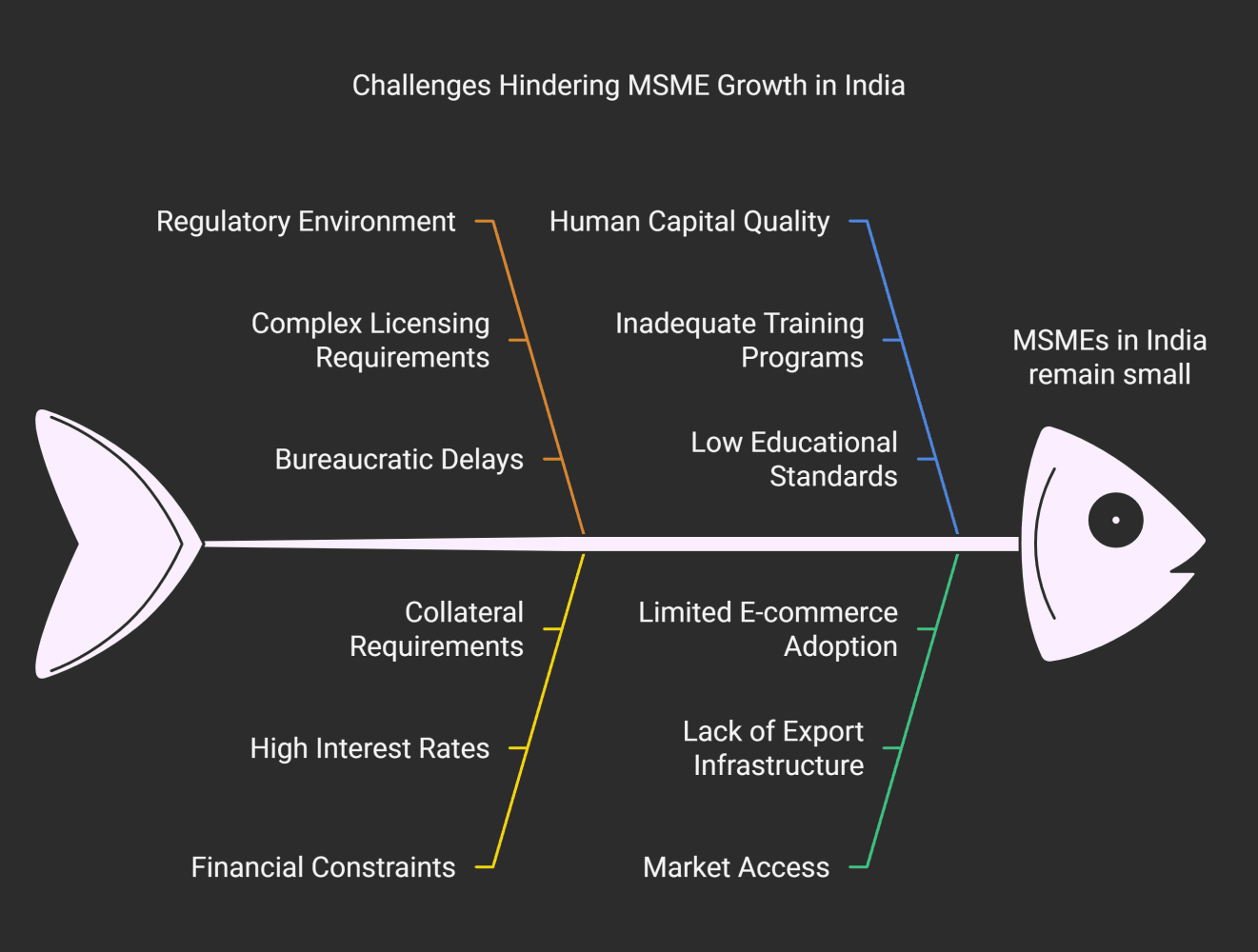
The Stunted Growth of India's Small Businesses Micro, Small, and Medium Enterprises (MSMEs) are critical to India's economy, contributing 📊 16.5% to GDP and employing 120 million people. However, despite their importance, MSMEs remain disproportionately small. 📌 Data from the Udyam portal reveals that 98% of registered MSMEs are micro-enterprises, with fewer than 10 employees. Only 11% of manufacturing MSMEs are formally registered, contributing to low productivity—small enterprises generate just 14% of the value produced by larger ones. 🧱 Key Barriers to Scaling MSMEs ⚖️ Regulatory Complexity India ranks 63rd on the Ease of Doing Business index. MSMEs face complex tax structures, licensing, and labor laws, limiting their growth. Companies with over 100 employees must get government approval for layoffs or closures, making growth less appealing. 💰 Access to Finance MSMEs face a massive $418 billion credit gap. Many lack collateral, banking relationships, and formal credit histories, forcing them to rely on informal funding that isn't growth-friendly. 🧠 Managerial Capabilities Many are family-run with limited exposure to modern practices. Research in Mumbai's textile sector showed that basic management training improved productivity by 17%, but adoption remains low. 🛣️ Infrastructure & Market Access Power supply issues, poor logistics, and local market dependence prevent ***** MSMEs struggle to expand beyond their immediate geography. 🌐 Conclusion While MSMEs face significant barriers, digital transformation is changing the game. Over 32% of MSMEs now report that more than half their sales come from online platforms. 🛒 E-commerce, digital tools, and tech adoption are reshaping India’s MSME ecosystem. With the right support, MSMEs can break out of stagnation and help drive India toward a $5 trillion economy 🚀.