‹ All Posts
THREETREND RESEARCH

19th Aug · SEBI-Registered Analyst

IRCTC

IRCTC
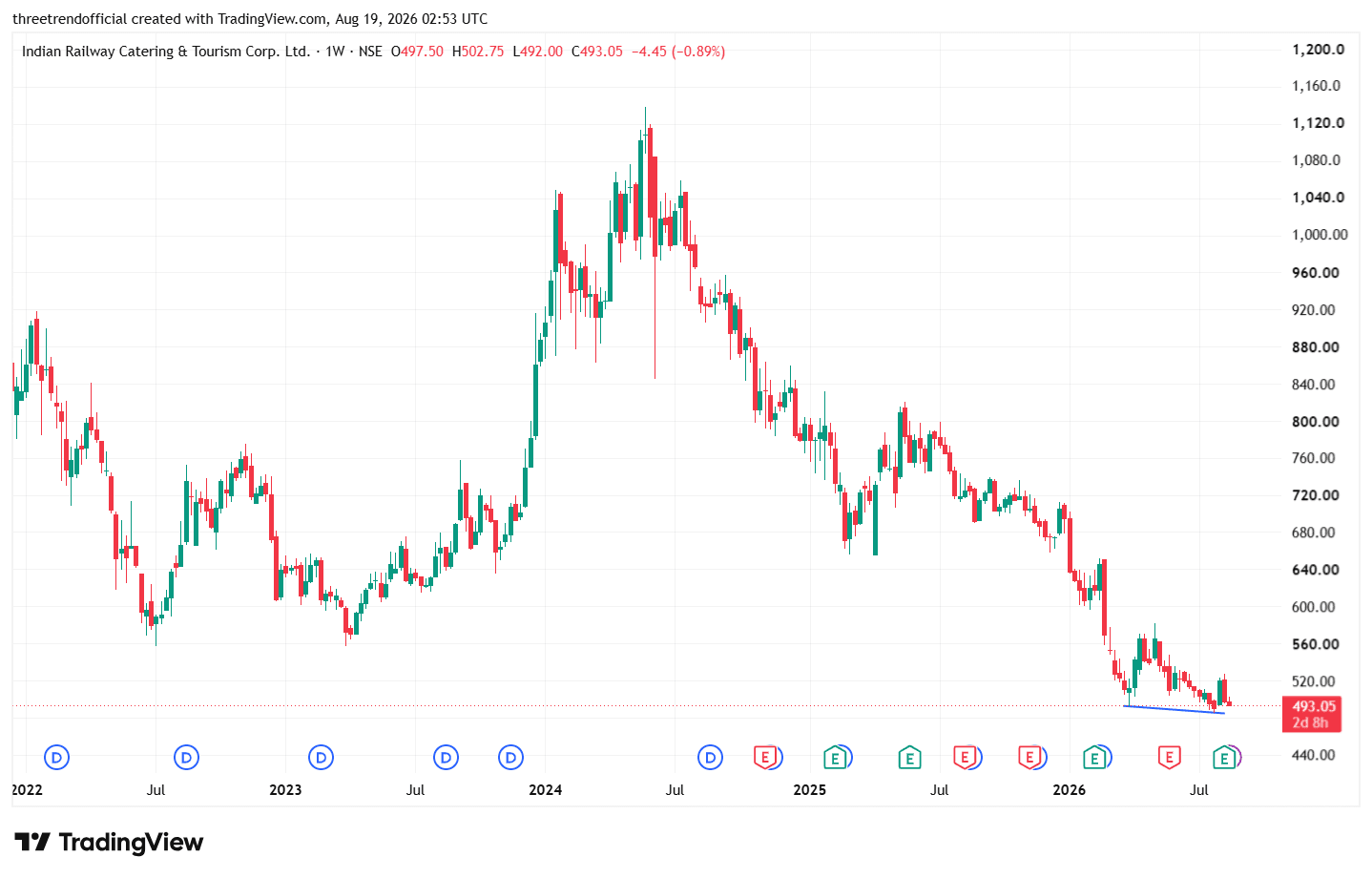
Why IRCTC became almost half from its peak IRCTC touched an all-time high of around ₹1,279 in October 2021 and was around ₹517 in June 2026, a decline of roughly 60% from the peak. It has subsequently traded near the ₹500 area. 1. The biggest issue was extremely high valuation after the 2020–21 railway-stock rally. IRCTC was valued as a unique railway monopoly with very high margins, especially in internet ticketing. Investors were willing to pay a huge premium for future growth. Once earnings growth moderated, that premium started disappearing. This is a classic P/E de-rating story rather than simply a business-collapse story. 2. Internet-ticketing growth has slowed dramatically. This is particularly important because internet ticketing is IRCTC's highest-margin business. In Q1 FY27, internet-ticketing revenue was only about ₹361 crore, up just 0.6% YoY, while catering revenue increased almost 34%. So IRCTC is growing, but increasingly through catering, which has lower margins than the extremely profitable ticketing business. 3. Revenue is growing faster than profit—but profit growth is weak. FY26 total income increased 11.7% to ₹5,475 crore, while PAT increased only 6% to ₹1,393 crore. And in Q1 FY27, revenue jumped 18.1% to ₹1,369.5 crore, but PAT was almost flat at ₹330.2 crore versus ₹330.7 crore a year earlier. That tells the market that costs and margins are becoming more important than headline revenue growth. 4. Catering has become the main growth engine—but it is lower margin. Q1 FY27 catering revenue rose to approximately ₹732 crore from ₹547 crore, while internet-ticketing revenue was nearly flat. This change in revenue mix is important: the company can report strong sales growth without generating proportionate profit growth.

#FundamentalViews#TechnicalViews
IRCTC_2026-08-19_08-23-55.png
536 likes·36 comments